A Masterpiece With a Criminal Record
The Ghent Altarpiece is often called the most stolen painting in history. Since its unveiling in 1432, the monumental work has endured theft, wartime looting, illicit sales, censorship, dismantling, and attempted destruction. One original panel remains missing, turning this sacred masterpiece into one of art history’s greatest unsolved mysteries.
Also known as The Adoration of the Mystic Lamb, the altarpiece is not a conventional painting. It is a large, folding polyptych composed of 12 panels, eight of which are hinged and painted on both sides. This construction made the work visually spectacular—but also dangerously easy to separate and transport.
According to Guinness World Records’ account of the most stolen painting, the Ghent Altarpiece has been targeted in 13 crimes and seven thefts. Its extraordinary survival is nearly as remarkable as the painting itself.
Why the Ghent Altarpiece Mattered So Much
The altarpiece was commissioned for a chapel in what is now St. Bavo’s Cathedral in Ghent, Belgium. Hubert van Eyck apparently began the project, while his younger brother Jan completed it in 1432.
When opened, the work presents a dazzling Christian vision centered on the sacrificial Lamb of God. Saints, angels, prophets, knights, judges, pilgrims, and worshippers gather across a radiant landscape filled with plants, jewels, architecture, and sacred symbols.
Jan van Eyck’s handling of oil paint produced astonishing textures and effects of light. Metal shines, gems sparkle, skin appears warm, and distant objects remain sharply defined. The altarpiece helped demonstrate what oil painting could accomplish and became a landmark of Northern European art.
Its religious importance was equally powerful. The work was not merely decoration; it represented faith, civic pride, wealth, and cultural identity. As with many of the world’s most famous paintings in history, its symbolic value made it desirable to collectors and rulers—and especially attractive as political loot.
Saved From Religious Destruction
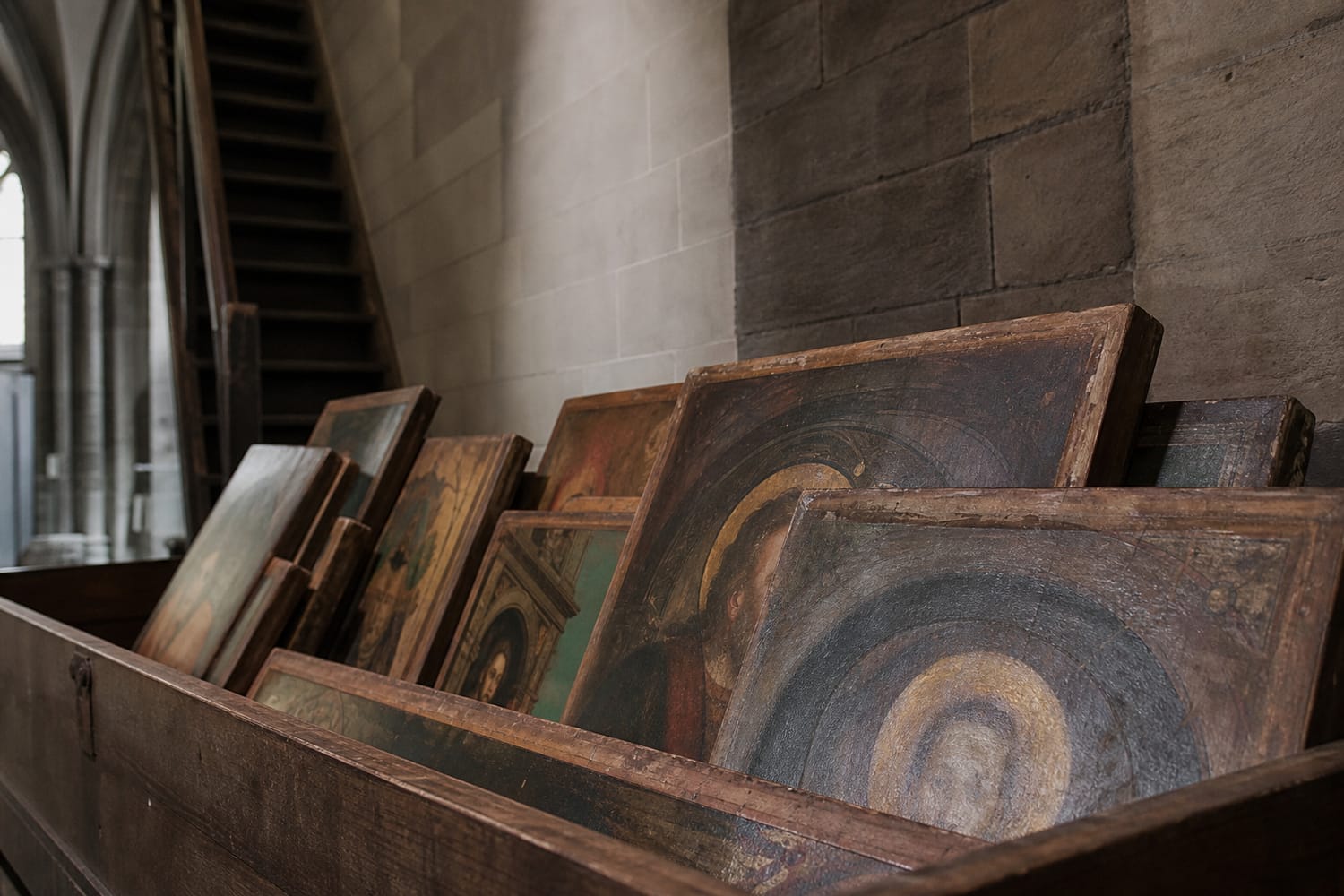
The altarpiece’s troubled history began during the Protestant Reformation. In 1566, Calvinist iconoclasts swept through churches in the Low Countries, destroying religious images they considered idolatrous.
St. Bavo’s Cathedral was a natural target. Before the crowd could reach the altarpiece, however, its guardians dismantled it and reportedly hoisted the panels into the cathedral’s tower. The operation prevented destruction but established a recurring pattern: whenever danger approached, the painting disappeared.
It was later moved to Ghent’s town hall and remained there until Catholic rule returned in 1584. This first escape showed both the benefits and risks of its construction. Individual wooden panels could be hidden—but they could also be scattered, sold, or stolen.
Napoleon Takes the Central Panels
In 1794, French revolutionary forces seized the altarpiece’s central panels and transported them to Paris. They were displayed at the Louvre, then known as the Musée Napoléon.
For France, confiscating European masterpieces was a demonstration of military and cultural dominance. Taking the Ghent Altarpiece meant more than acquiring a valuable painting: it meant possessing a symbol of the conquered region’s identity.
Following Napoleon’s defeat at Waterloo, the captured panels were returned in 1815. Yet the reunion was brief. In 1816, several wing panels were sold by a cathedral official without proper authorization. They eventually entered the collection of the king of Prussia and were displayed in Berlin.
The scattered sections were finally reunited in Belgium after World War I under the Treaty of Versailles. For the first time in more than a century, the altarpiece appeared complete again.
The Unsolved Theft of 1934
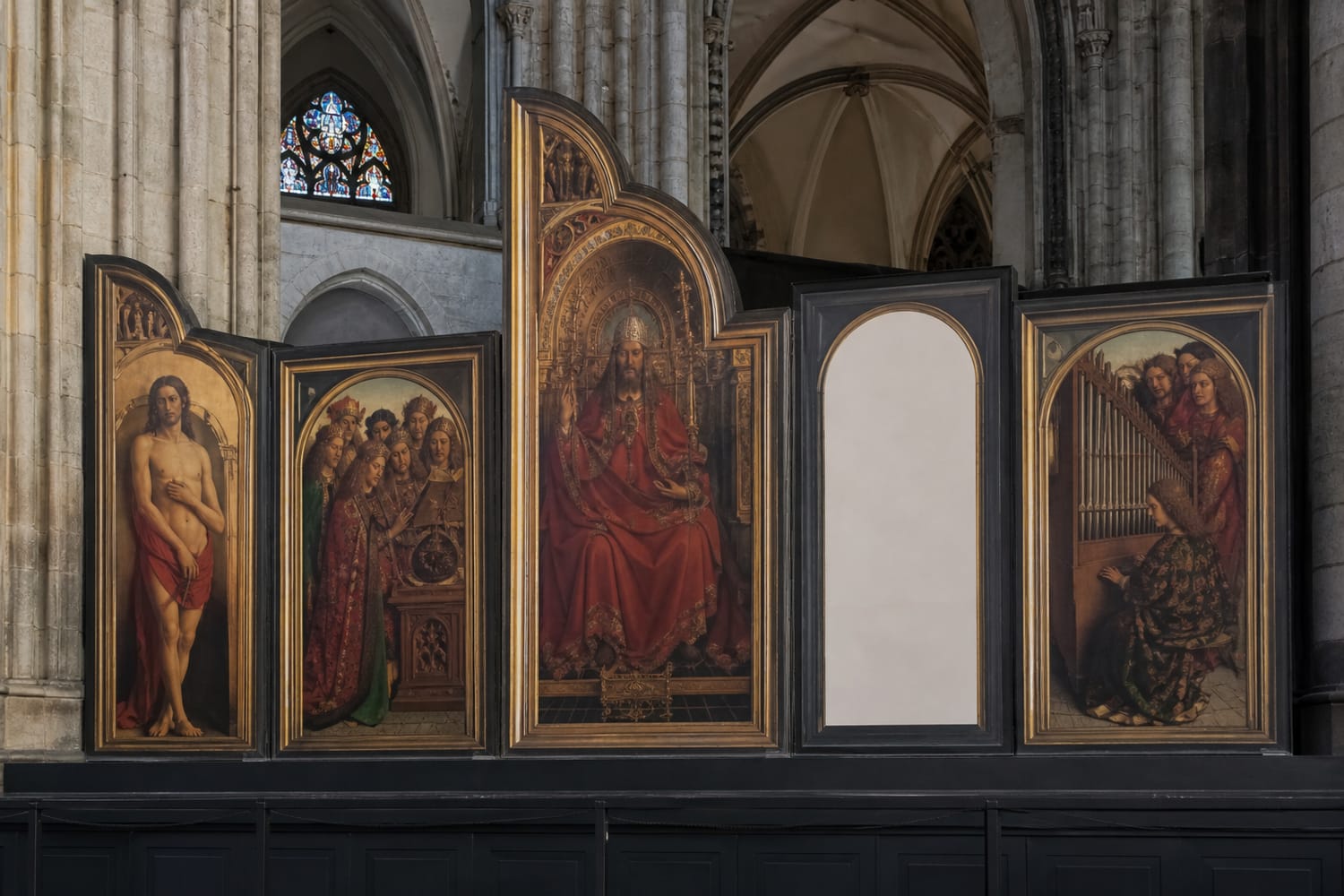
The most famous disappearance occurred during the night of April 10–11, 1934. A thief entered St. Bavo’s Cathedral and removed panels depicting Saint John the Baptist and the Just Judges.
A message left behind referred to Germany and the Treaty of Versailles, apparently attempting to give the crime a political motive. Nineteen days later, the bishop of Ghent received a ransom demand for one million Belgian francs. The writer signed the letters with the initials “D.U.A.”
To prove possession of the paintings, the blackmailer directed authorities to a luggage office at Brussels-North railway station. There, the Saint John the Baptist panel was recovered. The Just Judges, however, remained hidden.
Suspicion eventually focused on Arsène Goedertier, a Belgian stockbroker. After suffering a heart attack in November 1934, Goedertier reportedly indicated that he alone knew where the missing panel had been concealed. Investigators searched his papers and followed numerous clues, but they never found it.
A reproduction created by artist Jef Van der Veken now occupies the empty position. The original Just Judges remains missing, and the detailed official history of the 1934 disappearance continues to inspire searches, theories, and alleged discoveries.
Hitler’s Hunt for the Altarpiece
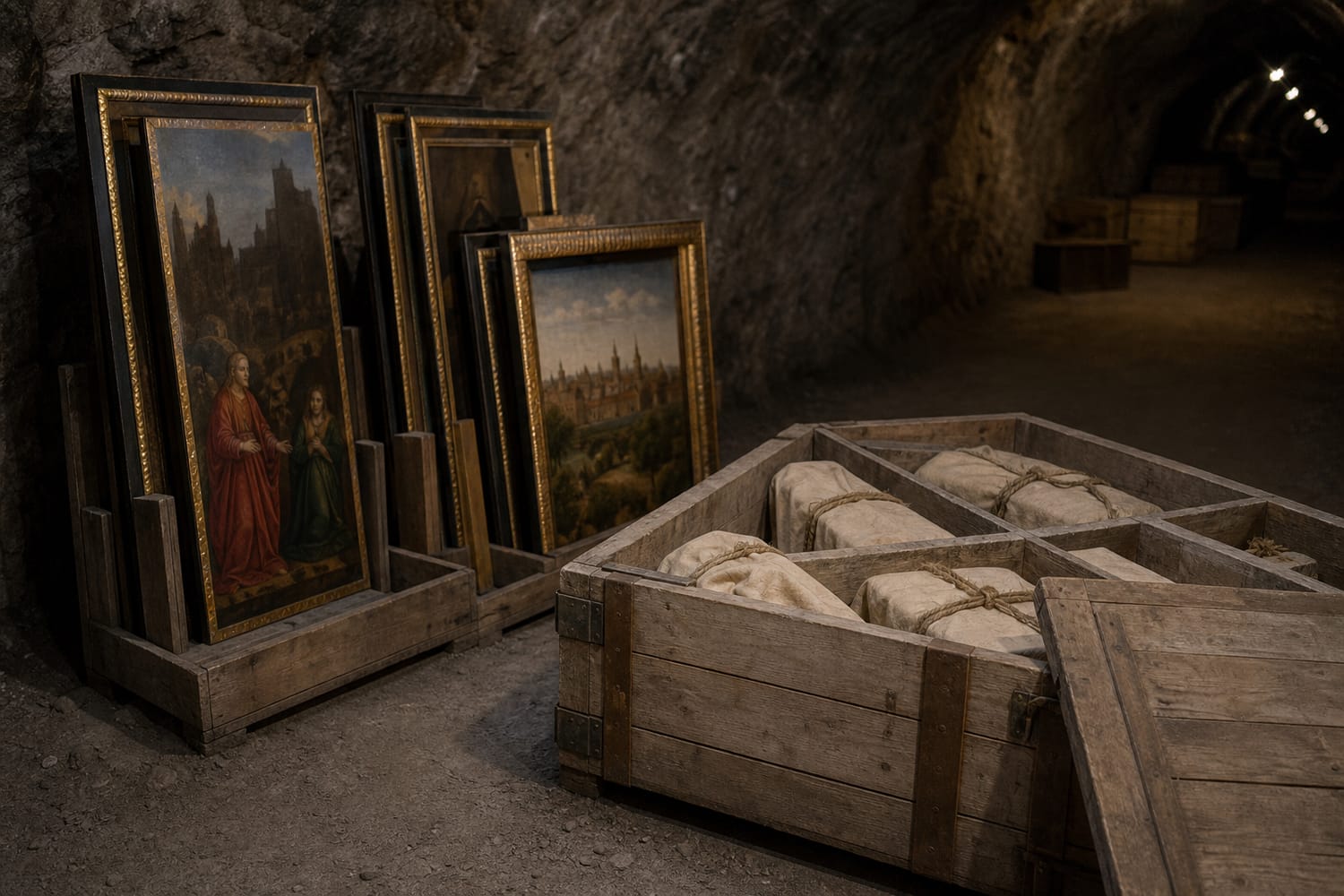
World War II placed the remaining panels in danger again. Belgian authorities attempted to send the work toward the Vatican, but Italy’s entrance into the war disrupted the plan. The altarpiece was temporarily stored in France before Nazi forces seized it in 1942.
Adolf Hitler wanted the masterpiece for his planned Führermuseum in Linz. Its return under the Treaty of Versailles had also made it a useful symbol for Nazi grievances against the post–World War I settlement.
The panels were eventually taken to the Altaussee salt mine in Austria, where the Nazis stored thousands of looted artworks. As Germany collapsed, explosives were placed inside the mine, threatening everything hidden there.
Local miners helped prevent the destruction. Allied forces and specialists associated with the Monuments, Fine Arts, and Archives program—popularly remembered as the Monuments Men—later recovered the altarpiece. It returned to Belgium in August 1945. The work had survived another forced journey, although the Just Judges was still absent.
Why It Kept Disappearing
Several factors made the Ghent Altarpiece unusually vulnerable:
- Its panels were portable: Unlike a wall fresco, the work could be dismantled and transported.
- It carried enormous prestige: Owning it suggested cultural authority and political power.
- Its religious imagery attracted enemies: Iconoclasts viewed it as a symbol of Catholic excess.
- Its sections had different custodians: Sales and changing ownership divided the masterpiece.
- War repeatedly reached Belgium: Ghent’s location placed the altarpiece in the path of invading armies.
- Its fame increased its appeal: Every theft made the work more legendary and desirable.
These same themes appear throughout the history of art heists that shocked the world: famous artworks are stolen not only for money, but also for status, leverage, ideology, and symbolism.
A Survivor With One Empty Space
The Ghent Altarpiece can now be viewed under carefully controlled and heavily secured conditions at St. Bavo’s Cathedral. Conservation specialists continue studying and restoring its remarkably detailed surfaces.
Yet one section still represents absence rather than survival. The copied Just Judges panel reminds every viewer that the altarpiece’s story remains unfinished.
That unresolved loss helps explain the masterpiece’s fascination. The Ghent Altarpiece is simultaneously a sacred object, an artistic revolution, political booty, a rescued war treasure, and evidence in a cold case. Its repeated disappearances reveal how people use art to express power—and how cultural treasures can become targets precisely because they matter so much.