A Market on the Scale of a City
Mexico City’s Central de Abasto is not simply a place to buy food. It is a 327-hectare distribution hub where farmers, wholesalers, truck drivers, retailers, and restaurant buyers keep one of the world’s largest urban populations supplied. Operating around the clock, this city-sized market handles roughly 30,000 tons of merchandise daily and supports tens of thousands of jobs.
Located in the eastern borough of Iztapalapa, the Central de Abasto—often shortened to CEDA—is considered the world’s largest wholesale market by area and volume of operations. Its warehouses, loading bays, roads, food stalls, offices, and service areas function like an independent commercial city.
Yet most consumers never see it. By the time a tomato appears at a neighborhood market or an avocado reaches a restaurant kitchen, it may already have passed through this enormous and largely invisible food machine.
Why the Market Was Built
For generations, much of Mexico City’s wholesale food trade centered on La Merced, near the historic downtown district. As the capital expanded, its narrow streets could no longer accommodate the increasing number of trucks, merchants, and agricultural products arriving every day.
The Central de Abasto opened in November 1982 to transfer large-scale distribution away from the congested city center. Architect Abraham Zabludovsky designed a complex capable of handling food on an almost industrial scale while maintaining the bargaining, relationships, and traditions associated with Mexican markets.
Today, CEDA covers 3.27 square kilometers—an area larger than Monaco. More than 2,000 businesses operate within the complex, serving hundreds of thousands of customers and helping food reach public markets, supermarkets, street vendors, hotels, restaurants, and small grocery stores.
The Nightly Race to Move Fresh Food
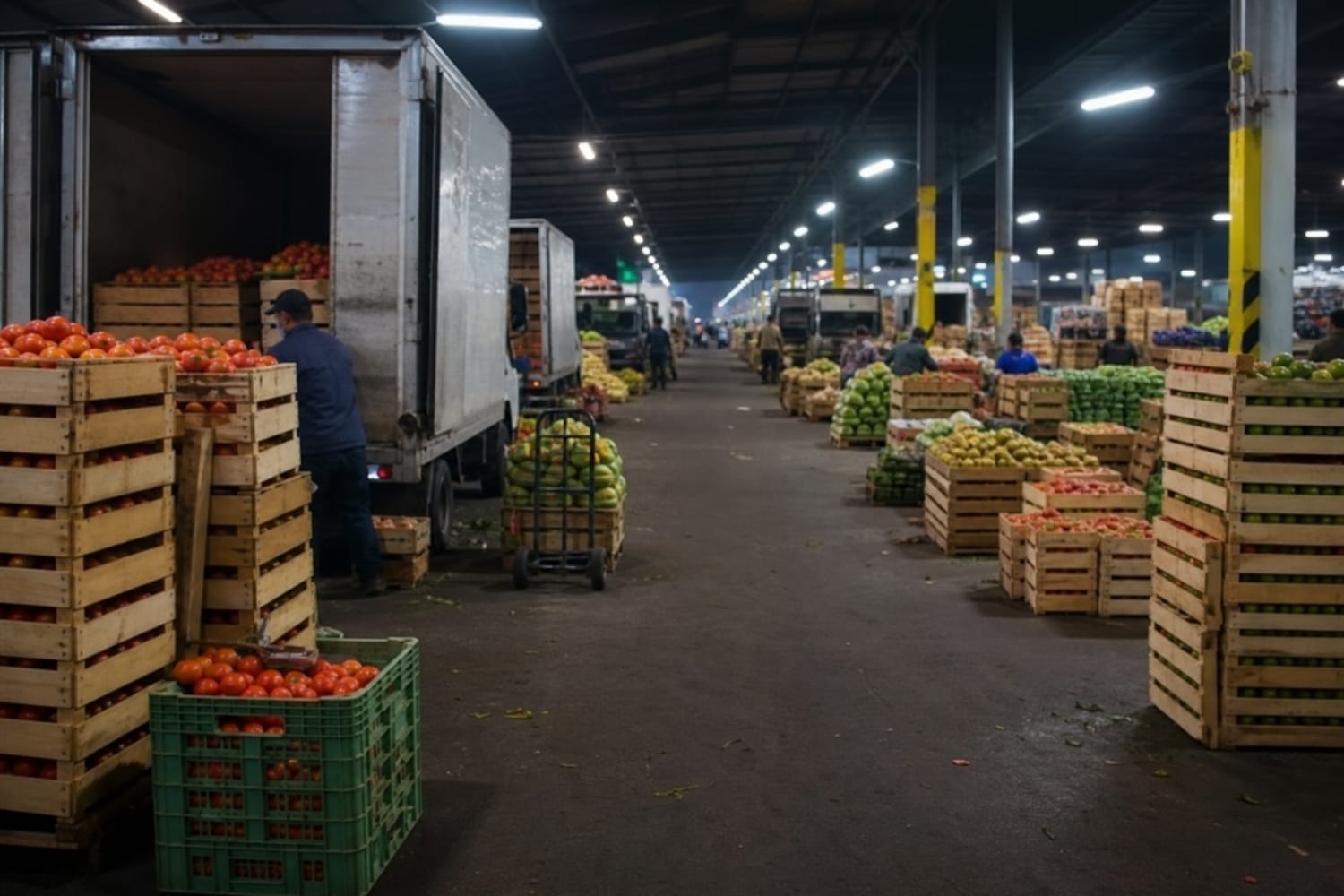
The market never truly sleeps. Activity intensifies late at night and before sunrise, when trucks arrive carrying produce from agricultural regions across Mexico. Some vehicles travel hundreds of miles with tomatoes, onions, citrus fruit, avocados, chiles, bananas, and other products that must be unloaded and sold quickly.
The basic supply chain follows several steps:
- Farmers and producers harvest, sort, and pack their goods.
- Trucks transport the products to the Central de Abasto.
- Wholesalers inspect shipments and negotiate prices.
- Workers unload and organize merchandise inside warehouses.
- Retailers, restaurateurs, and market traders purchase what they need.
- Smaller vehicles distribute those purchases throughout the metropolitan area.
Speed matters because fresh food loses value with every hour spent waiting. A damaged box, delayed truck, or poorly stored shipment can reduce quality and profit. The market’s huge loading areas and specialized sectors are designed to keep merchandise moving rather than sitting still.
A Marketplace Divided into Specialized Zones
The Central de Abasto is arranged by product and commercial activity. Its principal zones include groceries, fruits and vegetables, flowers and horticultural products, meat and poultry, producer sales, packaging, and transfer facilities. The market’s official guide to its commercial sectors reveals the scale and specialization behind what might otherwise appear to be controlled chaos.
The fruit and vegetable halls are among the busiest. Boxes are stacked high with familiar staples and seasonal harvests, while merchants compare color, size, ripeness, origin, and price. Elsewhere, grocery warehouses hold grains, dried chiles, spices, dairy products, sweets, seeds, and packaged foods.
This is not the oversized food spectacle found in stories about record-breaking feasts and enormous portions. The quantities at CEDA are enormous because they serve a practical purpose: feeding a megacity every day.
The People Behind the Supply Chain
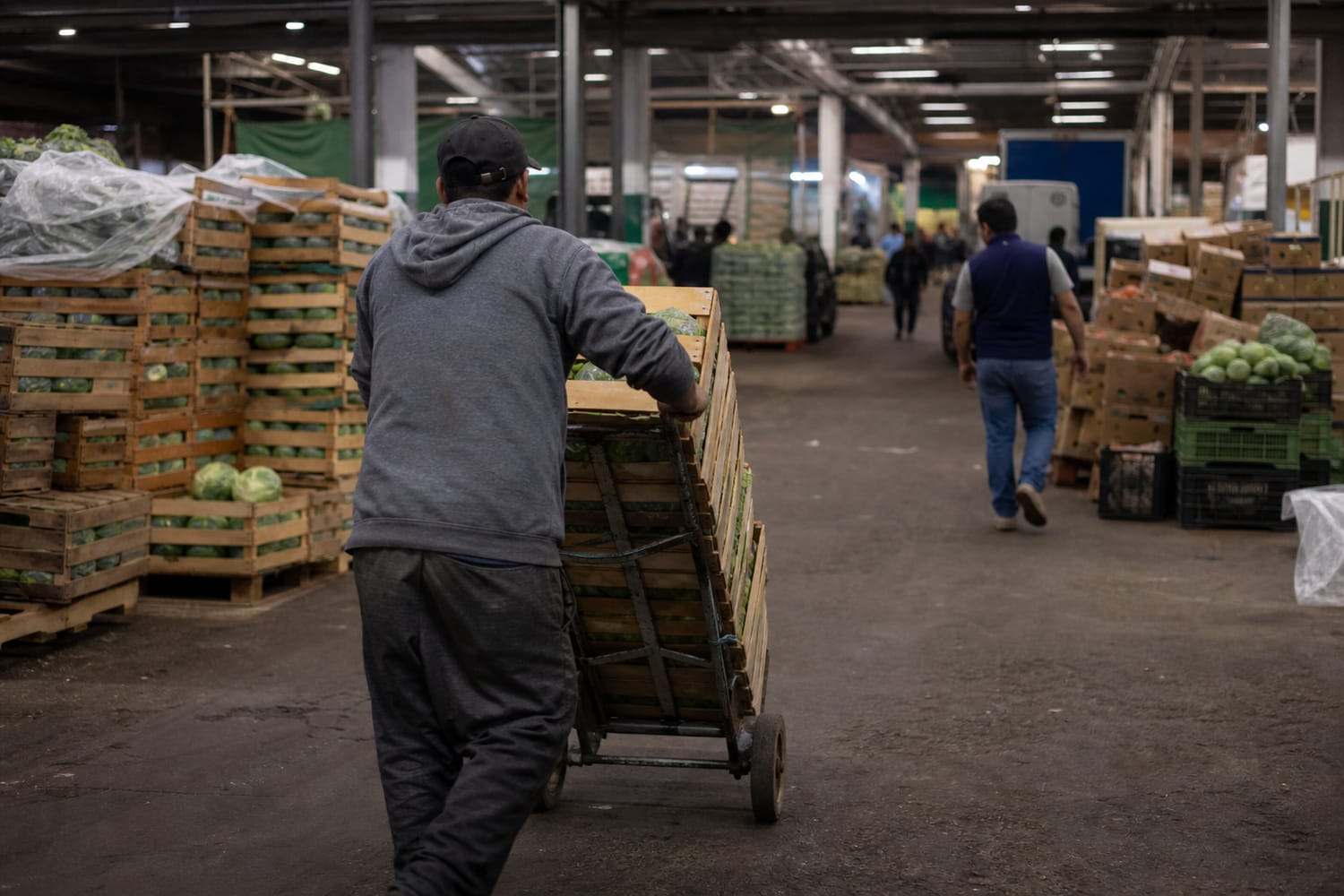
A market this large depends on human labor as much as infrastructure. Drivers navigate crowded service roads, merchants negotiate purchases, warehouse workers assemble orders, security teams monitor activity, and cleaners manage the waste produced by constant trading.
Among the most recognizable workers are the diableros, handcart operators named after the two-wheeled carts known as diablos. They transport heavy stacks of boxes through busy corridors, warning others as they pass. Their work connects loading bays, warehouses, shops, and waiting vehicles.
The market generates approximately 70,000 direct jobs, while many more livelihoods depend indirectly on its activity. Farmers need reliable buyers, neighborhood merchants need affordable inventory, and restaurants need ingredients delivered in predictable quantities.
Food stalls also serve the market’s enormous workforce. These informal dining spaces provide tacos, soups, stews, and other practical meals to people working long shifts, making them part of CEDA’s social fabric rather than a separate attraction.
How One Market Influences Food Prices
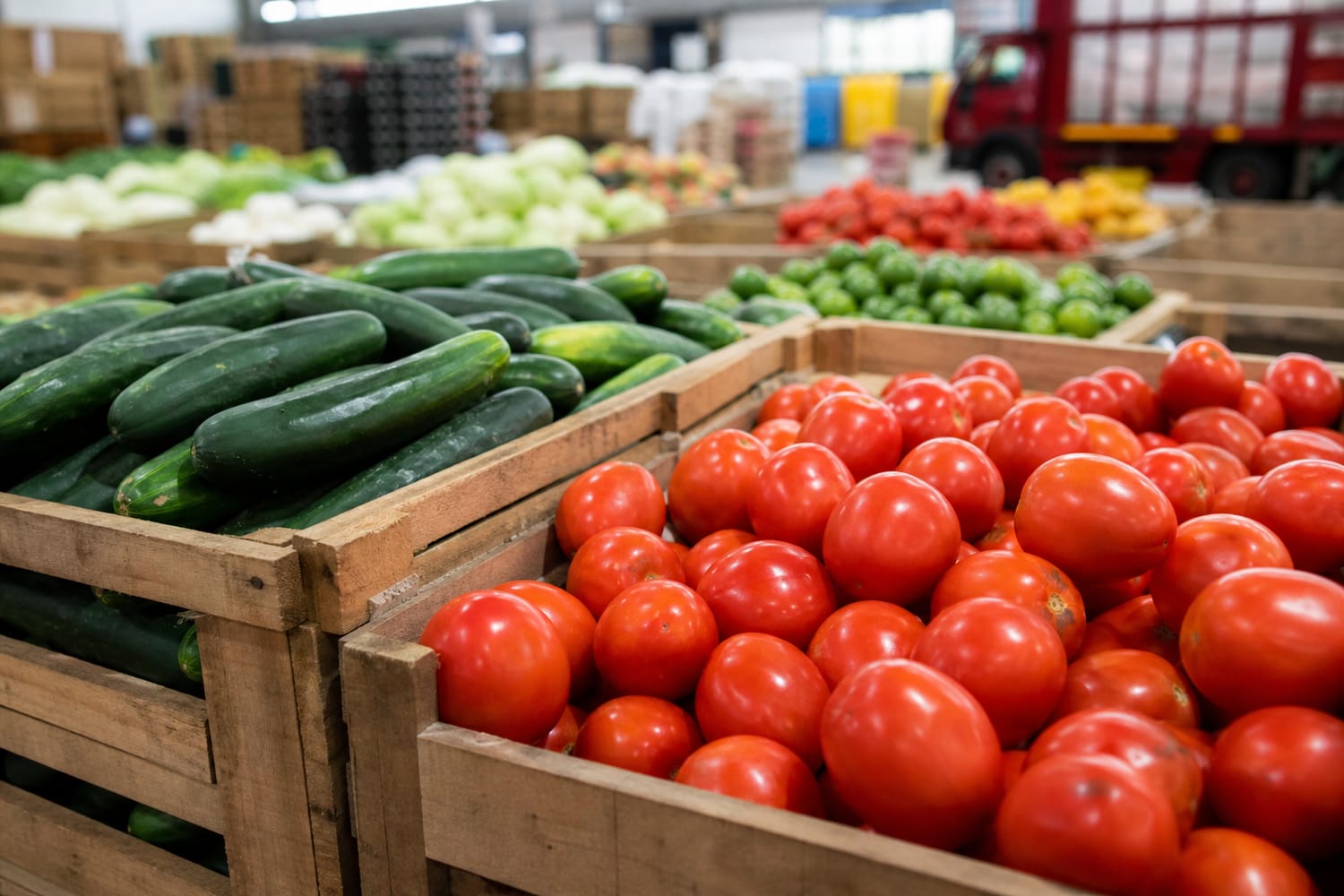
The Central de Abasto does more than distribute food. Because so many buyers and sellers meet there, transactions within the market help establish reference prices used elsewhere.
An abundant harvest may push wholesale prices downward. Drought, frost, transport disruption, fuel costs, or unexpectedly high demand can have the opposite effect. These changes eventually reach neighborhood stalls, supermarkets, restaurants, and household budgets.
The market also connects small agricultural communities with one of Latin America’s most important consumer centers. A producer may never sell directly to a family in central Mexico City, but CEDA provides the commercial bridge that makes the final sale possible.
For readers fascinated by the scale and variety of global eating habits, the site’s collection of food records and culinary trivia offers another perspective on how food connects commerce, culture, and human ambition.
The Challenge of Preventing Waste
Moving tens of thousands of tons of merchandise creates an unavoidable challenge: not every item is sold in time. Bruising, over-ripening, improper handling, and changing demand can turn edible produce into waste.
CEDA has introduced food-rescue and redistribution efforts, including programs that direct suitable surplus products toward vulnerable communities. Research into food loss and waste at the Central de Abasto has also examined why vendors discard products and how prevention strategies can be improved.
Modernization projects have included upgraded drainage, improved roads, security infrastructure, biodiesel production, and a large rooftop solar-energy installation. These initiatives reflect a broader reality: feeding millions sustainably requires more than increasing supply. It also requires reducing spoilage, using energy efficiently, and finding productive uses for unavoidable waste.
The Hidden Engine Behind Everyday Meals
The Central de Abasto demonstrates that a city’s food system is built on coordination. Every ordinary meal depends on farms, highways, warehouses, negotiations, physical labor, refrigeration, packaging, and countless early-morning deliveries.
Its scale may be record-breaking, but its importance is measured in something more familiar: stocked market stalls, functioning restaurant kitchens, and food on household tables. While shoppers see individual ingredients, CEDA reveals the vast network behind them.
This extraordinary wholesale market is ultimately more than a collection of warehouses. It is a living piece of urban infrastructure—a city within a city whose daily purpose is to ensure that millions of people can eat.