A Taste of the Distant Past
Food is one of the most fragile things humans make. It molds, rots, dries out, gets eaten by insects, or simply disappears into the soil. That is why ancient food discoveries feel almost magical. When archaeologists uncover a sealed jar of honey, a lump of butter from a bog, or a loaf of bread baked thousands of years ago, it is more than an unusual find. It is a direct connection to ordinary people from the past: what they cooked, stored, traded, valued, and sometimes buried for the afterlife.
Some of these foods have survived for centuries. Others have lasted for millennia. A few are technically still edible, although “edible” does not always mean “advisable.” Many ancient foods are chemically preserved by dryness, cold, salt, acidity, lack of oxygen, or natural antimicrobial properties. They are time capsules, carrying flavors, ingredients, and food habits across an astonishing span of human history.
Ancient Honey That Never Seems to Spoil
Honey is perhaps the most famous ancient food that can remain edible for a very long time. Archaeologists have found pots of honey in ancient Egyptian tombs, some dating back thousands of years. Reports often claim that honey discovered in tombs was still usable, and while not every story is easy to verify, the science behind honey’s longevity is very real.
Honey resists spoilage because it contains very little water and is naturally acidic. Its high sugar concentration draws moisture out of bacteria and other microbes, making it difficult for them to survive. Bees also add enzymes that produce small amounts of hydrogen peroxide, giving honey additional antimicrobial power.
In ancient Egypt, honey was both food and medicine. It was used to sweeten breads and drinks, treat wounds, and serve as an offering to the gods. Finding honey in tombs shows how valuable it was. To place it beside the dead was to provide nourishment, luxury, and perhaps healing in the next world.
Even modern honey can crystallize or darken over time, but it is often restored by gentle warming. That makes honey one of the closest things we have to a naturally shelf-stable ancient food.
Bog Butter Preserved in Peat
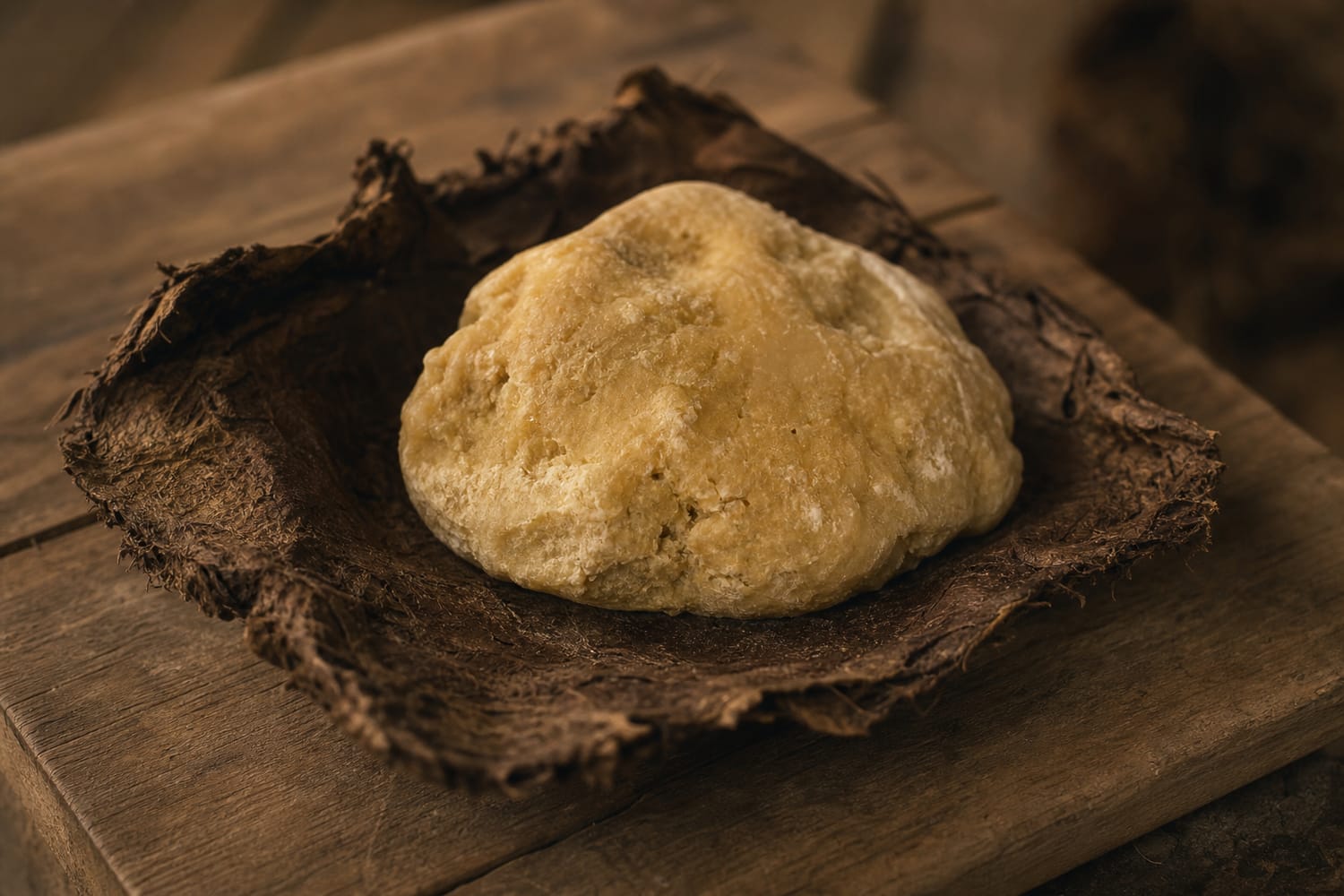
Across Ireland and Scotland, people cutting peat have occasionally uncovered large waxy lumps buried deep in the bog. These mysterious masses turned out to be ancient butter, sometimes more than 2,000 years old. Known as bog butter, these finds are among the strangest surviving foods in Europe.
Peat bogs are excellent preservers. They are cold, acidic, low in oxygen, and often full of compounds that slow bacterial decay. These conditions can preserve wood, leather, bodies, and, apparently, dairy fat. Some bog butter was packed into wooden containers, animal skins, or bark before being buried.
Why would anyone bury butter? Scholars have suggested several possibilities. It may have been a way to store food before refrigeration. The cool bog environment could have acted like a natural cellar. Some believe the butter was buried to improve flavor, similar to aging cheese. Others think it may have been an offering, a hidden reserve, or even a form of wealth.
Would anyone eat it today? A few brave tasters have sampled ancient bog butter, describing it as crumbly, cheesy, waxy, or pungent. But eating archaeological food is generally discouraged. These objects are more valuable as evidence than as snacks.
The World’s Oldest Cheese
Cheese is already a preserved food, so it is no surprise that ancient examples have survived. One of the most famous discoveries came from Egypt, where archaeologists identified a solid white substance in a tomb at Saqqara as cheese dating back more than 3,000 years. It was found inside broken jars in the tomb of Ptahmes, a high-ranking official.
Chemical analysis revealed proteins from cow, sheep, or goat milk, confirming that the material was indeed cheese. It may be one of the oldest known solid cheeses ever found.
Another extraordinary find came from China’s Xiaohe Cemetery, where lumps of kefir-like cheese were discovered on the necks and chests of naturally mummified bodies. These cheeses are around 3,600 years old and were preserved by the dry desert environment. Researchers found that they were made using fermentation methods involving bacteria and yeast, much like kefir.
Ancient cheese tells us a great deal about early food technology. Turning milk into cheese made it last longer, easier to transport, and easier to digest for people with lactose intolerance. Cheese was not just a luxury. It was a practical solution to the challenge of preserving nutrition.
Bread Older Than Agriculture
Bread is often linked with farming, but one remarkable discovery suggests people were baking bread before agriculture fully developed. At a site called Shubayqa 1 in Jordan, archaeologists found charred remains of flatbread dating back about 14,400 years. That makes it older than the widespread cultivation of grain.
The bread was made by hunter-gatherers using wild cereals and tubers. The ingredients were ground, mixed with water, and baked on hot stones or in ashes. Because the bread was charred, it survived; otherwise, it would have vanished completely.
This discovery changed how researchers think about the origins of farming. Perhaps people did not begin farming only because they needed more food. They may have been motivated by a desire to make special foods like bread more reliably. In other words, the craving for bread may have helped push humans toward agriculture.
The ancient flatbread was probably dense, coarse, and earthy in flavor. It would not resemble a modern fluffy loaf, but it was recognizably bread: ground plants, water, heat, and human intention.
A Bowl of 4,000-Year-Old Noodles
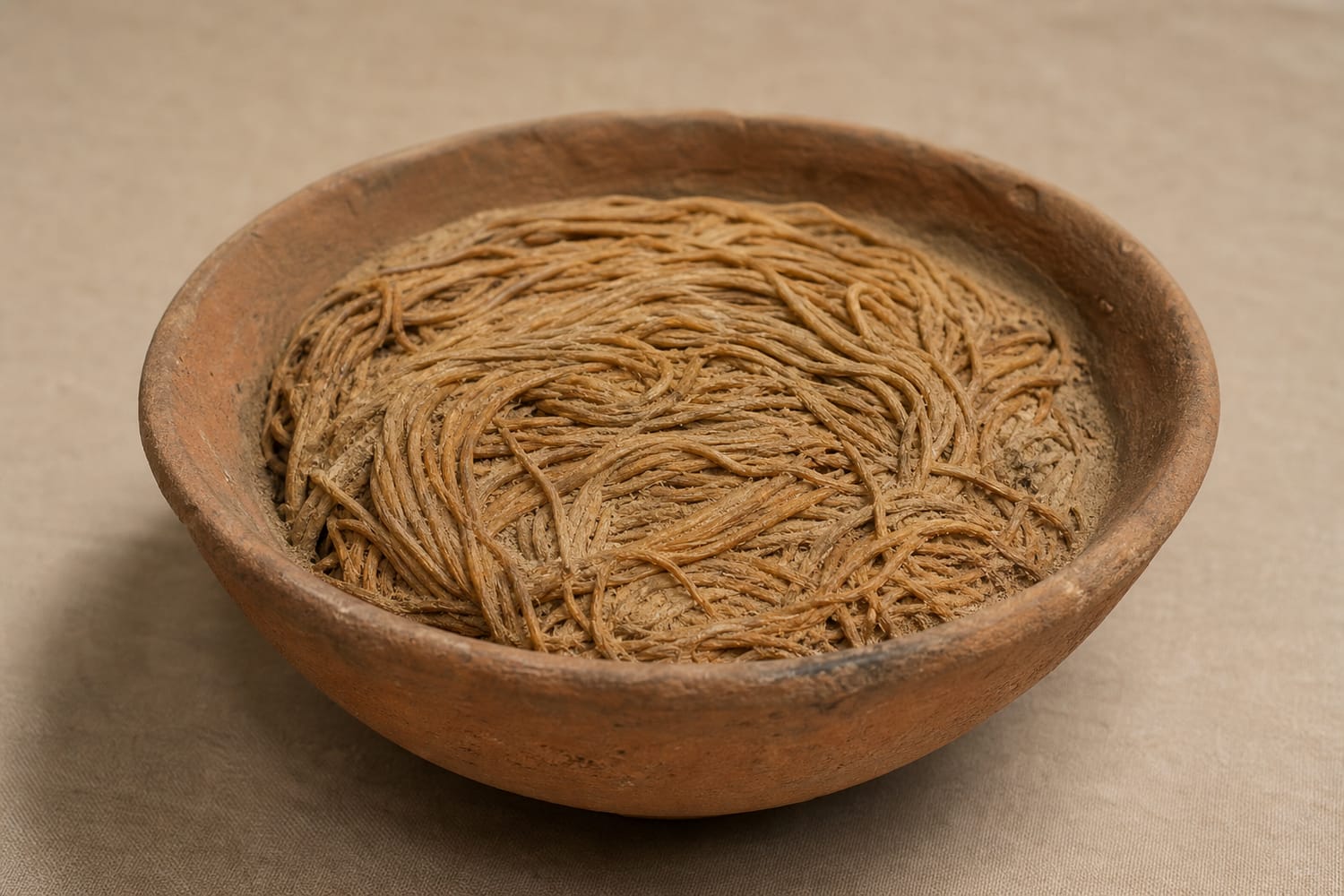
In 2005, archaeologists in China announced the discovery of a sealed bowl containing noodles about 4,000 years old. The bowl was found at the Lajia archaeological site, sometimes called “China’s Pompeii,” where an earthquake and flood appear to have suddenly buried a settlement.
The noodles were preserved under layers of sediment in an overturned clay bowl. They were long, thin, and yellowish, made from millet rather than wheat. This was important because it showed that noodle-making in ancient China used locally available grains.
The find sparked discussion about the origins of noodles, a food claimed by multiple culinary traditions. Whether noodles first appeared in China, Central Asia, or elsewhere remains debated, but the Lajia noodles are among the oldest physical examples ever discovered.
Their survival depended on disaster. The same event that destroyed the settlement sealed the food away from air and contamination. For archaeologists, tragedy sometimes creates preservation.
Ancient Wine Sealed in Jars and Bottles
Wine has also survived from the ancient world, though rarely in a drinkable state. Archaeologists have found wine residues in jars dating back thousands of years in places such as Georgia, Iran, Armenia, and Egypt. These residues are usually identified through chemical traces like tartaric acid, a marker associated with grapes.
One famous example of ancient liquid wine is the Speyer wine bottle, discovered in a Roman tomb in Germany and dated to around the 4th century CE. The glass bottle contains liquid, though it is not something anyone is eager to open. A layer of olive oil and a wax seal likely helped protect the contents from evaporation and oxidation.
Ancient wine was often very different from modern wine. It might be mixed with herbs, honey, seawater, resin, or spices. In some cultures, wine was safer than untreated water and played a major role in religion, medicine, trade, and social life.
Even when ancient wine is no longer drinkable, it reveals networks of agriculture and exchange. A jar of wine residue can tell us where grapes were grown, how drinks were flavored, and how communities celebrated.
Pemmican and Survival Foods Built to Last
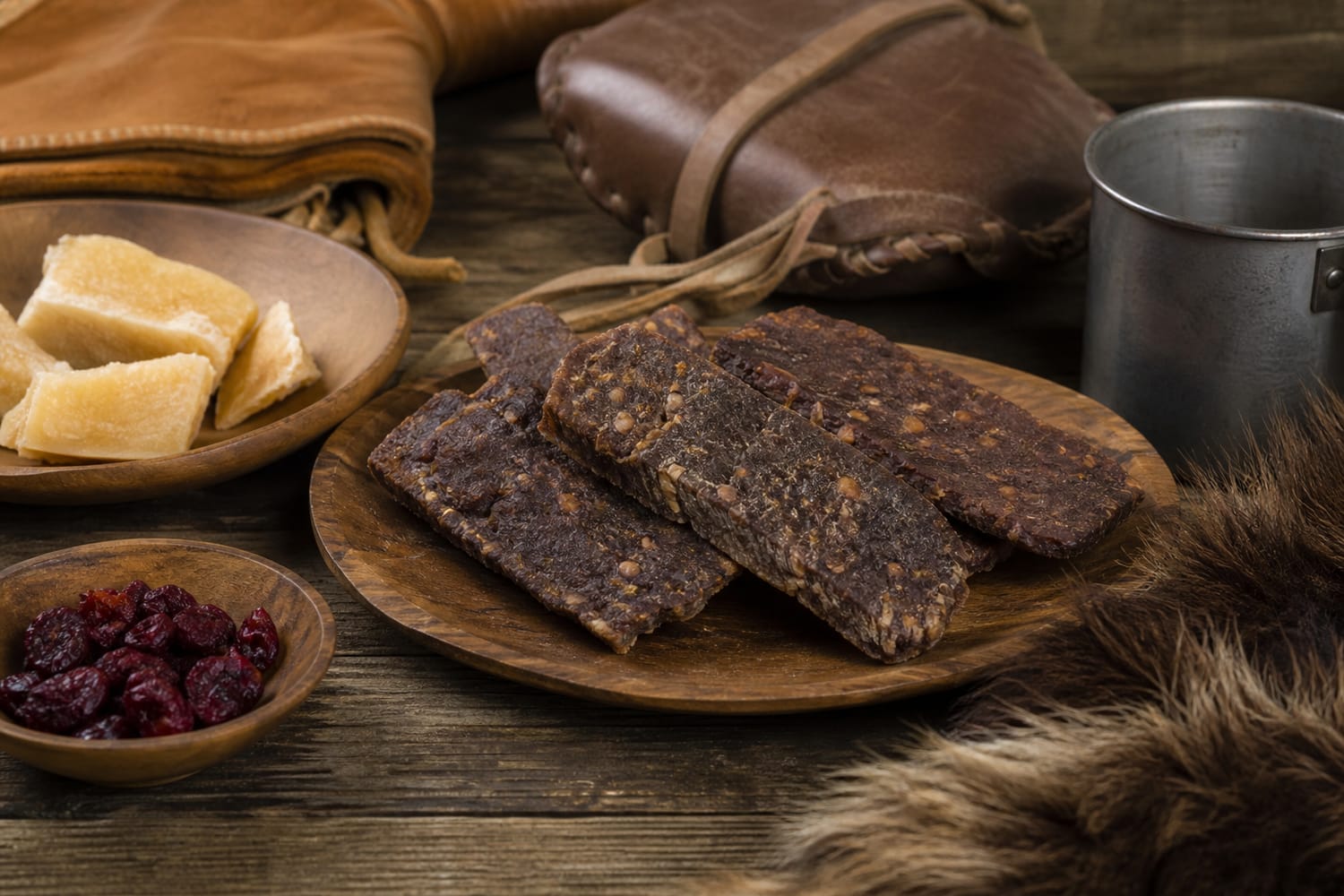
Not all long-lasting foods come from ancient tombs. Some traditional survival foods were designed specifically to endure months or years. Pemmican, made by Indigenous peoples of North America, is one of the best examples. It typically combines dried meat, rendered fat, and sometimes berries. When prepared and stored properly, pemmican is calorie-dense, portable, and remarkably durable.
European fur traders, explorers, and Arctic expeditions relied heavily on pemmican because it provided concentrated energy in harsh conditions. While historic pemmican is not usually found in archaeological contexts like Egyptian honey or Chinese noodles, it belongs in the story of edible time capsules because it shows intentional preservation at its most practical.
Other durable foods include hardtack, dried fish, salted meat, fermented vegetables, and dried fruit. These foods powered armies, sailors, caravans, and migrants. Their purpose was simple: survive the journey.
Why Some Foods Survive for Centuries
The oldest foods ever found usually survived because something interrupted the normal process of decay. Sometimes that “something” was intentional: drying, salting, fermenting, smoking, sealing, or burying food in cool ground. Other times, preservation happened by accident through fire, flood, freezing, desert dryness, or oxygen-poor environments.
Charred foods, like ancient bread, survive because they have been transformed into carbon-rich remains. Frozen foods can remain intact if they stay continuously cold. Desert foods dry out before microbes can destroy them. Bog foods are protected by acidity and lack of oxygen. Sealed jars can keep out moisture and insects.
Still, ancient food is delicate. Once exposed to modern air, humidity, and bacteria, it can deteriorate quickly. That is why archaeologists handle these finds carefully and often prioritize laboratory analysis over public display.
What Ancient Foods Teach Us
Old food discoveries are fascinating because they make history feel intimate. A sword or palace wall may show power, but a bowl of noodles shows daily life. A lump of cheese suggests herding, fermentation, and taste. A jar of honey reveals medicine, sweetness, and ritual. A burned piece of bread tells us that someone gathered grain, ground it, mixed dough, and cooked a meal more than 14,000 years ago.
These foods remind us that people of the past were not abstract figures in textbooks. They had cravings, skills, recipes, celebrations, and worries about storage. They preserved food for winter, packed provisions for travel, honored their dead with offerings, and experimented with flavors.
The oldest foods ever found are not just curiosities. They are messages from vanished kitchens. They show that eating has always been more than survival. It is culture, memory, technology, and identity—preserved, sometimes against all odds, in the most unlikely places.