A Doorway Into Three Centuries of Dining
In the heart of Madrid, tucked along the narrow, lively Calle de Cuchilleros near Plaza Mayor, stands a restaurant that feels less like a business and more like a time machine. Its name is Sobrino de Botín, often simply called Botín, and it holds a remarkable distinction: it is widely recognized by Guinness World Records as the oldest restaurant in the world still in continuous operation.
Founded in 1725, Botín has survived monarchs, wars, revolutions, changing food trends, and the rise of modern tourism. Yet step inside today and you will still find a restaurant built around many of the same pleasures that drew diners nearly 300 years ago: wood-fired roasting, hearty Castilian dishes, warm hospitality, and the quiet drama of eating in a place where history is not decoration, but part of the walls.
Botín is not merely old. Many buildings are old. Many taverns claim ancient roots. What makes Botín extraordinary is continuity. For generation after generation, people have come here to eat, drink, talk, celebrate, and watch the world change outside while the ovens inside keep burning.
The Origins of Sobrino de Botín
The story begins in the early 18th century, when Madrid was growing into its identity as Spain’s capital. In 1725, a French cook named Jean Botín and his wife opened an inn and eating house. After their time, the establishment passed to a nephew, which is where the name “Sobrino de Botín” comes from. In Spanish, “sobrino” means nephew.
This detail is more than a charming footnote. It reflects how restaurants of the period were often family affairs, passed down through relatives, apprentices, and trusted hands. The idea of a restaurant as we understand it today—a place where anyone could choose from a menu and dine at their own table—was still developing in Europe. Botín belongs to that early chapter of public dining, when inns, taverns, and eating houses began evolving into restaurants with recognizable identities.
The building itself is even older than the restaurant. Its brick façade and traditional architecture blend into the surrounding streets, but inside, the layers of age become unmistakable. Low ceilings, tiled rooms, wooden beams, and stone cellars give the impression that time has accumulated rather than passed.
The Famous Wood-Fired Oven
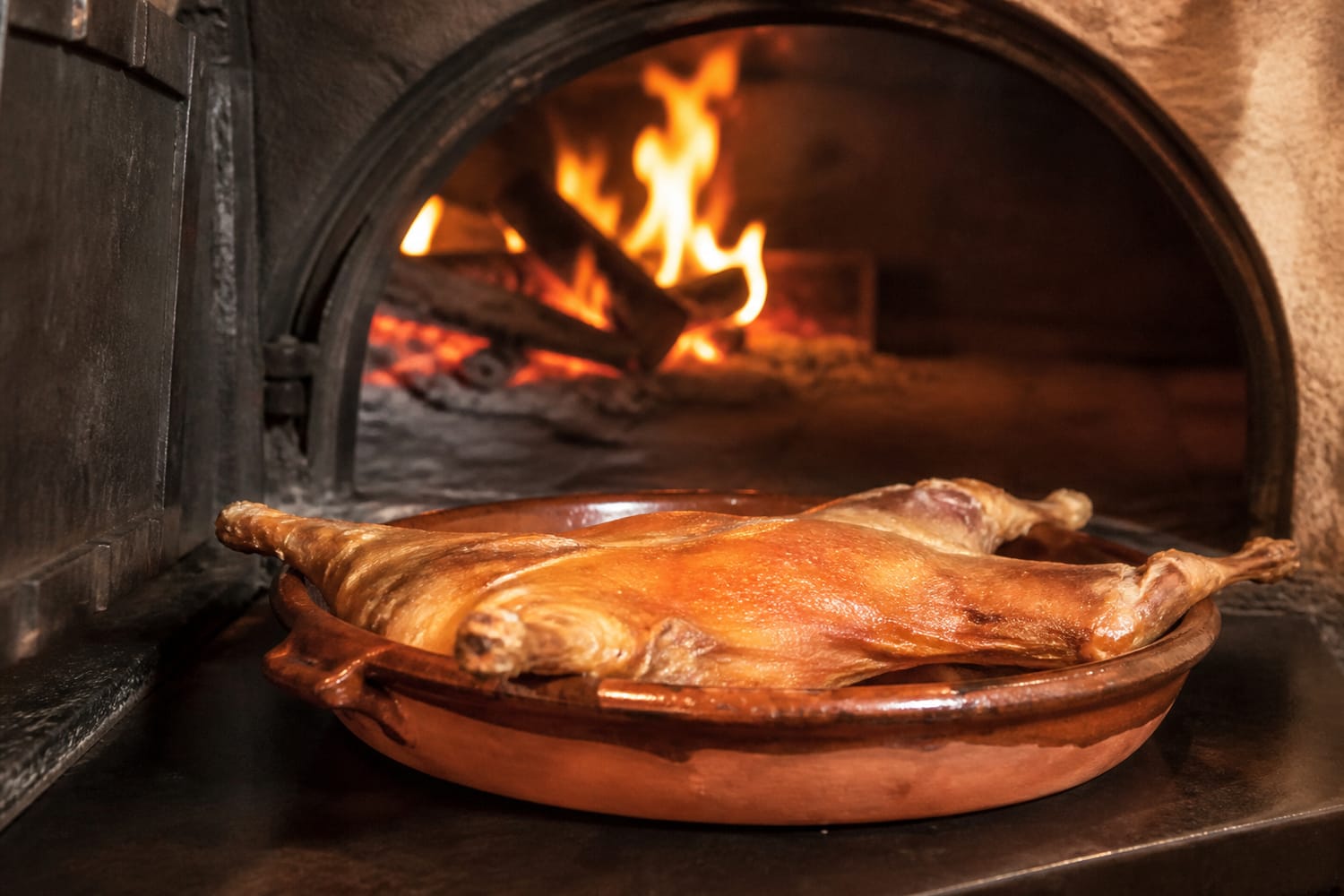
At the center of Botín’s legend is its oven. The restaurant is famous for claiming that its original wood-fired oven has remained in use since the 18th century. Whether one focuses on the literal continuity of the oven or the culinary tradition it represents, there is no doubt that roasting is the soul of the place.
The signature dish is cochinillo asado, or roast suckling pig. Prepared in the Castilian style, it arrives with crisp golden skin and tender meat that practically falls apart. Another classic is cordero asado, roast lamb, also cooked slowly and simply to emphasize flavor rather than complexity.
The cooking at Botín is not about foam, towers, or reinvention. It is about heat, timing, wood smoke, and patience. These are old skills, and they are difficult to fake. The dishes are generous, earthy, and direct, rooted in Spanish tradition rather than culinary performance.
Eating roast suckling pig in a restaurant that has specialized in it for centuries is part meal, part ritual. You are tasting something that has survived because it works.
Madrid Around the Restaurant
To understand Botín, it helps to understand its neighborhood. The restaurant sits just steps from Plaza Mayor, one of Madrid’s most historic public squares. Over the centuries, this area has seen markets, festivals, royal ceremonies, bullfights, political gatherings, and everyday city life.
Calle de Cuchilleros, where Botín is located, takes its name from the knife makers who once worked in the area. The street curves downward from the plaza, lined with old taverns and traditional façades. It is exactly the kind of place where you can imagine mule carts, merchants, students, soldiers, and travelers passing through in earlier centuries.
Madrid today is a modern European capital, full of museums, nightlife, business districts, and international restaurants. But around Botín, the older city remains easy to feel. The stones, alleys, and taverns preserve a sense of Madrid before glass towers and metro lines.
That setting helps explain why Botín has become more than a restaurant. It is part of the city’s memory.
Writers, Artists, and Famous Guests
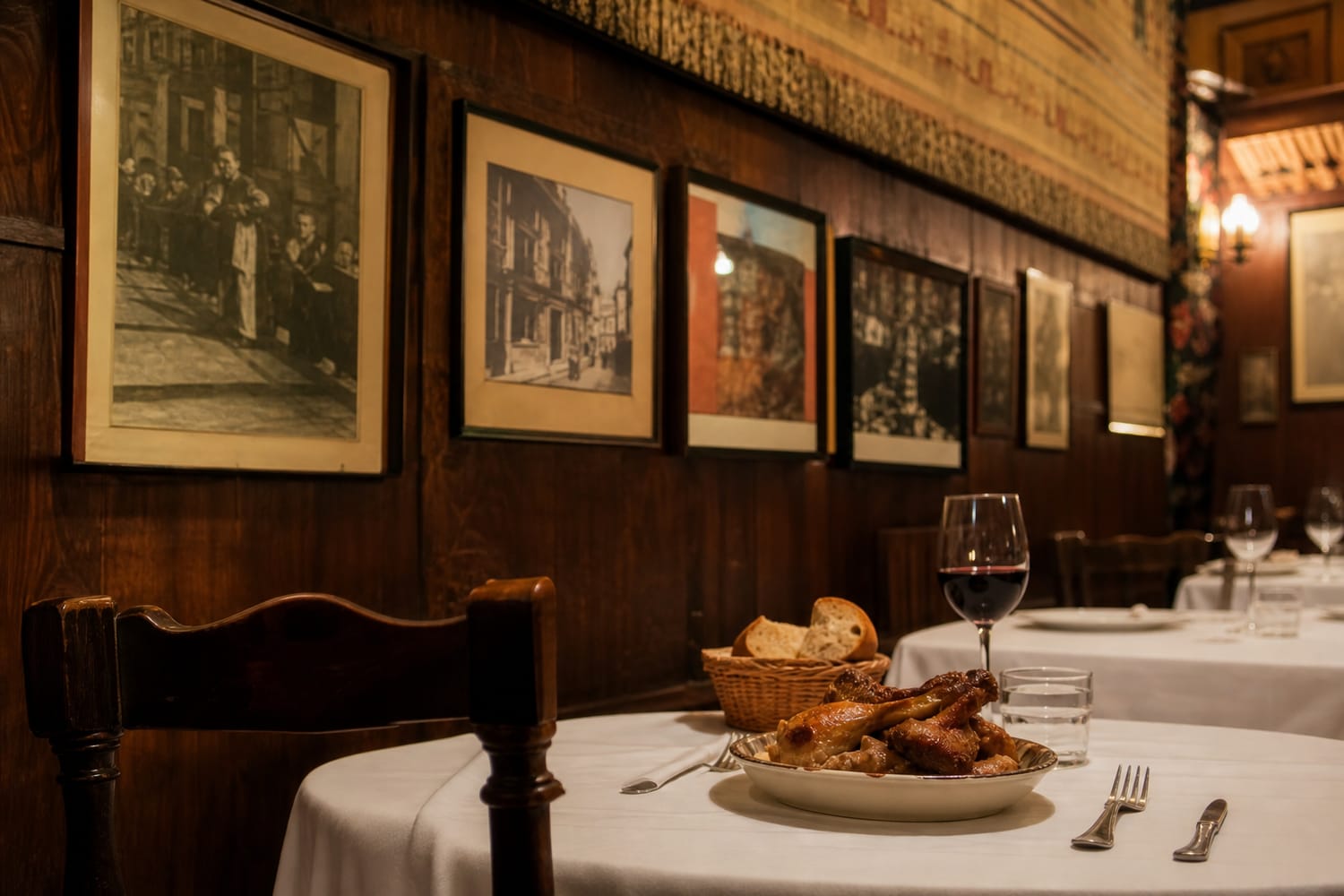
Botín’s long life has naturally attracted legends. One of the most famous names associated with the restaurant is Ernest Hemingway, who loved Spain and wrote often about its food, drink, and atmosphere. He mentioned Botín in “The Sun Also Rises,” helping introduce it to generations of English-speaking readers.
For Hemingway, places like Botín represented something vivid and authentic: a world of wine, conversation, roast meats, and old customs. His connection to the restaurant remains a major part of its international fame.
Another frequently repeated story links the young Francisco Goya to Botín, suggesting that he worked there before becoming one of Spain’s greatest painters. Like many old-restaurant legends, this tale is difficult to verify with certainty, but it has become part of the folklore surrounding the place.
Over the years, Botín has welcomed celebrities, politicians, travelers, chefs, and curious diners from all over the world. Yet its appeal does not depend only on famous guests. The real charm lies in the fact that ordinary people have been coming through the same doors for centuries.
What It Is Like to Eat There Today
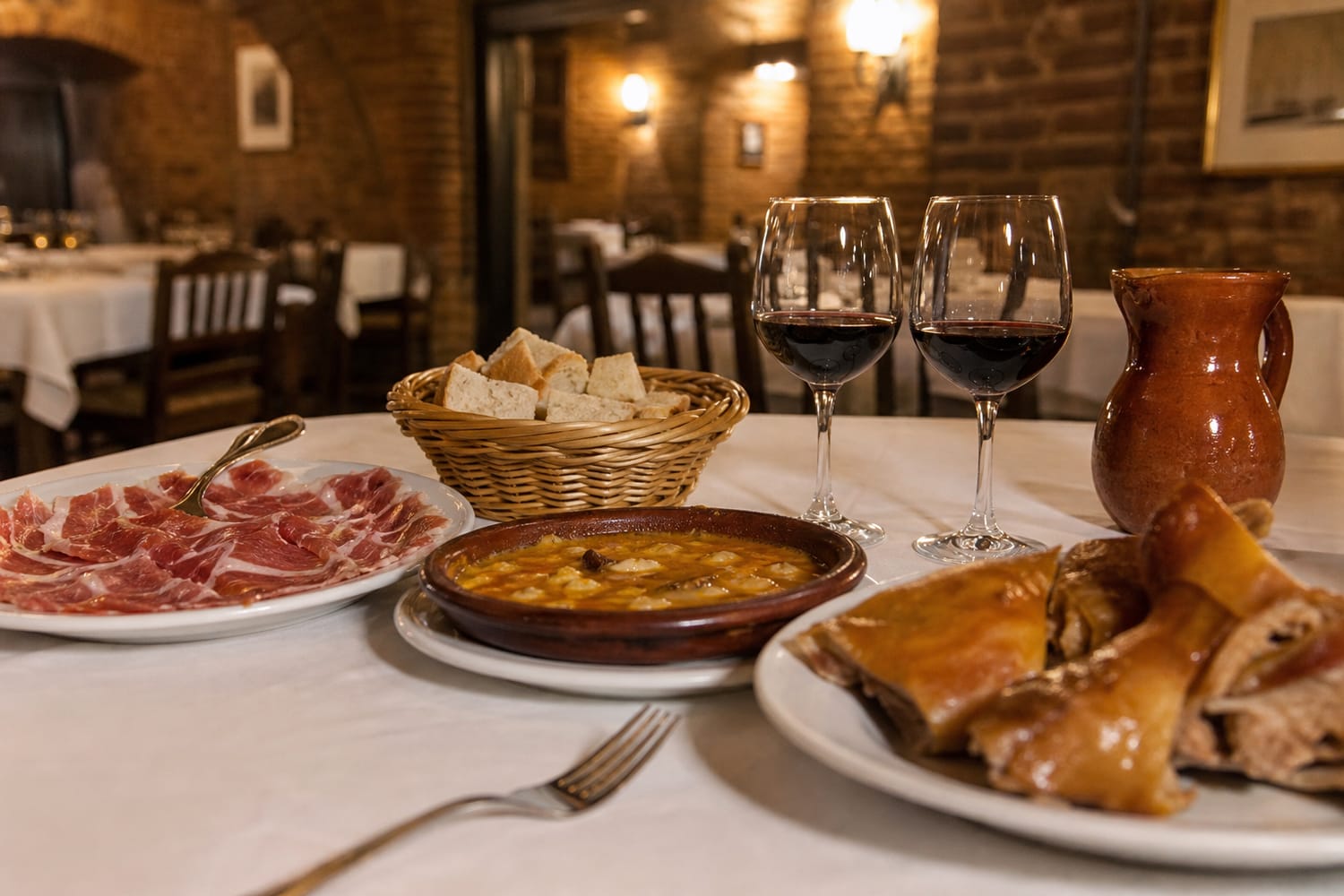
Despite its fame, Botín still feels like a traditional restaurant rather than a museum. Diners are seated across several atmospheric rooms, including vaulted cellar spaces that seem made for long meals and red wine. The service is professional, practiced, and accustomed to visitors who arrive with high expectations.
The menu features Spanish classics: garlic soup, gazpacho, Iberian ham, seafood, roasted meats, vegetables, and desserts such as flan or cheesecake. But most first-time visitors come for the roast suckling pig or lamb, and for good reason.
A meal at Botín is not necessarily the most experimental dining experience in Madrid, nor is it trying to be. The pleasure lies in continuity. You go because the restaurant knows exactly what it is. It has no need to chase trends when its identity has been tested by three centuries of diners.
Reservations are strongly recommended, especially during busy travel seasons. Because of its Guinness recognition and central location, Botín is popular with tourists, but locals and Spanish visitors also continue to dine there. It remains part of Madrid’s living food culture, not merely a stop on a checklist.
Why Longevity Matters
Restaurants are fragile things. Even beloved establishments can disappear because of rent increases, family changes, economic crises, fires, wars, or simple shifts in taste. To remain open for nearly 300 years is astonishing.
Botín’s survival tells us something about the power of tradition when it is carefully maintained. It also reminds us that food can be a form of cultural preservation. Recipes, dining rooms, service habits, and even the smell of roasting meat can carry memory across generations.
In a world where restaurants often open with great hype and vanish within a few years, Botín stands for a slower kind of success. Its fame was not built overnight. It came from repetition: opening the doors, lighting the oven, feeding people, and doing it again the next day.
That kind of endurance is rare, and it deserves attention.
More Than a Record
Calling Sobrino de Botín the oldest restaurant in the world is accurate according to Guinness World Records, but the phrase can make it sound like a curiosity, as if age alone were the point. The real reason Botín matters is not just that it opened in 1725. It matters because it is still serving meals with purpose and pride.
The restaurant connects past and present in the most human way possible: through food. You sit down, order, eat, talk, and become part of the same ongoing story as countless diners before you.
Nearly 300 years after its founding, Botín remains a reminder that some experiences do not need to be reinvented to remain meaningful. A warm room, a good meal, a bottle of wine, and a sense of history can still be enough.
In Madrid, the old oven keeps burning. And people are still gathering around it.