A Fruit That Redefined “Big”
Jackfruit is the world’s largest tree-borne fruit, with exceptional specimens weighing more than many adults can comfortably lift. Yet its record-breaking size is not simply a botanical accident. Jackfruit’s unusual flower structure, trunk-growing habit, tropical environment, and long relationship with human cultivation all helped turn it into a genuine giant.
Native to tropical Asia, the jackfruit tree produces green, armored-looking fruits that can approach 3 feet in length. According to Guinness World Records, the heaviest recorded jackfruit weighed 42.72 kilograms, or 94 pounds 2.9 ounces, on June 23, 2016.
One Fruit Made From Hundreds of Flowers
Jackfruit’s most important secret is that it is not a simple fruit like a mango or peach. Botanically, it is a multiple fruit, formed when hundreds—or sometimes thousands—of individual flowers develop together into one enormous structure.
Each fertilized female flower contributes to the finished jackfruit. The sweet yellow bulbs inside are associated with individual flowers, while the surrounding fibers, core, rind, and seeds combine into a single massive package.
This construction method gives jackfruit an advantage in the size department. Instead of one flower and one ovary producing a fruit, an entire flower cluster merges into a unified body. Pineapples develop through a broadly similar multiple-fruit process, but jackfruit takes that strategy to a far greater scale.
Why Jackfruit Grows on the Trunk
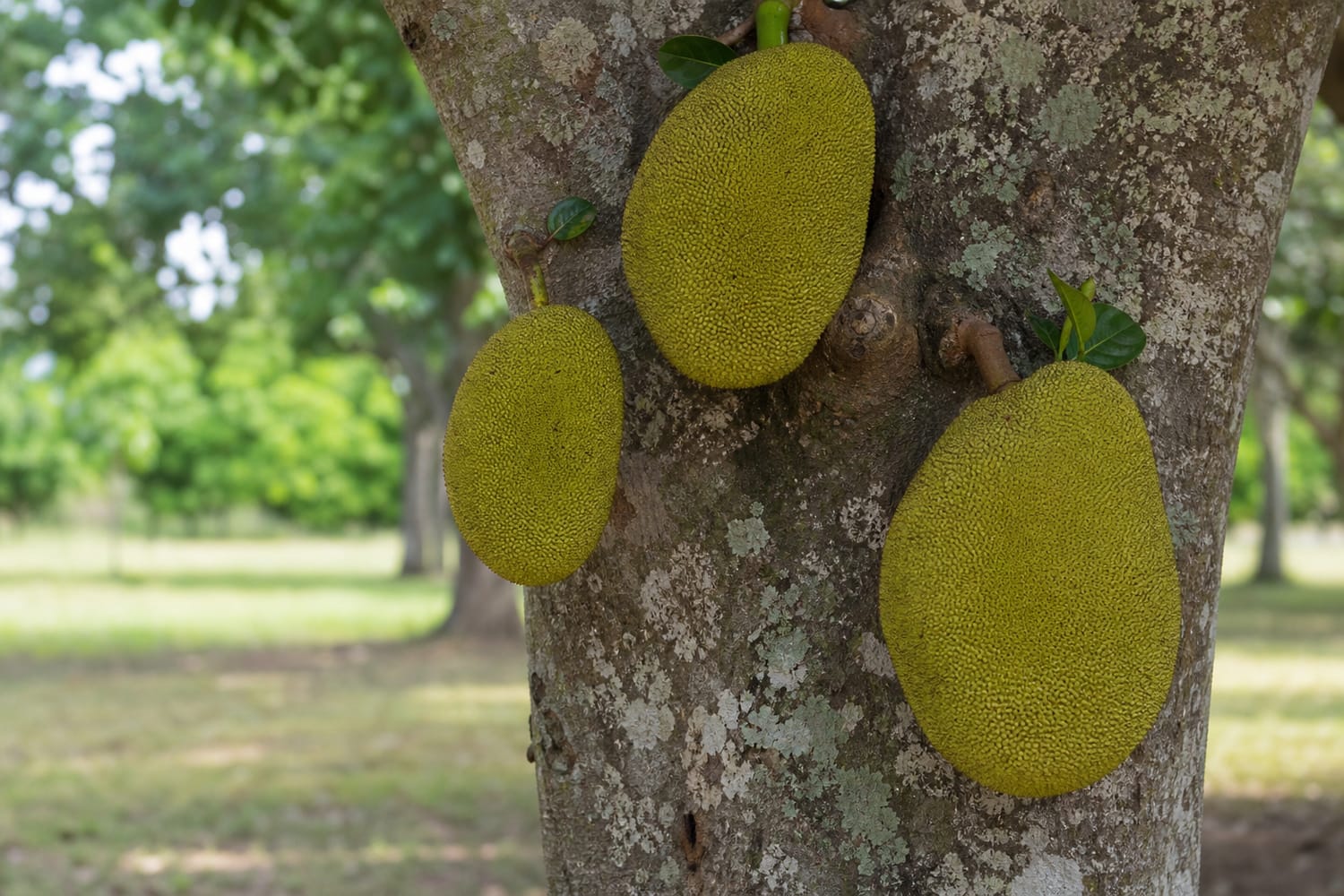
A fruit weighing 20, 40, or even 80 pounds would place tremendous stress on an ordinary twig. Jackfruit trees solve that engineering problem through cauliflory, the production of flowers and fruits directly on the trunk and older branches.
These thick, woody structures are strong enough to support the developing fruit. They also place the load closer to the tree’s central support system, reducing the leverage that would make a heavy fruit more likely to snap a branch.
This unusual growth habit explains why jackfruits can appear to be glued to the trunk. It is one of nature’s most effective weight-bearing designs—and one reason jackfruit belongs alongside the planet’s other record-breaking living giants.
A Tropical Environment Built for Growth
Jackfruit thrives in warm, humid regions where long growing seasons provide the energy and water needed to produce enormous crops. The trees are evergreen and can grow to impressive heights, although cultivated specimens are often pruned to make harvesting easier.
Large leaves capture sunlight throughout much of the year, supporting the extensive photosynthesis needed to build fruit. Reliable tropical rainfall also helps the tree transport nutrients and maintain the water-rich tissues inside each jackfruit.
The result is not merely one oversized specimen. A healthy mature tree may carry numerous fruits at different stages of development. Because each one represents a major investment of carbohydrates, water, and minerals, a heavily loaded tree is a remarkable example of biological productivity.
How Cultivation Encouraged the Giant
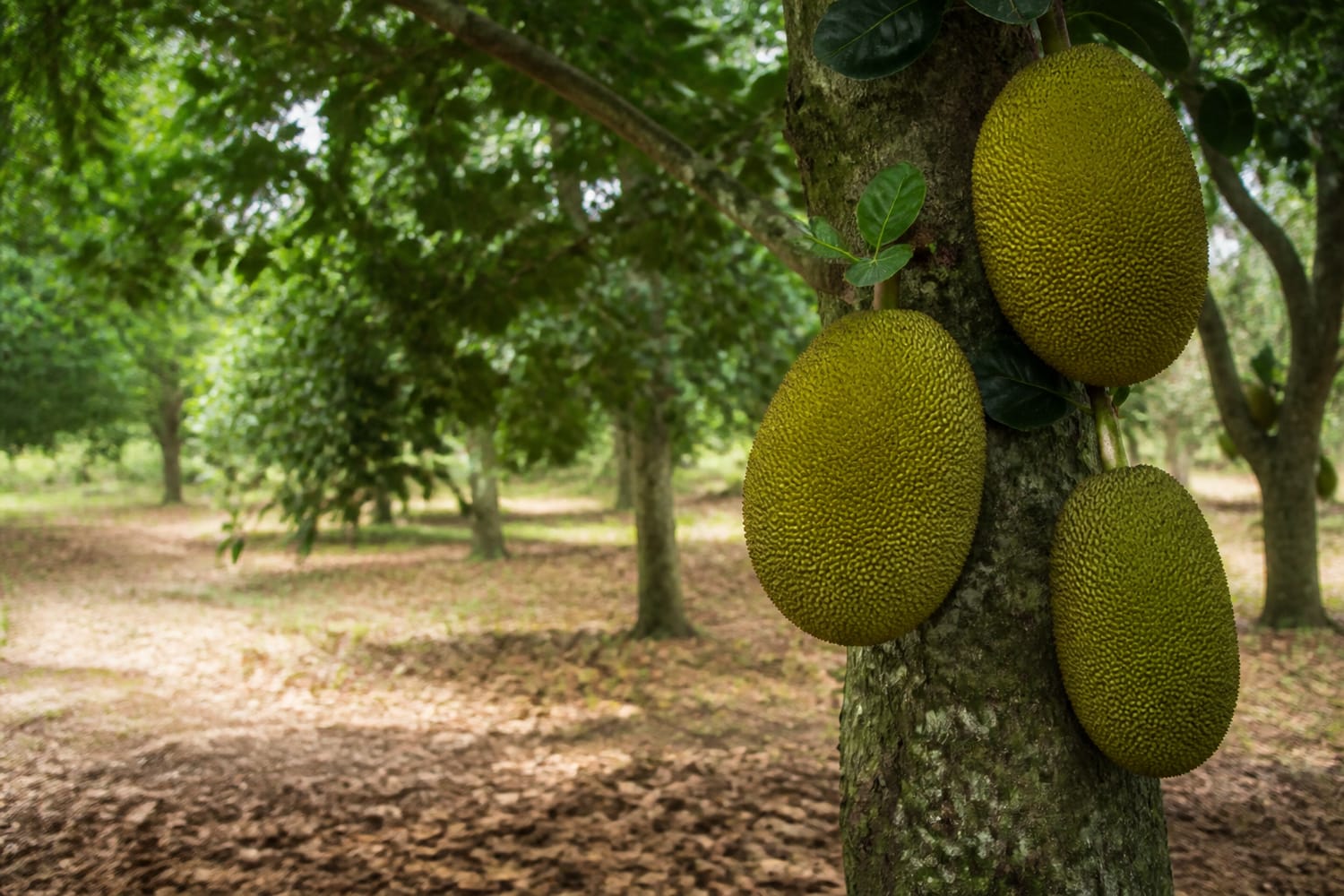
Jackfruit has been cultivated in Asia for thousands of years, although its precise wild ancestor and original domestication story remain uncertain. One widely accepted hypothesis places its origin in the Western Ghats of southern India, followed by its spread across South and Southeast Asia. Genetic research also indicates a complicated history involving multiple introduction routes and diverse cultivated populations.
Generations of farmers preserved trees that offered desirable characteristics, such as:
- Larger edible bulbs
- More appealing sweetness and aroma
- Softer or firmer flesh
- Smaller cores and less waste
- Reliable fruit production
- Manageable trees with accessible fruit
Size was only one useful trait, but productive trees naturally attracted attention. A single large jackfruit could feed several people, provide numerous seeds, and supply ingredients for multiple meals. By propagating favored trees, growers helped maintain the genetics behind large, valuable harvests.
The Scale of a Record-Breaking Jackfruit
The official record tells only part of the story. Even ordinary jackfruits are huge compared with familiar orchard crops. The University of Florida’s Institute of Food and Agricultural Sciences reports that jackfruits commonly weigh between 10 and 60 pounds.
To appreciate that scale, consider the differences:
- A typical apple can be held in one hand.
- A watermelon may require both arms.
- A large jackfruit can require two people to move safely.
- A record-sized specimen may weigh about as much as a punching bag or a large dog.
Jackfruit does not come from the world’s tallest tree, however. Its record concerns fruit mass rather than tree height. Readers interested in the vertical extremes of plant life can explore the tallest trees ever recorded.
A Giant With Many Edible Parts
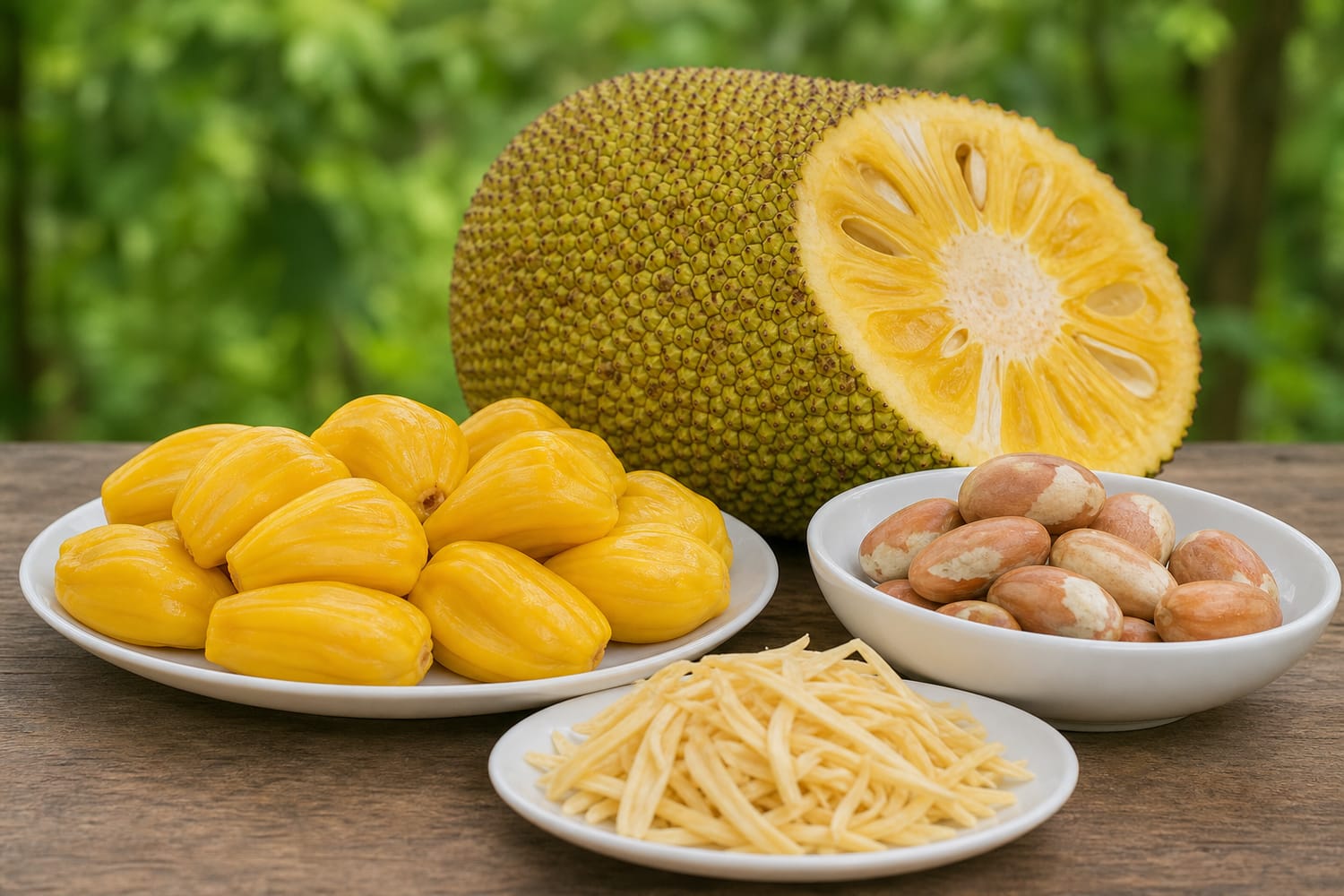
Jackfruit’s success as a cultivated plant is not based on spectacle alone. Much of the fruit can be put to use, although preparation requires time because the rind and internal fibers contain sticky latex.
Unripe jackfruit has a relatively mild flavor and fibrous texture. When cooked with spices or sauces, it can be shredded and used in curries, stews, sandwiches, and other savory dishes.
Ripe jackfruit is completely different. Its yellow bulbs become fragrant and sweet, with a tropical flavor often compared to combinations of banana, mango, and pineapple. They can be eaten fresh or used in desserts, preserves, drinks, and dried snacks.
The seeds are edible after cooking and may be boiled, roasted, or added to recipes. This versatility meant that selecting productive, large-fruited trees offered practical rewards rather than merely creating botanical curiosities.
The Challenges of Being Enormous
Record-breaking size creates disadvantages as well. Harvesting a mature jackfruit can be difficult, especially when it develops above the ground. Its rough skin, considerable weight, and sticky sap make cutting and handling messy work.
A falling jackfruit can also cause injury or property damage. Trees therefore require thoughtful placement, while growers may prune them to keep fruit within reach. Determining ripeness can be another challenge: growers look for changes in color, a stronger aroma, and flatter or wider-spaced surface spines.
Once opened, the fruit presents another logistical problem. One household may struggle to use dozens of pounds of food before it spoils, making preservation, freezing, sharing, or commercial processing important.
More Than a Botanical Record
Jackfruit became the world’s largest tree-borne fruit through a powerful combination of structure and circumstance. Thousands of flowers merge into one fruit, a sturdy trunk supports its weight, tropical conditions fuel its growth, and centuries of cultivation preserve productive varieties.
Its size may earn the headlines, but usefulness explains its lasting importance. Jackfruit can be eaten ripe or unripe, its seeds can be cooked, and a single harvest can supply an extraordinary amount of food.
That combination makes jackfruit more than an oversized curiosity. It is a record-breaking giant shaped by evolution, environment, and human choice—and one of the clearest examples of how nature can turn abundance into something truly enormous.