A Mountain Range Beneath the Waves
When most people imagine the world’s great mountain ranges, they picture the Himalayas, the Andes, the Rockies, or the Alps—towering peaks rising into the sky, capped with snow, and visible from miles away. But the longest mountain range on Earth is not found on any continent. It is hidden beneath the ocean, winding through the deep sea like the seam of a baseball.
This enormous underwater system is called the mid-ocean ridge. Stretching for more than 40,000 miles, it wraps around the globe through every major ocean basin. Despite its size, most of it lies thousands of feet below the surface, far beyond ordinary human sight. It is one of Earth’s most important geological features, yet it remains unfamiliar to many people because it is almost entirely submerged.
The mid-ocean ridge is not just a chain of underwater mountains. It is a dynamic, restless boundary where the planet constantly creates new ocean floor. It plays a central role in plate tectonics, volcanism, ocean chemistry, and even deep-sea life. Hidden in darkness, under immense pressure, this mountain range helps shape the surface of the planet.
The Scale of the Mid-Ocean Ridge
The mid-ocean ridge system is the longest mountain range on Earth by a huge margin. While the Andes stretch about 5,500 miles along the western edge of South America, the mid-ocean ridge extends more than seven times that length. It forms a continuous network of underwater ridges that connect across the Atlantic, Indian, Pacific, Arctic, and Southern Oceans.
One of the best-known parts of this system is the Mid-Atlantic Ridge. It runs roughly down the center of the Atlantic Ocean, separating the Americas from Europe and Africa. In some places, it rises high enough to break the surface. Iceland, for example, sits directly on the Mid-Atlantic Ridge, making it one of the few places where this underwater mountain range can be seen on land.
But the Mid-Atlantic Ridge is only one segment of a much larger structure. Other branches include the East Pacific Rise, the Southeast Indian Ridge, the Southwest Indian Ridge, and many more. Together, they form a global network of mountains, valleys, fractures, and volcanic zones stretching through the deep ocean.
The height of these underwater mountains can be impressive. In many areas, the ridge rises 6,000 to 13,000 feet above the surrounding seafloor. If the oceans were drained, the mid-ocean ridge would appear as one of the most dramatic landscapes on Earth: a vast mountain chain crossing the planet, interrupted by deep valleys, volcanic peaks, and long rift zones.
How an Underwater Mountain Range Forms
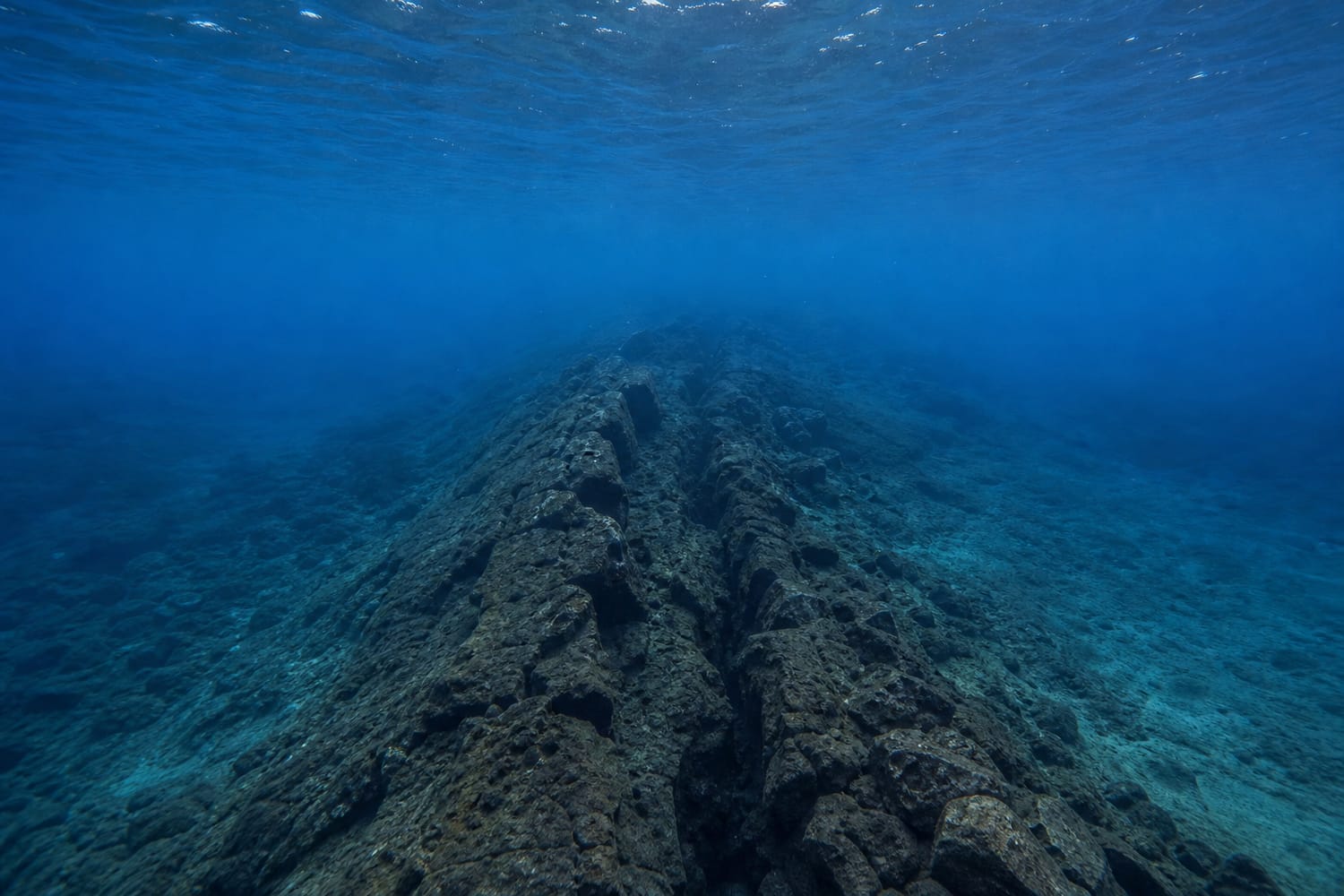
The mid-ocean ridge forms at places where tectonic plates move apart. Earth’s outer shell, called the lithosphere, is broken into large plates that slowly shift over the softer, hotter material beneath them. At divergent plate boundaries, two plates pull away from each other, creating a gap.
As the plates separate, molten rock from the mantle rises to fill the space. This magma cools and hardens, creating new oceanic crust. Over time, the continuous addition of new rock builds a raised ridge along the boundary.
This process is known as seafloor spreading. It was one of the key discoveries that helped scientists develop the theory of plate tectonics in the 20th century. Before then, the ocean floor was often assumed to be flat, old, and largely inactive. Mapping the seafloor revealed something very different: the ocean basins were full of mountains, trenches, fractures, and volcanic activity.
The mid-ocean ridge is essentially a giant factory for new seafloor. New crust forms at the ridge, then slowly moves away on either side as more material rises from below. The farther ocean crust is from the ridge, the older it tends to be. This pattern provided strong evidence that the seafloor is constantly being created and recycled.
A Landscape of Fire, Stone, and Darkness
Although the mid-ocean ridge is underwater, it is highly volcanic. Lava erupts from cracks in the seafloor, forming new rock in strange shapes. One common form is pillow lava, which develops when molten rock rapidly cools in seawater. These rounded, bulbous formations look like stacked cushions or inflated blobs.
The ridge is also shaped by earthquakes. As tectonic plates pull apart and shift, the ocean floor cracks and breaks. Many of these earthquakes are small, but they are constant reminders that the ridge is an active boundary between moving plates.
At the center of many ridge segments is a rift valley, a long depression where the plates are spreading apart. In places like the Mid-Atlantic Ridge, this valley can be deep and rugged, bordered by steep cliffs and volcanic terrain. Other ridge systems, such as the East Pacific Rise, spread more quickly and tend to have smoother, broader profiles.
Even though sunlight never reaches most of the mid-ocean ridge, it is far from lifeless. In fact, some of the most surprising ecosystems on Earth were discovered there.
Hydrothermal Vents and Strange Deep-Sea Life
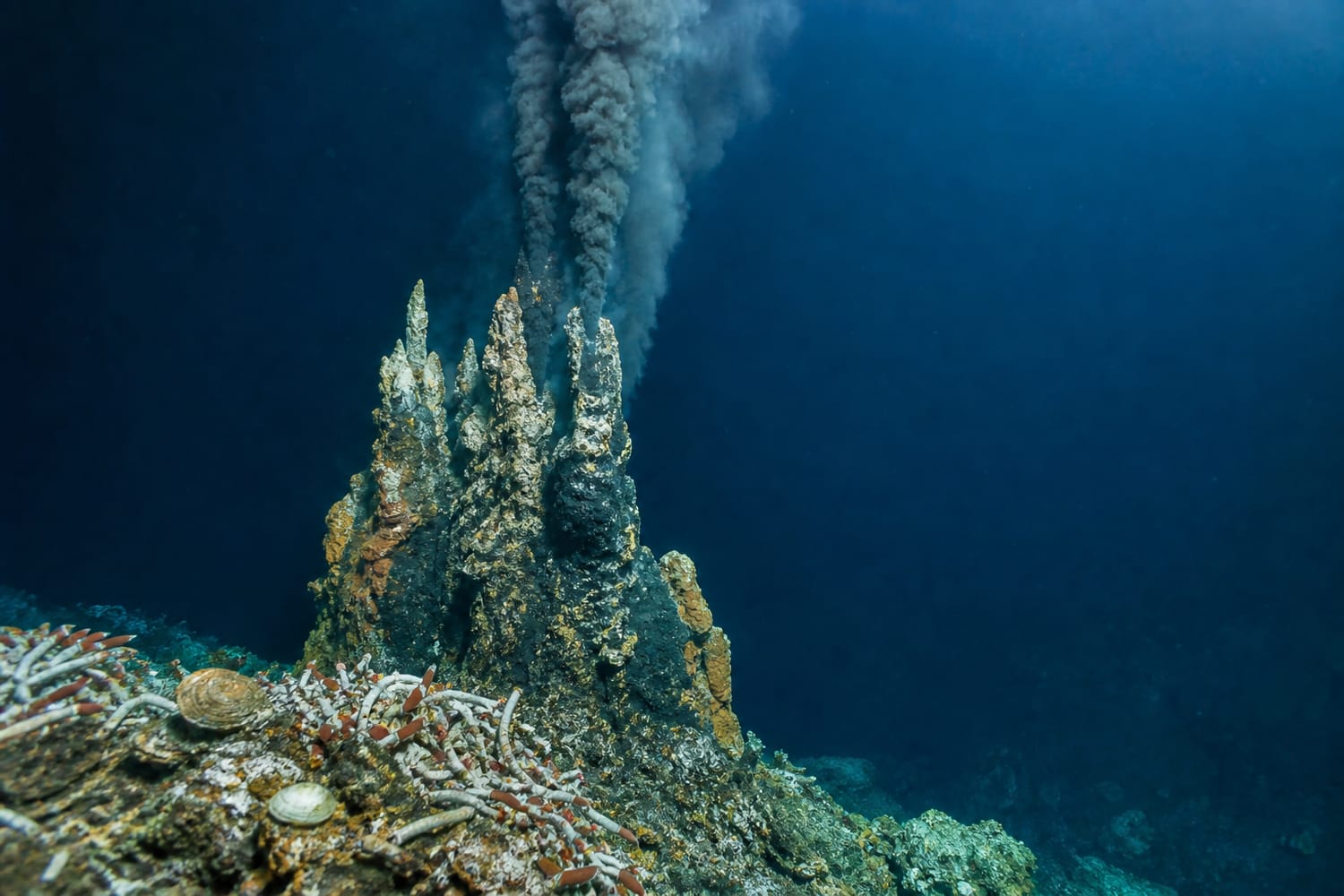
One of the most remarkable features of the mid-ocean ridge is the presence of hydrothermal vents. These vents form when seawater seeps into cracks in the ocean crust, is heated by magma below, and then bursts back out into the ocean carrying dissolved minerals.
Some vents release dark, mineral-rich fluids that look like black smoke. These are called black smokers. The “smoke” is actually made of tiny mineral particles that precipitate when the hot vent fluid mixes with cold seawater. Temperatures at these vents can exceed 700 degrees Fahrenheit, yet the surrounding ocean water remains near freezing.
Hydrothermal vents support ecosystems unlike almost any others on Earth. Instead of relying on sunlight and photosynthesis, vent communities depend on chemosynthesis. Microbes use chemicals such as hydrogen sulfide to produce energy. These microbes form the base of a food web that includes tube worms, clams, mussels, shrimp, crabs, and other organisms adapted to extreme conditions.
The discovery of hydrothermal vent life in the late 1970s changed the way scientists thought about biology. It proved that life could thrive without sunlight, as long as there was another source of energy. This insight has influenced the search for life beyond Earth, especially on icy moons such as Europa and Enceladus, where hidden oceans may exist beneath frozen surfaces.
Why We Did Not Know Much About It for So Long
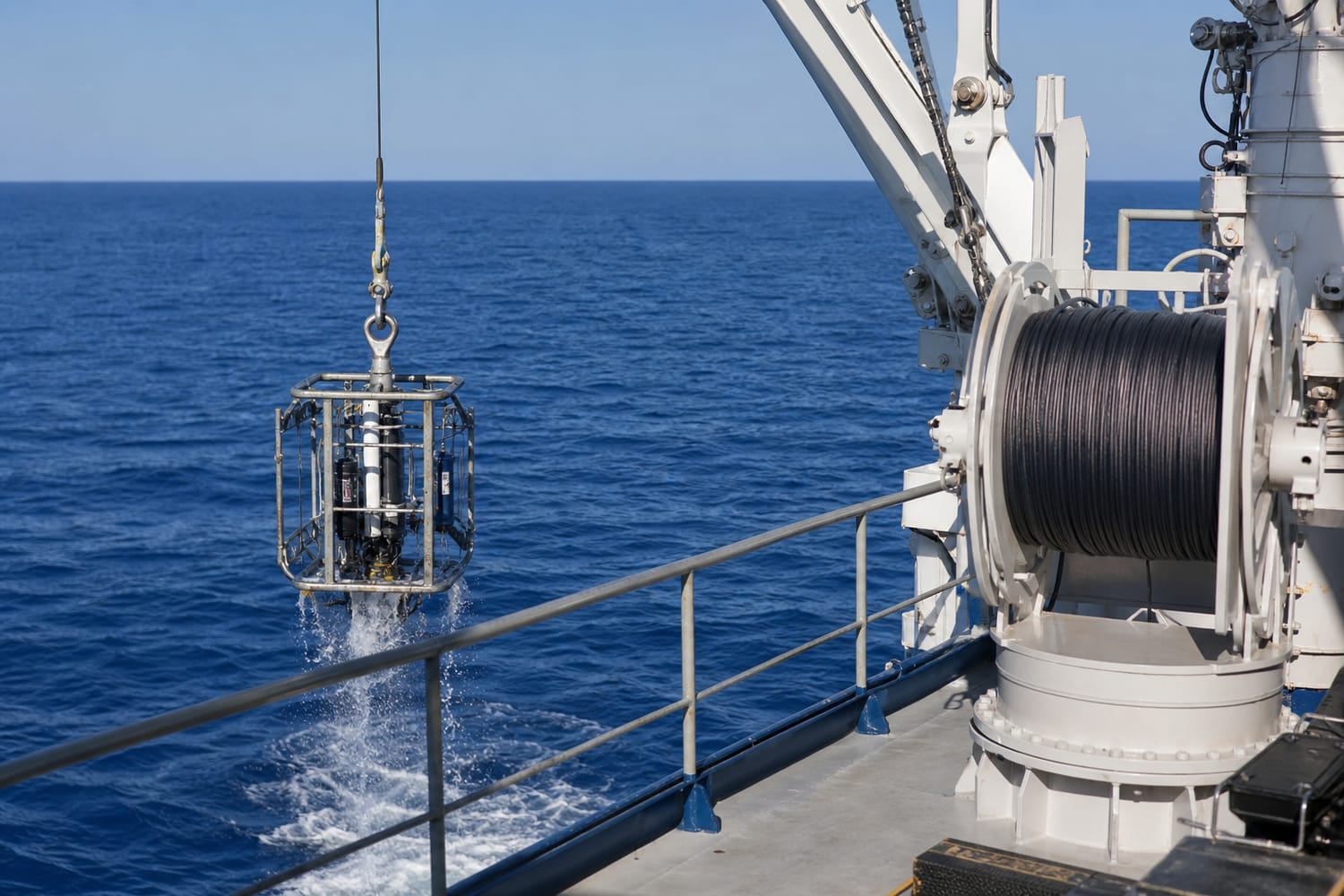
The mid-ocean ridge remained hidden from human knowledge for much of history because the deep ocean is difficult to study. For centuries, sailors crossed the oceans without any idea that enormous mountain chains lay beneath them. Early depth measurements were limited and often made with weighted ropes, which could only provide scattered information.
Modern understanding began to improve with sonar mapping. By sending sound waves to the seafloor and measuring how long they took to return, scientists could build detailed maps of underwater terrain. These maps revealed that the ocean floor was not a flat plain but a complex landscape.
World War II and the Cold War accelerated ocean mapping because navies needed better knowledge of the seafloor for submarine navigation. Later, research vessels and deep-sea submersibles allowed scientists to study the ridges more directly. Today, satellites, remotely operated vehicles, autonomous underwater vehicles, and advanced sonar systems continue to refine our view of this hidden mountain range.
Even now, much of the seafloor remains less thoroughly mapped than the surfaces of the Moon or Mars. The mid-ocean ridge is enormous, remote, and difficult to access. Every expedition has the potential to reveal new geological features or unknown species.
Its Role in Earth’s Geological Cycle
The mid-ocean ridge is part of a much larger planetary system. While new ocean crust forms at ridges, old ocean crust is destroyed at subduction zones, where one tectonic plate sinks beneath another. This cycle of creation and destruction helps regulate Earth’s geology over millions of years.
The ridge also affects ocean chemistry. Hydrothermal circulation changes the composition of seawater by exchanging heat and chemicals between the ocean and the crust. Minerals released by vents can influence local ecosystems and contribute to deposits on the seafloor.
In addition, the movement of tectonic plates helps shape continents and ocean basins. The Atlantic Ocean, for example, is gradually widening as new crust forms along the Mid-Atlantic Ridge. Meanwhile, other ocean basins may shrink as crust is consumed elsewhere. Over vast timescales, the positions of continents change dramatically, driven in part by processes occurring along mid-ocean ridges.
A Hidden Wonder of the Planet
The longest mountain range on Earth is not a place most people will ever visit, hike, or even see with their own eyes. It lies beneath miles of seawater, in a world of darkness, pressure, volcanic heat, and strange life. Yet it is one of the planet’s defining features.
The mid-ocean ridge reminds us that Earth’s greatest landscapes are not always visible from the surface. Some are hidden beneath the waves, quietly shaping the world from below. It is a place where new crust is born, where ecosystems flourish without sunlight, and where the movement of tectonic plates becomes visible in stone.
Understanding this underwater mountain range helps us understand Earth itself. It reveals that the planet is not static but alive with motion, heat, and change. Beneath the ocean, the longest mountain range on Earth continues to grow, one eruption at a time.