A Village Built for the Afterlife
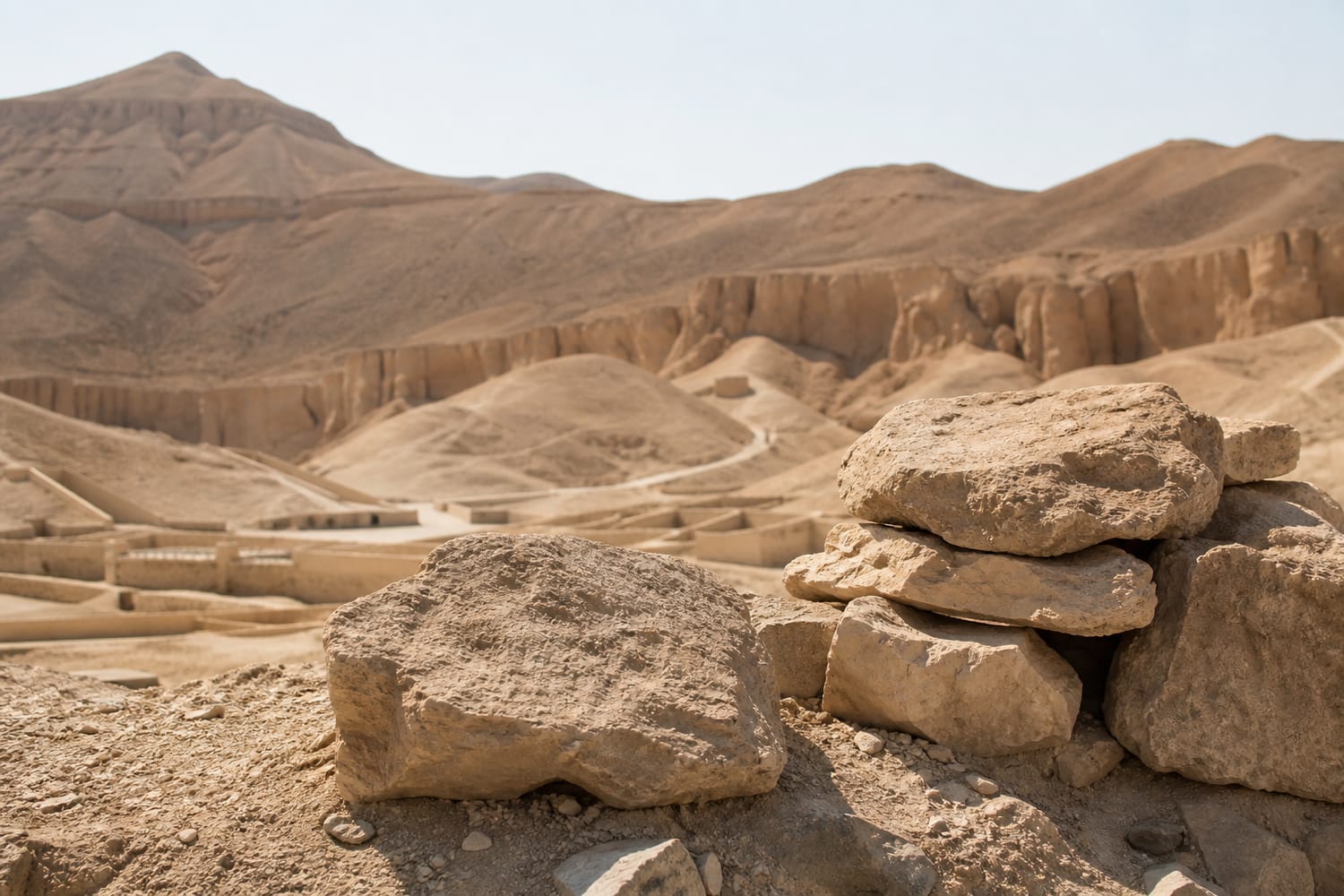
In the dry hills across the Nile from ancient Thebes, near what is now Luxor, stood a remarkable workers’ village called Deir el-Medina. Its residents were not ordinary laborers. They were highly skilled artisans, quarrymen, draftsmen, sculptors, painters, and scribes responsible for creating the royal tombs of Egypt’s New Kingdom pharaohs in the Valley of the Kings and the Valley of the Queens.
These workers carved and decorated some of the most famous burial chambers in human history. Their job was sacred, prestigious, and demanding. They prepared eternal homes for kings and queens who were believed to become divine after death. Yet despite the religious importance of their work, these artisans were still employees of the state. They depended on regular payment, not in coins, but in rations of grain, beer, fish, vegetables, oil, and other supplies.
Around 1152 BCE, during the reign of Pharaoh Ramesses III, that system broke down. The workers’ rations were delayed again and again. Hungry and frustrated, they did something extraordinary: they stopped working and walked off the job. In doing so, they carried out what is widely regarded as the first recorded labor strike in history.
Life and Labor at Deir el-Medina
Deir el-Medina was unusual because it preserved the lives of ordinary workers in exceptional detail. Unlike many ancient communities, this village left behind thousands of written records on papyrus and pottery fragments known as ostraca. These documents include letters, attendance records, legal disputes, shopping lists, prayers, and complaints.
The village was a planned settlement, enclosed by walls, with modest houses arranged along narrow streets. The workers lived with their families, and their community had its own officials, scribes, foremen, and religious life. Because they worked on royal tombs, they were somewhat privileged compared with many laborers in ancient Egypt. They received state-issued rations and had days off for festivals, illness, family matters, and religious observances.
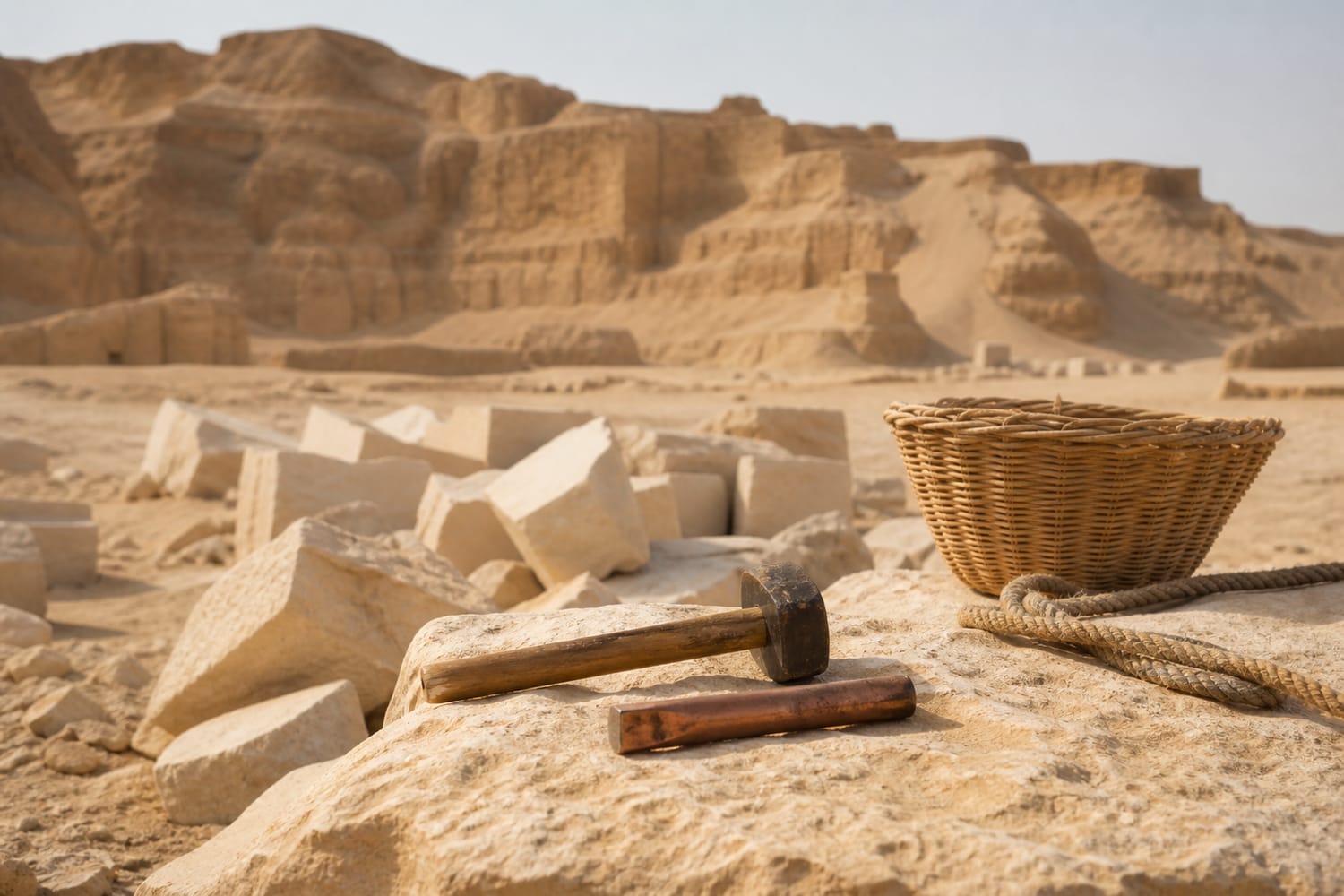
Still, their lives were not easy. The work was physically exhausting and often dangerous. Tomb building required cutting deep into limestone cliffs, smoothing walls, plastering surfaces, drawing intricate designs, and painting elaborate religious scenes. The workers labored in darkness, dust, and heat, often far from their homes.
Their compensation was essential for survival. Grain was especially important because it could be made into bread and beer, the staples of the Egyptian diet. When rations failed to arrive, it was not a minor inconvenience. It meant hunger for entire households.
The Crisis Under Ramesses III
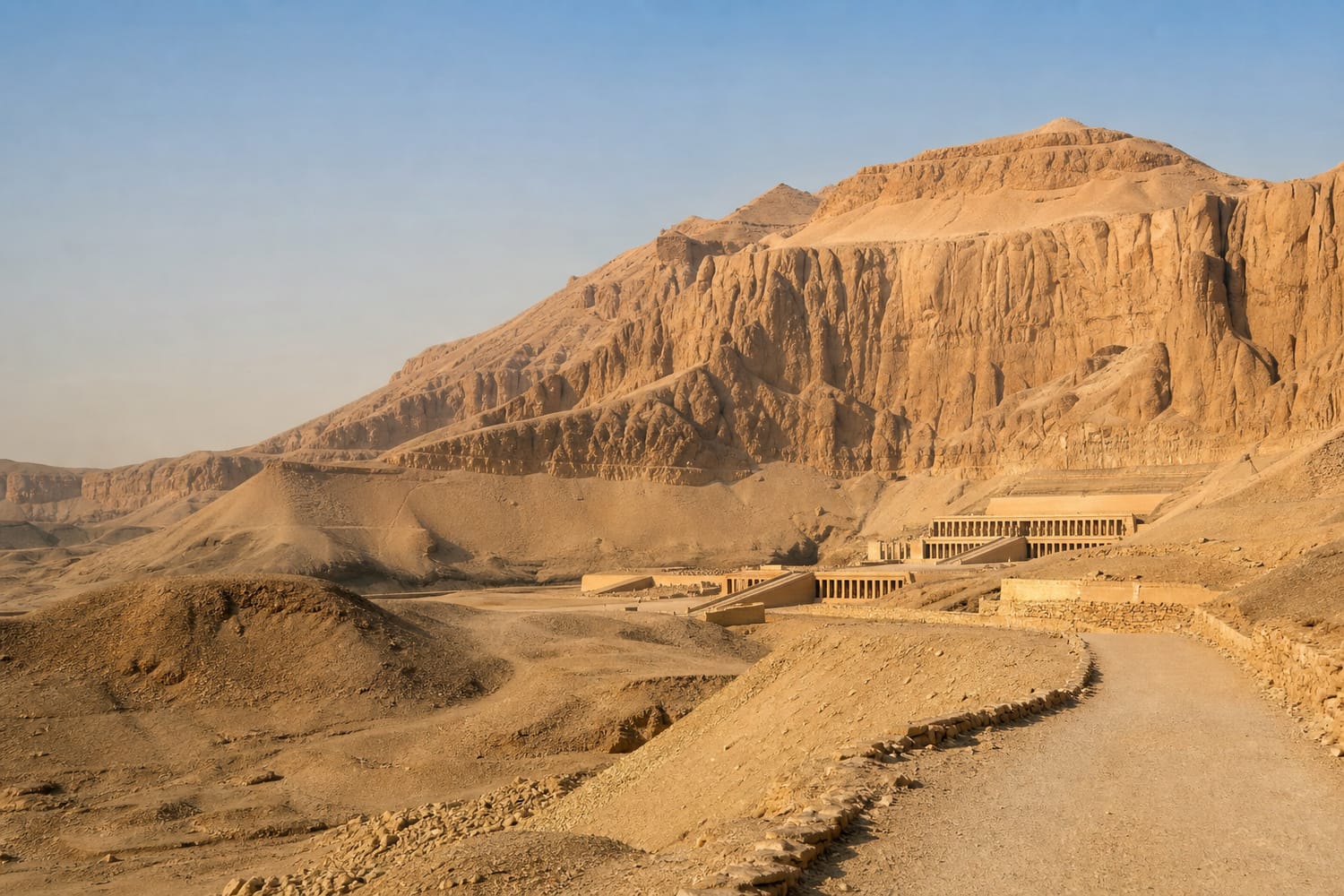
Ramesses III was one of the last powerful pharaohs of the New Kingdom. His reign faced serious challenges, including foreign invasions, economic strain, corruption, and political instability. Egypt had fought costly battles against groups known as the Sea Peoples, and the empire’s resources were under pressure.
Although royal monuments continued to project power and divine authority, the machinery of the state was beginning to falter. Administrative delays and mismanagement became increasingly common. Supplies meant for workers did not always reach them on time. Officials may have hoarded goods, diverted resources, or simply failed to manage the distribution system properly.
By the 29th year of Ramesses III’s reign, the tomb workers at Deir el-Medina had had enough. Their grain payments were overdue. According to surviving records, they complained that they were hungry and that no one was listening.
This was not a spontaneous outburst after a single missed delivery. The strike appears to have followed repeated delays and failed promises. The workers first tried to use official channels. When that did not solve the problem, they chose direct action.
“We Are Hungry”
The main source for the strike is a document known as the Turin Strike Papyrus, now held in the Museo Egizio in Turin, Italy. Written by a scribe, it records the events in strikingly human terms.
The workers left the necropolis and marched toward important administrative and religious sites. They staged sit-ins near temples, including the mortuary temple of Thutmose III and possibly the Ramesseum, the great temple complex associated with Ramesses II. These were not random locations. Temples were centers of wealth, storage, and authority. By occupying these spaces, the workers made their grievance visible to those with power.
Their message was simple and direct: “We are hungry.”
That phrase cuts through more than 3,000 years of history. It reminds us that behind the splendor of ancient monuments were people with families to feed, bodies that tired, and voices that could rise in protest.
Officials tried to persuade the workers to return. Some rations were distributed, but the underlying problem was not fully resolved. The workers continued to protest on multiple occasions. They refused to resume labor until their demands were addressed.
Why This Strike Was So Remarkable
The Deir el-Medina strike is remarkable not because ancient people never resisted authority before, but because it was recorded in detail. Most labor struggles in antiquity vanished without written evidence. Here, however, the bureaucratic habits of ancient Egypt preserved the story.
The strike also challenges popular assumptions about ancient labor. When people imagine Egyptian monuments, they often think of enslaved masses forced to build pyramids under the whip. That image is overly simplistic, especially for the New Kingdom tomb workers. The artisans of Deir el-Medina were not anonymous slaves. They were skilled professionals in a complex state labor system.
Their protest shows that they understood their value. They knew the royal tomb project depended on their expertise. By withholding their labor, they used one of the most powerful tools workers have ever possessed: collective refusal.
It also reveals that ancient Egypt was not an unchanging world of absolute obedience. Even in a society ruled by a divine king, ordinary workers could confront local administrators, demand justice, and disrupt state projects.
The Power of Collective Action
The workers did not simply complain as individuals. They acted together. That collective nature is what makes the event recognizable as a labor strike.
They left the worksite as a group, marched as a group, and negotiated as a group. Their demands were not abstract or revolutionary. They wanted the payment they were owed. They wanted the state to fulfill its obligations.
This is one reason the strike feels so modern. Many labor disputes across history have centered on the same basic issues: delayed wages, unsafe conditions, unfair treatment, and unresponsive management. The Deir el-Medina workers may have lived in a world of pharaohs, temples, and tomb gods, but their struggle is easy to understand today.
They also chose tactics that would remain familiar throughout labor history. They stopped production. They occupied symbolic spaces. They appealed to higher authorities. They used public visibility to increase pressure. They insisted that promises were not enough without material results.
Tomb Builders, Not Rebels
It is important to note that these workers were not trying to overthrow the pharaoh. Their protest was not a political revolution. They remained within the cultural and religious framework of ancient Egypt. They still recognized the authority of the state and the sacred importance of their work.
Their complaint was that the system was failing them. In their view, justice required proper distribution of rations. The state had a duty to maintain order, known in Egyptian thought as ma’at: truth, balance, and cosmic harmony. When officials failed to provide food, they were not merely causing inconvenience; they were violating the moral order.
This gives the strike a deeper meaning. The workers were not rejecting Egyptian society. They were demanding that it live up to its own values.
What Happened Afterward
The records suggest that the workers received at least some of the overdue rations after their protests. However, delays and disputes continued in later years. The strike did not permanently fix Egypt’s economic problems.
In fact, the unrest at Deir el-Medina was part of a larger pattern of decline during the late New Kingdom. Royal authority weakened. Tomb robberies became more common. Corruption spread among officials. Eventually, the centralized power that had sustained massive royal building projects began to fragment.
Still, the strike left a lasting mark because it was written down. The Turin Strike Papyrus preserves not only the administrative facts but also the emotional reality of the crisis. It allows us to hear the voices of workers who might otherwise have been buried beneath the grandeur of the monuments they created.
Why the First Recorded Strike Still Matters
The first recorded labor strike in history matters because it reminds us that labor history is as old as civilization itself. Wherever large projects, state power, and organized workforces exist, questions of fairness follow. Who does the work? Who controls the resources? What happens when promises are broken?
The artisans of Deir el-Medina built tombs meant to last for eternity, but their most powerful legacy may be the record of the day they stopped building. Their protest reveals a timeless truth: even the mightiest rulers depend on the labor of ordinary people.
Ancient Egypt is often remembered through pyramids, temples, gold masks, and royal names carved in stone. Yet the strike at Deir el-Medina shifts our attention from kings to workers. It shows us the human foundation beneath monumental history.
More than three millennia later, their words still resonate: “We are hungry.” That simple statement turned a delayed ration payment into a landmark moment in the history of work, protest, and human dignity.