Long before cookbooks had glossy photographs, precise measurements, or celebrity chefs, someone in ancient Mesopotamia pressed instructions for making dinner into wet clay. Those wedge-shaped marks, written in cuneiform, have survived for nearly 4,000 years, giving us one of the most intimate glimpses into daily life in the ancient world: what people cooked, what they valued, and how they experienced flavor.
The oldest written recipes ever found come from a set of clay tablets known as the Yale Culinary Tablets. Dating to around 1730 BCE, they were created in ancient Babylonian Mesopotamia, in what is now Iraq. These tablets are remarkable not only because they are old, but because they reveal a sophisticated food culture filled with stews, broths, herbs, meats, and careful cooking techniques.
They remind us that history is not only made of kings, wars, temples, and empires. It is also made of kitchens, pots, ingredients, and shared meals.
A Recipe Written in Clay
The Yale Culinary Tablets are part of the Babylonian Collection at Yale University. They were written in Akkadian, the language of ancient Mesopotamia, using cuneiform script. Cuneiform was created by pressing a reed stylus into soft clay, leaving behind tiny wedge-shaped impressions. Once dried or fired, the clay could last for thousands of years.
Unlike modern recipes, these ancient instructions are brief and sometimes difficult to interpret. They often do not include exact measurements, cooking times, or temperatures. Instead, they read more like notes written for someone who already knew their way around a kitchen.
One tablet, for example, includes recipes for meat-based stews. Another contains recipes for broths and vegetable dishes. Ingredients such as lamb, pigeon, garlic, onions, leeks, coriander, cumin, and herbs appear throughout. There are also references to fats, grains, and liquids used to build flavor and texture.
To modern readers, these recipes can feel mysterious. They might say to use a certain cut of meat, add water, include aromatics, and cook it together, but leave out many details we would expect today. Yet that mystery is part of their charm. They are not polished cookbook entries; they are working documents from a world almost unimaginably distant from our own.
The World of Ancient Babylonian Food
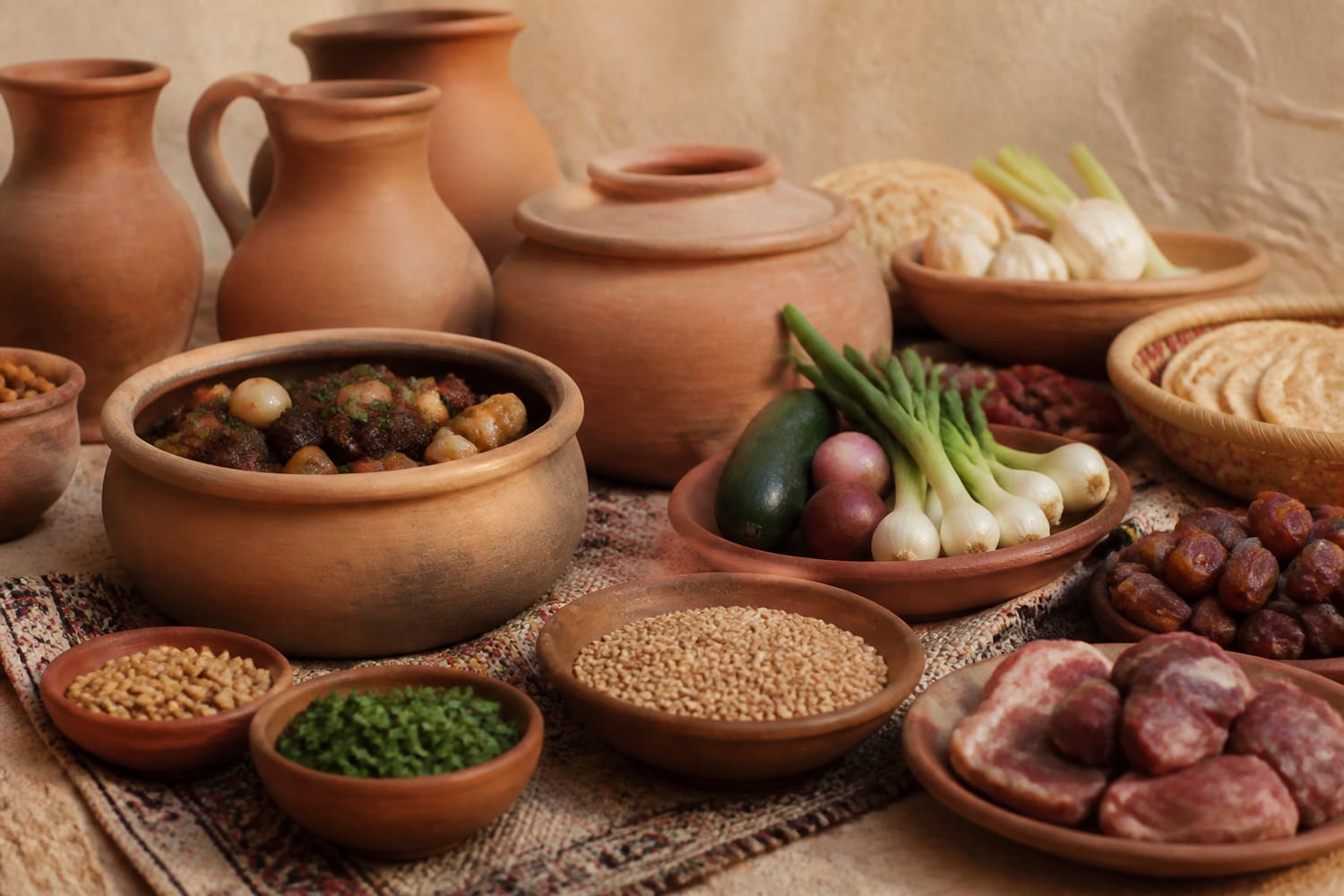
Mesopotamia, often called the “cradle of civilization,” was home to some of the world’s earliest cities, writing systems, legal codes, and agricultural innovations. The region between the Tigris and Euphrates rivers supported farming, trade, and urban life on a grand scale.
Food in this world was shaped by both abundance and geography. Farmers grew barley, wheat, lentils, chickpeas, onions, garlic, leeks, cucumbers, and dates. People raised sheep, goats, cattle, pigs, and poultry. Fish from rivers and canals were also important. Beer, especially barley beer, was a staple drink.
The recipes on the Yale tablets likely reflect elite cuisine rather than everyday meals of the poor. Many of the dishes use meat, spices, and multiple preparation steps, suggesting they may have been intended for palace or temple kitchens. In ancient Mesopotamia, large institutions often controlled food production and distribution. Temples and palaces fed priests, workers, officials, and guests.
Still, even if these recipes belonged to a high-status kitchen, they show that ancient cooks cared deeply about flavor. They combined meats with herbs, alliums, fats, and liquids in ways that would not feel completely unfamiliar today. A simmering pot of lamb with garlic and onions would still smell inviting in a modern kitchen.
What Was the Oldest Recipe?
One of the most famous dishes from the tablets is a meat stew often associated with lamb. The recipe is short, but it describes a process that sounds surprisingly recognizable: meat is cooked with water, fat, salt, beer, onions, garlic, and herbs.
Another notable dish is called “tuh’u,” a kind of beet stew. Modern reconstructions of tuh’u often include lamb, red beets, beer, leeks, garlic, onions, coriander, cumin, and arugula or similar greens. The result is a rich, earthy, savory stew with a deep red color.
It is important to be careful when calling any single dish “the oldest recipe.” The Yale tablets contain multiple recipes, and scholars continue to debate translations and interpretations. However, as a collection, these Babylonian tablets are widely recognized as the oldest known written culinary recipes.
The recipes are not simple survival food. They demonstrate layering of flavors: browning or simmering meat, adding aromatics, using beer as a cooking liquid, and finishing with herbs. They show that cooking had already developed into a refined art thousands of years ago.
Cooking Without Modern Instructions
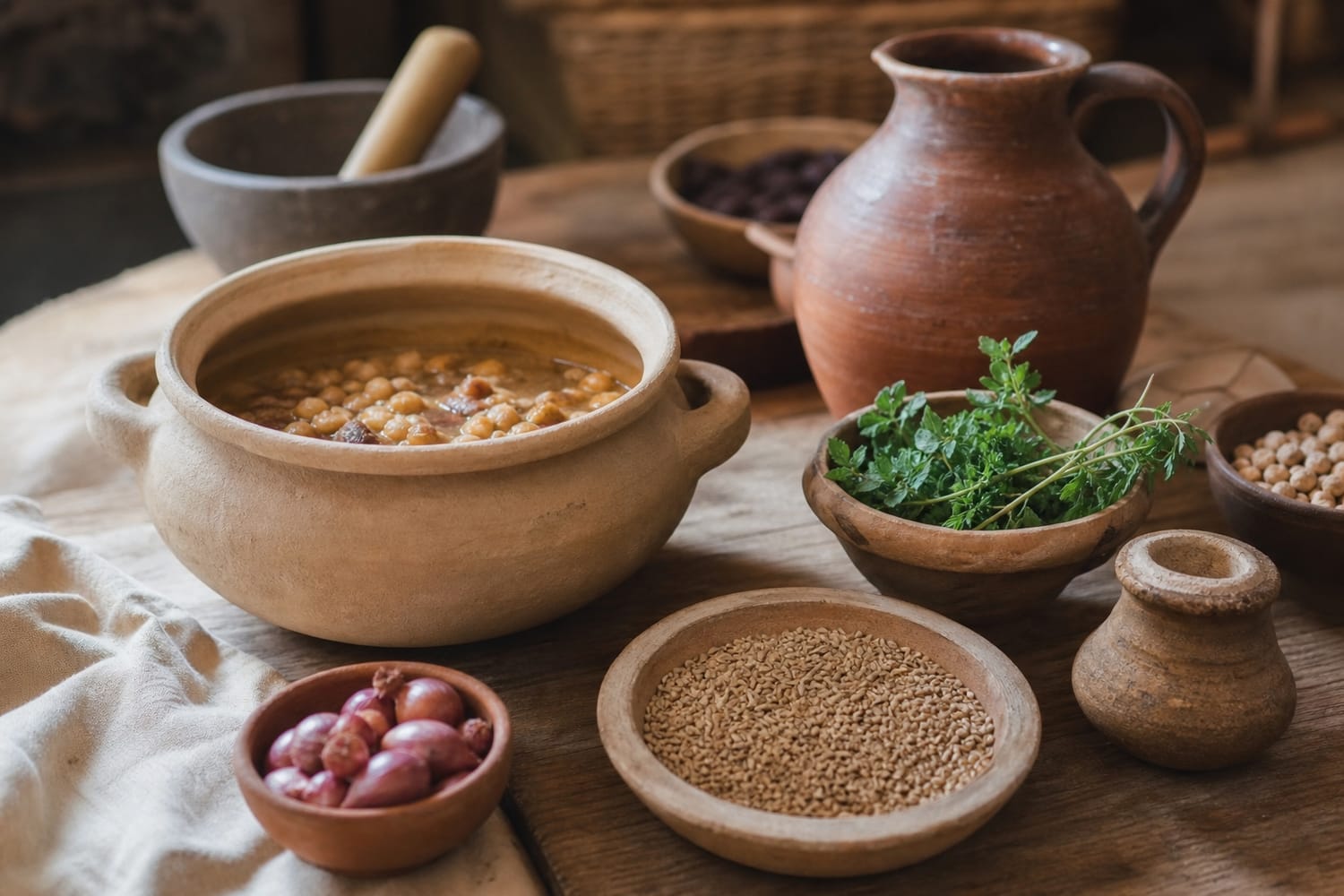
One of the biggest challenges in understanding ancient recipes is that they assume background knowledge. Modern recipes are designed to guide a wide audience. They tell us to preheat an oven, chop an onion, simmer for 30 minutes, or use two tablespoons of oil.
Ancient recipes did not need to explain every step. The people reading them were likely trained cooks. They knew how much liquid to add, how hot the fire should be, how long meat needed to cook, and what the finished dish should look and taste like.
This makes recreating the recipes both exciting and uncertain. Scholars, chefs, and food historians must translate the words, identify ingredients, and make educated guesses about technique. Some ingredients have changed over time. Some ancient plant names are difficult to match with modern species. Even the flavor of ancient beer, onions, or herbs may have differed from what we use now.
Despite these uncertainties, experimental cooking helps bring the tablets to life. When researchers recreate Babylonian stews, they often discover flavors that are complex and appealing. The dishes can be hearty, aromatic, and surprisingly balanced.
A Taste of Daily Life
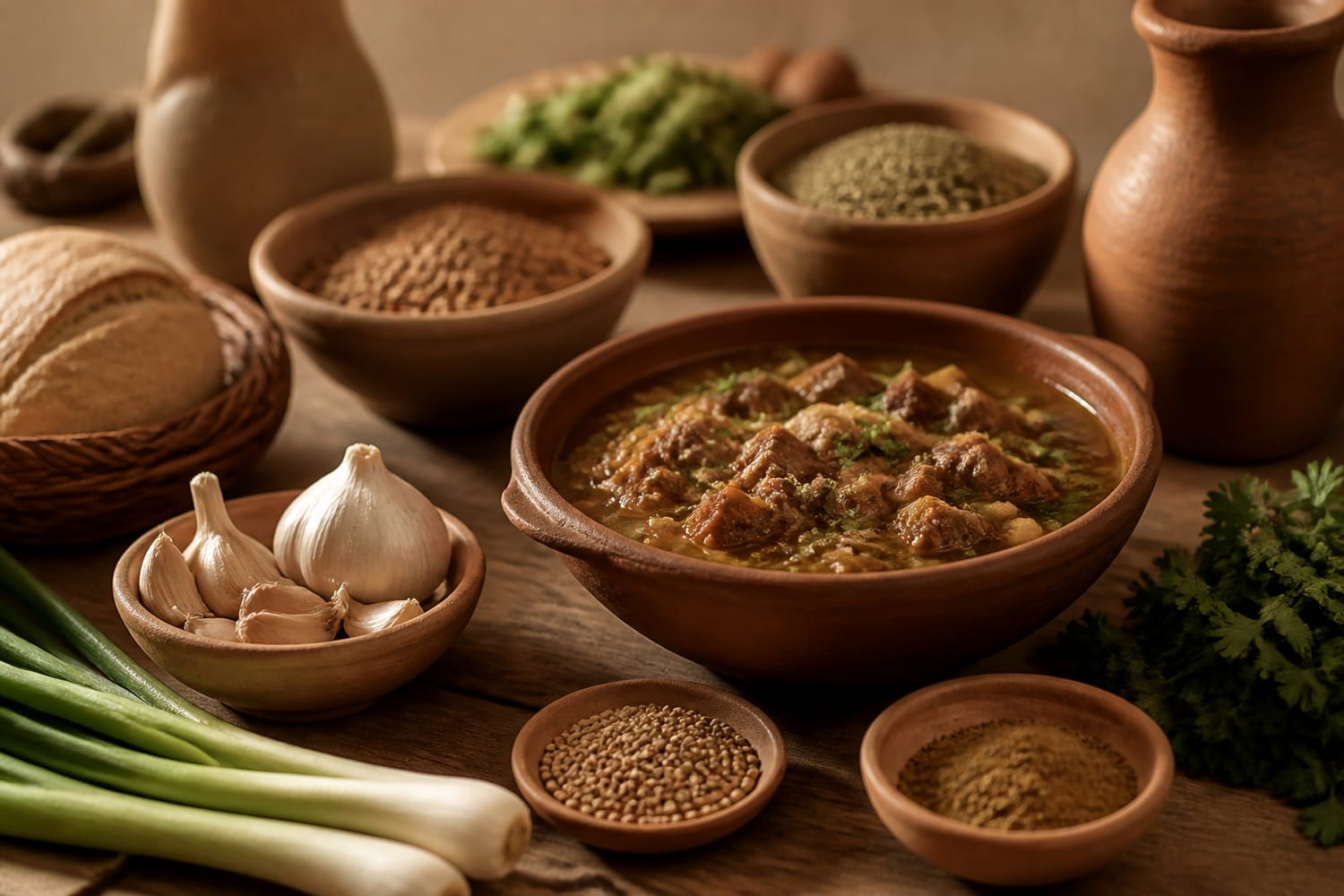
Food has a unique power to collapse time. We may struggle to imagine ancient politics or religious rituals, but we understand hunger, cooking, and the pleasure of a good meal.
The oldest written recipes connect us to people who lived nearly four millennia ago. They chopped onions, stirred pots, seasoned meat, and waited for stew to soften over heat. They cared about aroma and texture. They gathered around food as families, workers, priests, or elites.
These tablets also challenge the idea that ancient food was bland or primitive. Babylonian cuisine used a wide range of ingredients and seasonings. Garlic, leeks, coriander, cumin, and beer would have created bold flavors. The recipes suggest not only nourishment, but enjoyment.
In this way, the tablets are more than historical curiosities. They are evidence of human creativity. Cooking is one of our oldest arts, and these recipes show it being practiced with skill and imagination.
Why the Recipes Matter
The Yale Culinary Tablets are important because they preserve a part of history that rarely survives. Buildings crumble, fabrics decay, and meals disappear as soon as they are eaten. But written recipes can preserve the memory of food long after the cooks and diners are gone.
They also broaden our understanding of ancient literacy. Writing in Mesopotamia was used for administration, trade, law, literature, religion, and scholarship. These tablets show that culinary knowledge, too, could be important enough to write down.
For historians, the recipes provide clues about agriculture, trade, social class, and cultural taste. Ingredients reveal what was grown, raised, imported, or valued. Cooking techniques reveal habits and technologies. The presence of elaborate dishes suggests organized kitchens and trained cooks.
For everyone else, they offer something simpler and perhaps more powerful: a human connection. The people of ancient Babylon were not so different from us. They enjoyed rich stews, fragrant herbs, and meals prepared with care.
The Enduring Flavor of History
The oldest written recipes ever found are not just instructions for cooking. They are messages from the ancient kitchen, preserved in clay across thousands of years. They tell us that food has always been central to human life—not only as fuel, but as culture, comfort, status, and art.
A 4,000-year-old Babylonian stew may not come with exact measurements or a perfect modern translation, but it carries something more meaningful: proof that the love of flavor is ancient. Long before printed cookbooks, restaurant menus, or online food blogs, people were already experimenting with ingredients and recording the results.
To read these recipes today is to stand at the edge of a very old table and breathe in the imagined scent of lamb, garlic, onions, herbs, and beer simmering together. It is a reminder that history can be tasted, not just studied. And sometimes, the past reaches us not through monuments or battles, but through a humble bowl of stew.