Life Where the Ocean Becomes Extreme
Far below the sunlit surface, beyond coral reefs, kelp forests, and the twilight zone, the ocean drops into a realm of cold, darkness, and crushing pressure. This is the abyssal and hadal ocean: the deepest habitat on Earth. At these depths, sunlight never arrives, temperatures hover near freezing, and pressure can exceed 1,000 times what we experience at sea level.
For a long time, scientists assumed that the deepest seafloor would be nearly lifeless. Today, exploration by submersibles, landers, remotely operated vehicles, and deep-sea cameras has revealed the opposite. The deepest parts of the ocean are home to strange, specialized animals that survive in conditions that would destroy most surface life instantly.
These animals are not just survivors; they are record-breakers. From ghostly snailfish gliding through trenches to tiny crustaceans scavenging on the seafloor, the deepest-living animals ever found show how adaptable life can be.
What Counts as the Deepest-Living Animal?
Before naming the record-holders, it helps to define what “deepest-living” means. Some animals are occasional visitors to great depths, while others spend their entire lives there. A whale, for example, may dive thousands of meters in search of food, but it must return to the surface to breathe. A true deep-living animal is one adapted to survive, feed, reproduce, and complete its life cycle in deep ocean habitats.
Scientists also distinguish between animals that are observed on camera, collected in traps, or inferred from traces such as DNA or tracks. In the deep sea, proof can be difficult. Equipment must operate under immense pressure, and expeditions are expensive and rare. Because of this, depth records sometimes change as technology improves.
The deepest zone of the ocean is the hadal zone, named after Hades, the underworld of Greek mythology. It begins around 6,000 meters and includes ocean trenches such as the Mariana Trench, Tonga Trench, Kermadec Trench, Japan Trench, and others. The hadal zone contains the planet’s greatest depths, including Challenger Deep, which reaches nearly 11,000 meters.
The Deepest Fish: Snailfish of the Trenches
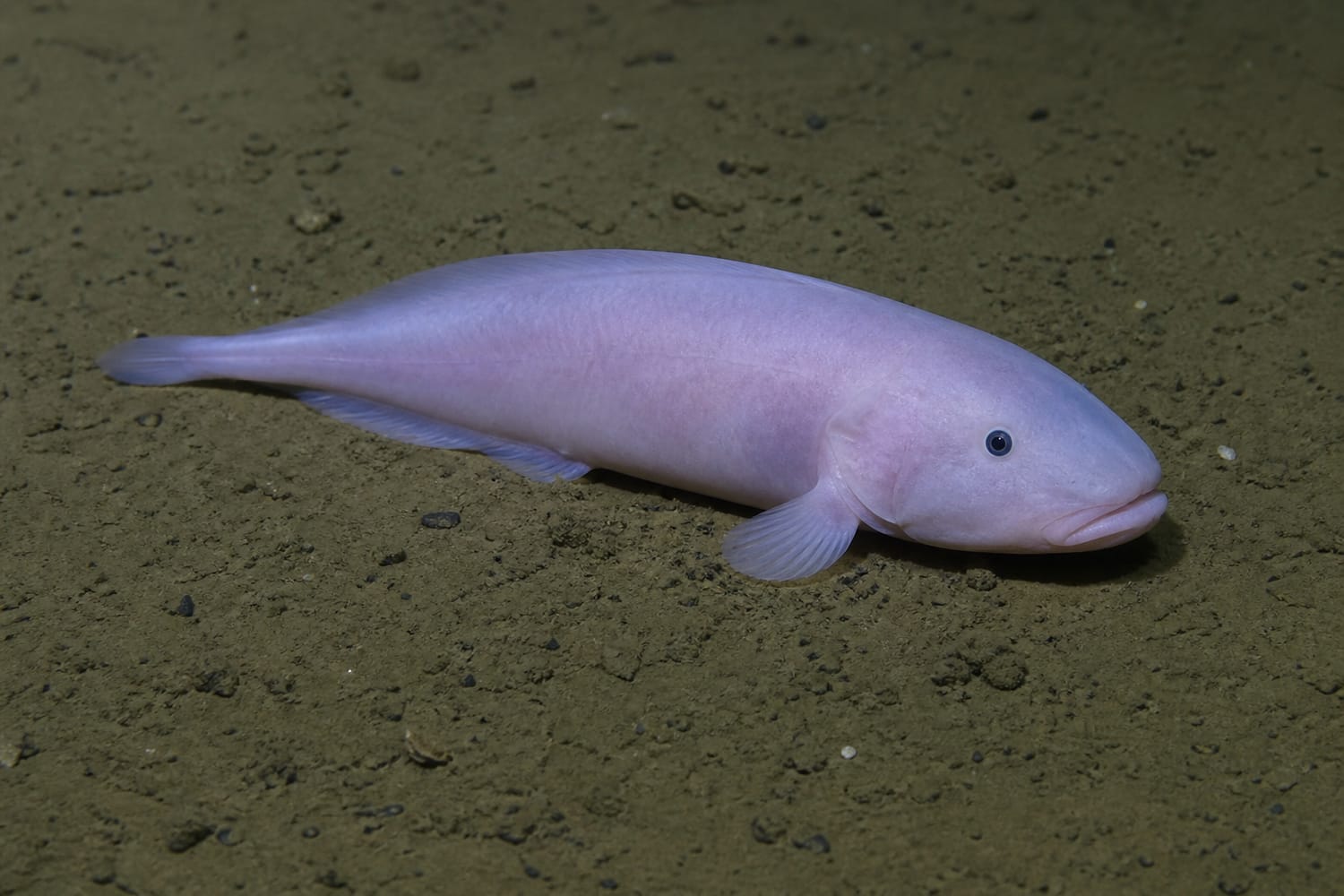
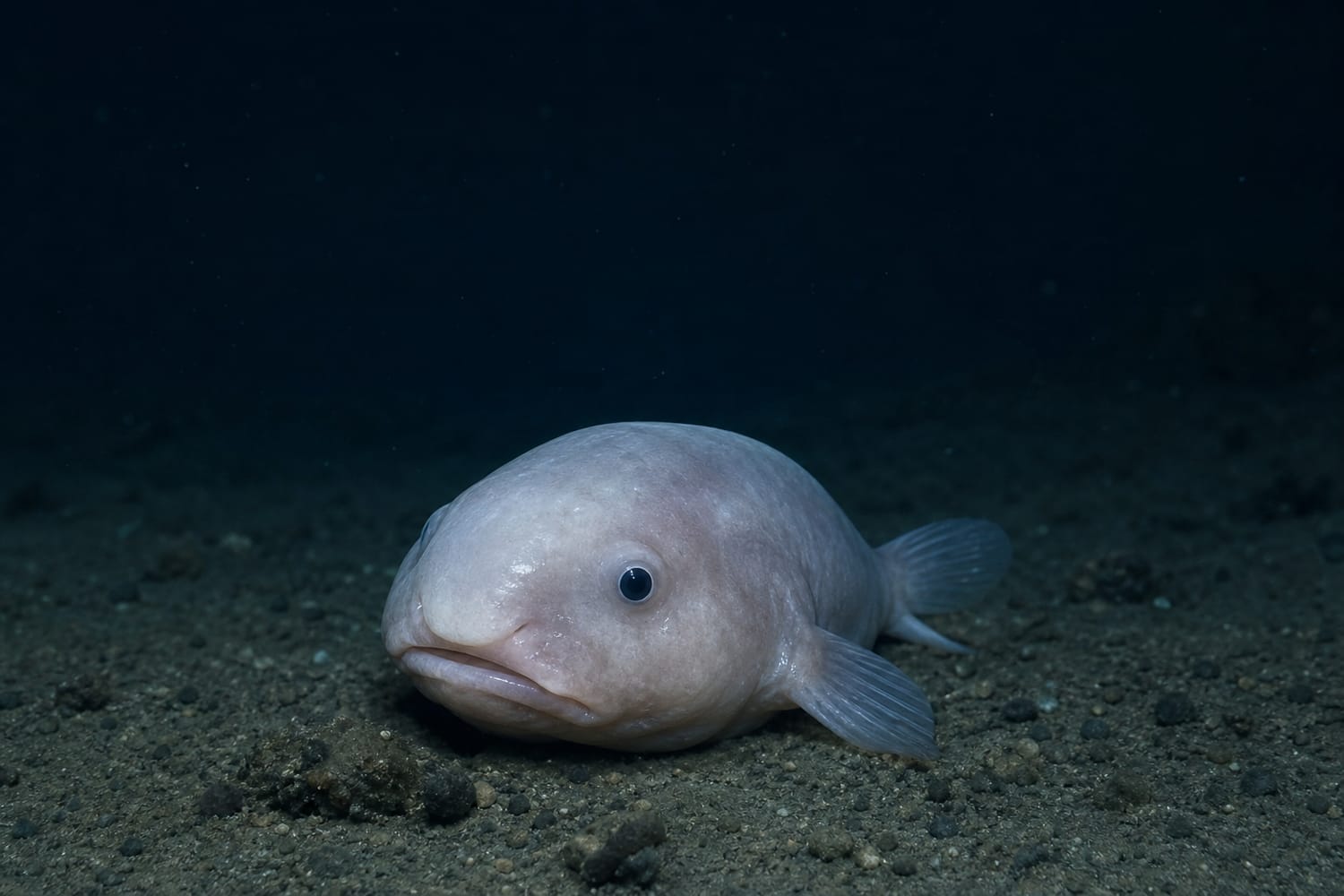
Among vertebrates, the deepest-living champions are snailfish. These soft-bodied fish belong to the family Liparidae, and they look very different from the streamlined predators people usually imagine when thinking of fish. Their bodies are gelatinous, pale, and delicate, with large heads and tapering tails.
For years, the Mariana snailfish, Pseudoliparis swirei, was one of the most famous deep-sea record-holders. It has been documented at depths of around 8,000 meters in the Mariana Trench. These fish are not accidental visitors. They live in the hadal zone, feeding on tiny crustaceans and other organisms that inhabit the trench environment.
In 2023, scientists filmed a snailfish in the Izu-Ogasawara Trench near Japan at approximately 8,336 meters, setting a new record for the deepest fish ever observed. This remarkable sighting pushed the known limits of vertebrate life slightly deeper.
Fish face a major biochemical challenge at extreme depths. Pressure affects proteins and cell membranes, threatening normal body function. Many deep-sea fish use a molecule called trimethylamine N-oxide, or TMAO, to help stabilize proteins under pressure. However, there appears to be a limit to how much TMAO a fish can use before it disrupts the balance of water and salts in its body. This may explain why fish are not found at the absolute deepest parts of trenches.
Amphipods: Tiny Giants of the Hadal Zone
If fish reach impressive depths, small crustaceans go even deeper. Amphipods are shrimp-like animals found throughout the ocean, from beaches to the deepest trenches. In hadal environments, they are among the most successful scavengers.
One of the best-known trench amphipods is Hirondellea gigas, found in the Mariana Trench, including near Challenger Deep. These animals have been collected from depths greater than 10,000 meters, making them some of the deepest-living animals ever directly sampled.
Amphipods thrive in trenches because they are excellent scavengers. Food is scarce in the deep sea, arriving mostly as “marine snow”—a slow fall of dead plankton, fecal pellets, and organic debris from above. Occasionally, large food falls such as dead fish, squid, or whales sink to the seafloor, creating temporary feasts. Hadal amphipods are quick to detect and consume these rare meals.
Their bodies are adapted to pressure, cold, and limited food. Some species have enzymes that work efficiently in icy conditions, while others possess flexible membranes that remain functional under immense pressure. Hirondellea gigas is especially interesting because it can digest wood-like plant material and other tough organic matter, giving it an advantage in a habitat where every calorie matters.
Sea Cucumbers on the Deepest Seafloor
Sea cucumbers may not look like record-breaking animals, but they are among the most important residents of the deep ocean. These echinoderms, relatives of sea stars and sea urchins, crawl across the seafloor feeding on sediment. In doing so, they recycle nutrients and help shape deep-sea ecosystems.
Deep-sea sea cucumbers have been observed and collected at hadal depths, including trenches deeper than 8,000 and 9,000 meters. Some are soft, translucent, and almost alien in appearance. Others have fin-like structures that allow them to swim briefly above the seafloor.
Their lifestyle is well suited to the deep ocean. Rather than chasing prey, many sea cucumbers process large amounts of sediment, extracting tiny particles of organic matter. In the food-poor abyss, this strategy is effective. They do not need speed or sharp senses in the same way predators do; they need patience, efficiency, and the ability to survive on little.
Sea cucumbers also show that the deepest ocean is not just a barren plain. It is a living landscape where animals feed, move, reproduce, and interact in complex ways.
Worms, Mollusks, and Other Hidden Residents
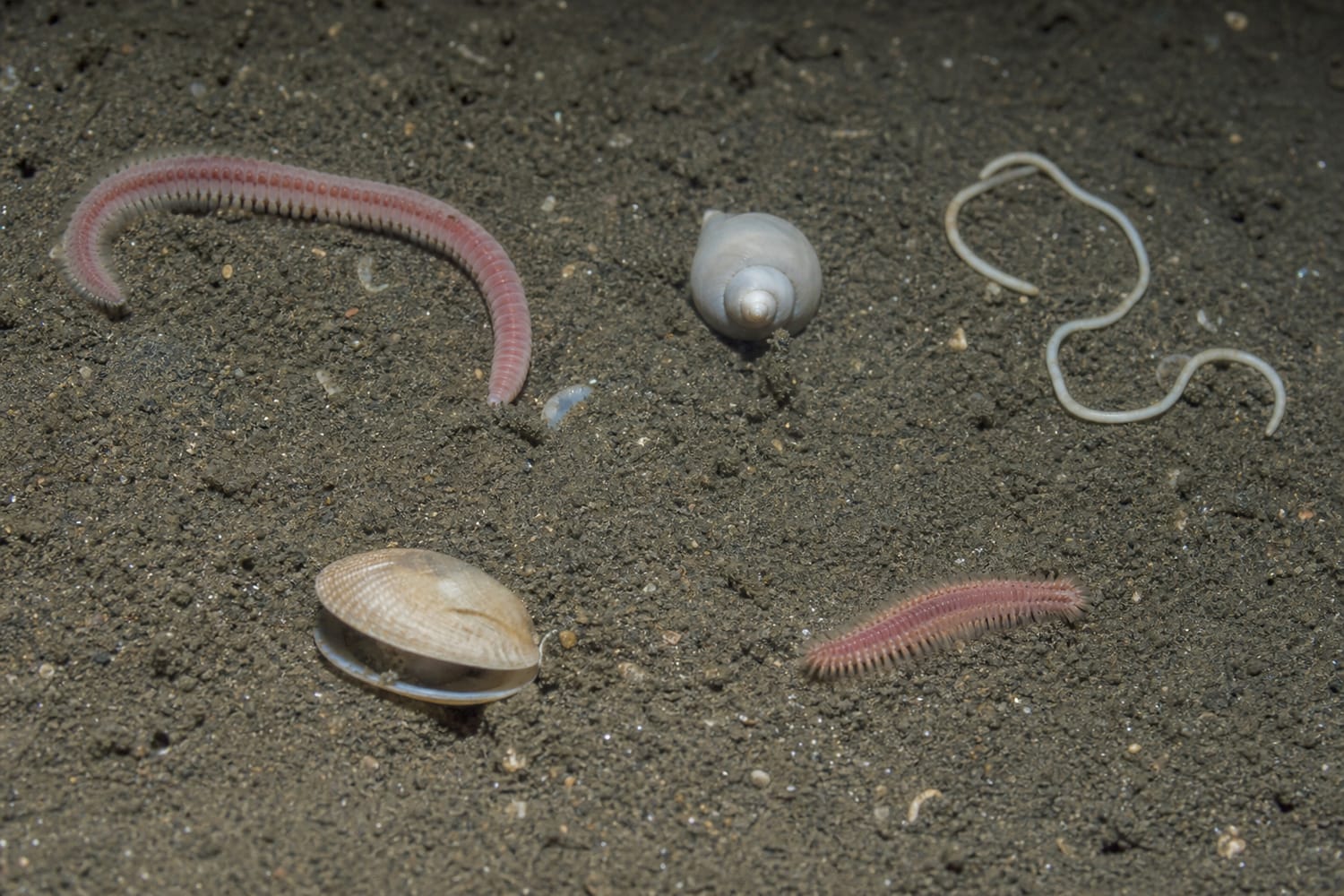
Some of the deepest-living animals are not as famous as snailfish or amphipods because they are small, fragile, or buried in sediment. These include polychaete worms, nematodes, bivalves, gastropods, and other invertebrates.
Nematodes, or roundworms, are especially widespread in deep-sea sediments. They are tiny, but they may be among the most abundant animals in the hadal zone. Because they live between grains of sediment, they are easy to overlook, yet they form an important part of the seafloor community.
Polychaete worms also occur at great depths. Some crawl through sediment, while others live in tubes or feed on particles drifting through the water. Mollusks, including small clams and snails, have also been found in deep trenches, though they are generally less visible than larger scavengers.
These animals reveal an important truth: the deepest ecosystems are not made only of dramatic record-holders. Much of the life there is small, hidden, and ecologically essential.
The Deepest Cephalopods and Predators
Cephalopods, including squid and octopuses, are among the ocean’s most intelligent and mysterious animals. While they are not known from the very bottom of the deepest trenches, some have been recorded at impressive depths.
Dumbo octopuses, named for their ear-like fins, are among the deepest-living octopuses. They have been observed at depths greater than 6,000 meters, drifting gracefully through the darkness. Their soft bodies and slow movements suit the cold, high-pressure world of the deep sea.
Bigfin squid have also been filmed at great depths, sometimes more than 6,000 meters below the surface. Their extremely long arms and ghostly appearance make them some of the most striking animals ever recorded by deep-sea cameras.
Predators at these depths must cope with limited prey. Many deep-sea hunters conserve energy by moving slowly, using ambush tactics, or feeding opportunistically. In the abyss, survival often depends less on speed and more on efficiency.
How Animals Survive Crushing Pressure
The pressure in the deepest trenches is almost unimaginable. At 10,000 meters, every square centimeter of an animal’s body experiences more than a metric ton of force. Yet deep-sea animals are not crushed because their bodies are mostly water, which does not compress easily.
The real danger is biochemical. Pressure can distort proteins, interfere with cell membranes, and disrupt vital chemical reactions. Deep-living animals have evolved pressure-resistant enzymes, flexible membranes, and chemical stabilizers that allow their cells to function.
Many deep-sea animals also lack gas-filled spaces, which would collapse under pressure. This is why deep-sea fish often have reduced or absent swim bladders. Soft, watery bodies are common because they are less vulnerable to pressure and require less energy to maintain.
Cold is another challenge. Most hadal environments are only a few degrees above freezing. Animals there grow slowly, move slowly, and often have low metabolic rates. In a world where food is rare and energy is precious, doing less can be a powerful survival strategy.
Why Deep-Sea Records Keep Changing
The list of deepest-living animals is not final. Every new expedition has the potential to change what we know. The hadal zone is one of the least explored habitats on Earth, and much of it remains unseen by human eyes or cameras.
Technology is opening this world. Baited landers attract scavengers and record them on video. Remotely operated vehicles collect samples and film behavior. Autonomous underwater vehicles map seafloor terrain. Genetic tools reveal species that may never be seen alive.
As exploration improves, scientists may discover animals living deeper than currently known, or entirely new groups adapted to trench life. Some records may shift by a few meters; others may be overturned completely.
What the Deepest Animals Teach Us
The deepest-living animals ever found are more than curiosities. They help scientists understand the limits of life on Earth. By studying them, researchers learn how cells function under pressure, how ecosystems survive without sunlight, and how evolution solves extreme challenges.
They may also offer clues about life beyond Earth. If animals can survive in dark, high-pressure environments on our own planet, then microbial or even complex life might exist in subsurface oceans on icy moons such as Europa or Enceladus.
The abyss and trenches remind us that Earth is still full of unknowns. Beneath kilometers of water, in darkness deeper than night, life continues. It crawls through sediment, swims through freezing water, scavenges rare meals, and breaks records simply by existing where survival seems impossible.