Television Crossed a Hollywood Line
There was a time when the phrase “expensive TV episode” meant a big battle, a celebrity guest star, or maybe a helicopter crash in a season finale. Television was supposed to be the smaller, cheaper cousin of cinema: faster schedules, tighter sets, fewer visual effects, and budgets that rarely threatened the balance sheets of major studios.
That line has now been thoroughly erased.
The most expensive TV episode ever made is generally understood to come from Amazon’s The Lord of the Rings: The Rings of Power, whose first season reportedly cost around $465 million to produce. With eight episodes, that puts the average cost at roughly $58 million per episode—more than the entire production budget of many successful feature films.
That number is staggering not just because it is high, but because of what it represents. A single hour of streaming television now costs more than mid-budget movies, Oscar contenders, horror hits, comedies, and even some action films. So how did one TV episode become more expensive than a movie? The answer lies in rights, world-building, visual effects, streaming competition, and a massive shift in how entertainment companies think about television.
The Episode That Redefined TV Budgets
When people talk about the most expensive TV episode ever made, they are usually talking about The Rings of Power on Prime Video. Technically, Amazon did not publicly announce that one specific episode cost exactly $58 million. Instead, that figure comes from the reported total production cost of the first season divided across its eight episodes.
Even with that caveat, the show sits in a category of its own.
For comparison, later seasons of Game of Thrones reportedly cost around $15 million per episode. Stranger Things season four was reported at around $30 million per episode. Marvel and Star Wars shows on Disney+ have also reached blockbuster-level budgets. But The Rings of Power pushed the ceiling higher than almost anything before it.
The scale was obvious from the first episode. Sweeping landscapes, enormous sets, digital kingdoms, elaborate costumes, fantasy creatures, battle sequences, and cinematic lighting all made the series look less like traditional television and more like an eight-hour movie. That was the point. Amazon was not simply making a fantasy show. It was trying to create a flagship franchise that could stand alongside the biggest theatrical properties in the world.
The Rights Alone Cost a Fortune
One of the biggest reasons The Rings of Power became so expensive is that the cost did not begin with cameras, actors, or visual effects. It began with the rights.
Amazon reportedly paid around $250 million just for the television rights to material from J.R.R. Tolkien’s world. That figure is separate from the reported production cost of the first season, but it matters because it shows the scale of the gamble from the beginning.
Buying into Middle-earth is not like purchasing an original script or adapting a modest novel. The Lord of the Rings is one of the most valuable fantasy properties in entertainment history. Peter Jackson’s film trilogy became a cultural phenomenon and won major awards, including Best Picture for The Return of the King. The brand carries enormous expectations from fans, critics, and the industry.
Amazon was not paying only for a story. It was paying for access to a mythology with global recognition. That kind of intellectual property comes at a premium, especially in the streaming era, where recognizable brands are seen as weapons in the battle for subscribers.
Building Middle-earth Is Not Cheap
Fantasy is one of the most expensive genres to produce because almost nothing can be taken for granted. A modern crime drama can shoot on city streets, in offices, and inside houses. A fantasy epic has to create entire civilizations from scratch.
The Rings of Power needed multiple kingdoms, races, languages, cultures, armor styles, weapons, ships, temples, forests, mines, and palaces. Every visual detail had to feel connected to Tolkien’s world while still being distinct from the earlier films.
That means armies of designers, builders, costume makers, dialect coaches, makeup artists, armorers, prop makers, concept artists, and historians of the source material. Even a single background character might require custom clothing, prosthetics, weapons, jewelry, and hair design.
Unlike a film, which may only need to sustain that level of detail for two or three hours, a television series has to maintain it episode after episode. Sets must be built for long-term use, characters need multiple costumes, locations must support ongoing storylines, and the visual language has to remain consistent across an entire season.
In other words, Amazon was not just producing episodes. It was constructing a world.
Visual Effects Turned Each Episode Into a Blockbuster
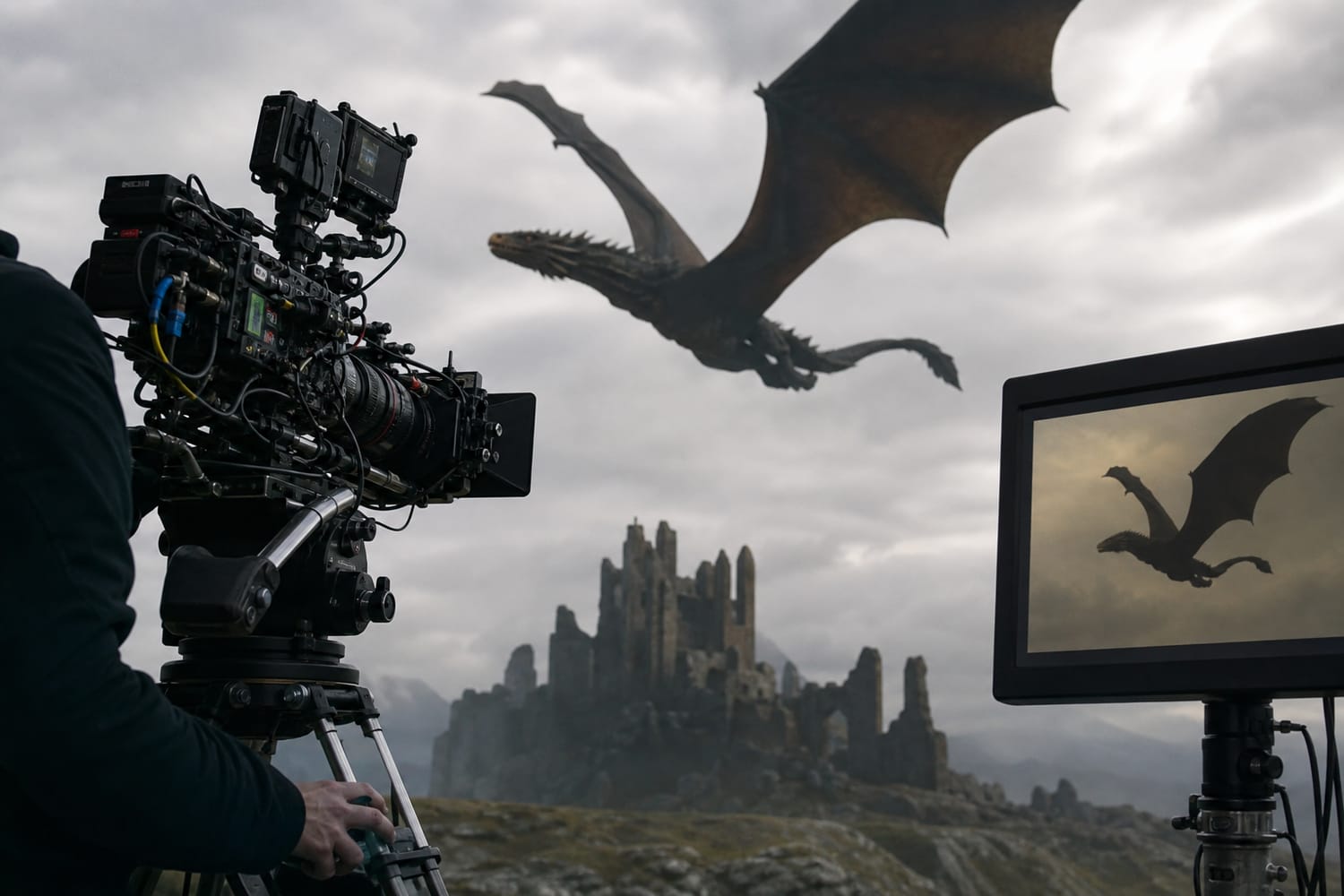
A major reason the cost rose above movie territory is visual effects. Fantasy on this scale demands extensive CGI, from cities and creatures to oceans, storms, landscapes, and magical elements.
Modern audiences are also less forgiving than ever. Viewers compare streaming shows directly to major theatrical releases. If a dragon, monster, kingdom, or battle looks cheap, social media notices immediately. For a franchise as famous as The Lord of the Rings, “good enough for TV” was never going to be good enough.
High-end visual effects require time and huge teams. Artists create digital environments, extend physical sets, simulate water and fire, animate creatures, remove wires, enhance crowds, and polish every frame until it feels cinematic. When a show has hundreds or thousands of effects shots across a season, the cost rises rapidly.
The irony is that viewers often notice bad effects more than good ones. If the work is excellent, the audience simply accepts the world as real. That invisible success is expensive.
Streaming Changed the Economics of Television
In the old television model, networks cared about ratings and advertising revenue. Budgets were tied to what a show could realistically earn from commercials, syndication, and international sales.
Streaming changed that logic.
For companies like Amazon, Netflix, Disney, and Apple, a major show is not just a show. It is a subscriber magnet, a brand statement, and a reason for people to stay inside an ecosystem. Prime Video is connected to Amazon Prime, which includes shopping benefits, music, shipping, and more. A huge fantasy series can help make the entire subscription feel more valuable.
That means the budget is not judged only by direct profit from one season. It is judged by attention, subscriber growth, retention, prestige, and long-term franchise potential. If a massive series convinces millions of people to keep paying for Prime, the cost can be justified in a broader business strategy.
This is why a TV episode can cost more than a movie. The “box office” is no longer a ticket window. It is a subscription economy.
Why It Cost More Than Many Movies
A $58 million episode is more expensive than many well-known films. Plenty of dramas, thrillers, horror movies, romantic comedies, and awards-season films are made for far less. Even some action movies come in below that number.
Movies can often control costs by limiting locations, shooting schedules, cast size, or visual effects. A film might focus on one central story with a contained structure. A series like The Rings of Power has to serve multiple storylines across different regions of Middle-earth, each with its own production demands.
There is also the startup cost. The first season of an enormous fantasy series is especially expensive because everything has to be designed and built from zero. Later seasons can reuse costumes, sets, digital assets, workflows, and production knowledge. But season one carries the cost of invention.
That makes the first batch of episodes unusually expensive, because they are laying the foundation for what the studio hopes will be a long-running franchise.
Was It Worth the Money?
Whether The Rings of Power was “worth it” depends on what standard you use.
Creatively, the show divided audiences. Some praised its scale, music, visuals, and ambition. Others criticized its pacing, writing choices, or relationship to Tolkien’s lore. With a property this beloved, universal agreement was impossible.
Financially, the question is more complicated. Amazon likely did not expect the first season to function like a normal TV production. It was a long-term investment. The company wanted a global fantasy franchise, a prestige title for Prime Video, and a show that could compete with the biggest names in streaming.
By that measure, the budget was not only about producing episodes. It was about buying relevance in the fantasy space and proving that streaming television could match, or exceed, theatrical spectacle.
The New Era of Mega-Budget Television
The most expensive TV episode ever made is not just a trivia answer. It is a symbol of where entertainment has gone.
Television used to imitate movies on a smaller scale. Now, the biggest shows are movies stretched across seasons, with budgets to match. The competition for attention has become so intense that streamers are willing to spend blockbuster money on individual episodes if they believe the result can anchor a platform.
The Rings of Power may not hold the record forever. As technology evolves and streaming wars continue, another company may eventually spend even more. But for now, its reported per-episode cost stands as a landmark moment: the point where television stopped being the cheaper alternative and became one of the most expensive forms of storytelling on Earth.