A Traffic Jam Beyond Imagination
Most traffic jams are measured in minutes or hours. A bad commute might steal an afternoon, delay a delivery, or turn a short drive into an exercise in patience. But in August 2010, a traffic jam in China became something far more extraordinary: a 12-day gridlock so severe that it entered the record books and became one of the most infamous transportation failures in modern history.
The jam took place on China National Highway 110, a major route connecting Beijing with Inner Mongolia and other northern regions. At its worst, vehicles were reportedly backed up for more than 100 kilometers. Drivers moved only a few kilometers per day, and some remained trapped for nearly two weeks.
What made this event so remarkable was not just its size, but its duration. This was not a short-term pileup caused by a single accident. It was a slow-motion transportation breakdown involving road construction, heavy freight traffic, limited infrastructure, and a rapidly growing economy that was putting enormous pressure on China’s road network.
Where the Gridlock Happened
The traffic jam occurred mainly along the Beijing-Tibet Expressway and National Highway 110, especially in the stretch between Beijing and Inner Mongolia. This route was, and still is, an important transportation corridor for goods moving from the resource-rich northern and western regions of China toward the capital and other industrial centers.
In 2010, China was experiencing explosive economic growth. Coal, construction materials, and consumer goods were constantly moving across the country. Inner Mongolia, in particular, was a major supplier of coal, and thousands of heavy trucks used the highway to transport it toward Beijing and surrounding provinces.
This steady flow of freight created a constant strain on the road. When maintenance and construction work reduced the highway’s capacity, the already crowded route quickly became overwhelmed. What began as a slowdown soon grew into a massive, nearly immovable line of cars, trucks, and buses.
How a Traffic Jam Lasted 12 Days
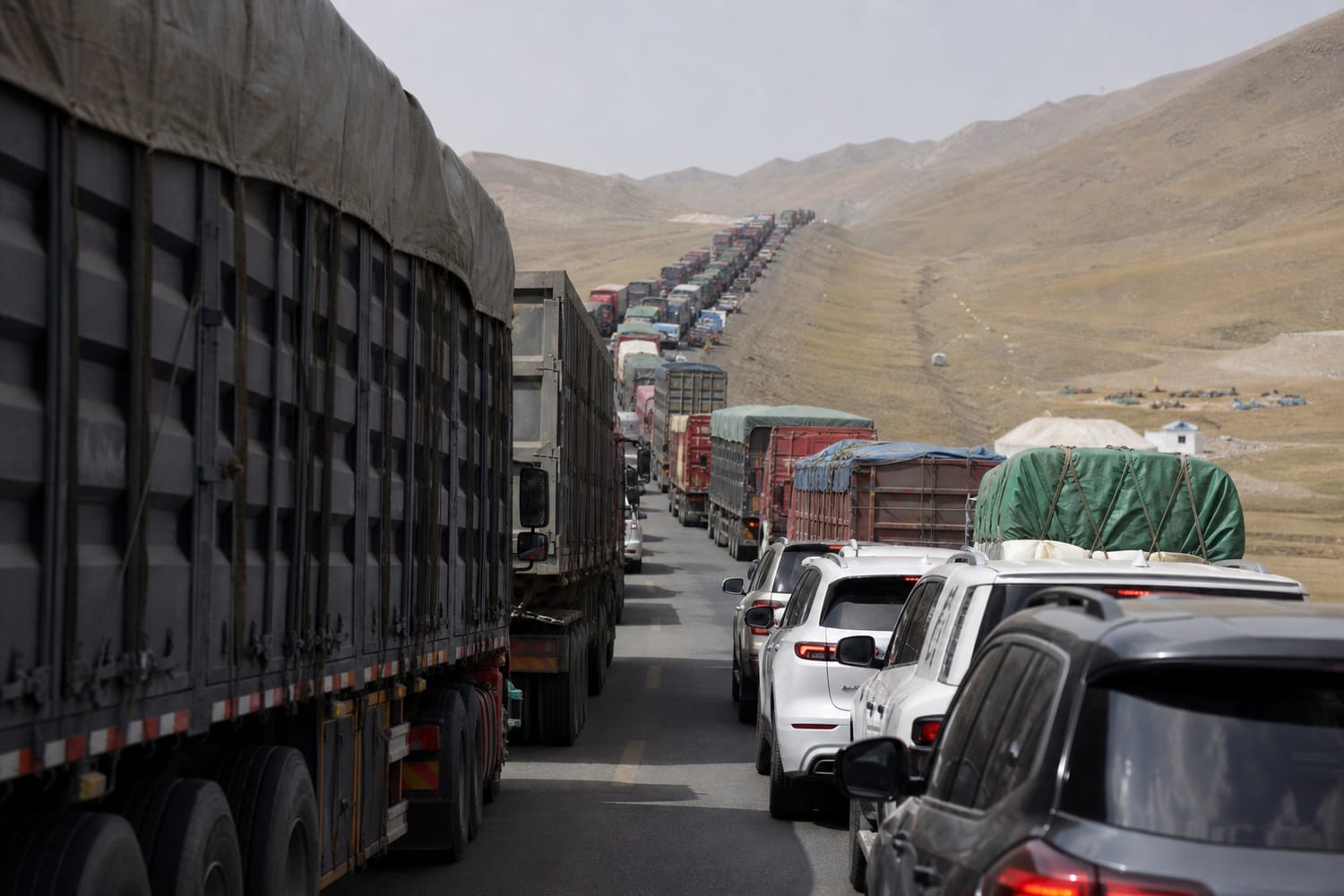
The gridlock began around August 14, 2010. Roadwork on the Beijing-Tibet Expressway had reduced available lanes, forcing vehicles into narrower traffic patterns. At the same time, an unusually high volume of coal trucks was traveling through the region.
Truck drivers had few good alternatives. Many were carrying heavy loads over long distances, and rerouting was difficult. As more vehicles entered the highway, traffic slowed to a crawl. Then it slowed even further. Eventually, for long stretches, it barely moved at all.
Some drivers reported advancing less than one kilometer per day. Others said they spent days in the same general area, inching forward only when vehicles ahead of them moved slightly. The jam became less like a traffic delay and more like a temporary roadside settlement.
The situation was made worse by breakdowns and minor accidents. When vehicles are trapped bumper to bumper for days, even a small mechanical failure can block movement. Heavy trucks, overheated engines, driver fatigue, and poor road conditions all contributed to the problem.
Life Inside the Jam
For the people stuck in the gridlock, the experience was exhausting, frustrating, and surreal. Drivers slept in their vehicles, stretched on the roadside, and waited under the summer heat with little idea of when they would reach their destinations.
Food and water quickly became valuable. Since vehicles were stranded for days, many drivers ran out of supplies. Local residents and roadside vendors began selling instant noodles, bottled water, snacks, and cigarettes to those trapped in traffic.
Reports from the time described prices rising sharply. A bottle of water or a simple meal could cost several times more than usual. For drivers who had no choice but to buy from nearby sellers, the jam became expensive as well as inconvenient.
Still, the traffic jam also created strange moments of community. Drivers talked with one another, shared information, played cards, and tried to make the best of a miserable situation. Truckers, used to long hours on the road, were perhaps better prepared than ordinary motorists, but even they found the delay extreme.
The highway had become a temporary world of its own: engines idling, people waiting, vendors walking between vehicles, and police attempting to restore order.
Why the Jam Became So Severe
The 12-day traffic jam was not caused by one single problem. Instead, it was the result of several factors happening at once.
One major cause was road construction. Maintenance work had reduced road capacity, creating a bottleneck on a route that was already heavily used. When too many vehicles tried to pass through too few lanes, congestion built rapidly.
Another cause was the huge number of coal trucks. China’s economic boom required enormous amounts of energy, and coal remained a key fuel source. Trucks carrying coal from Inner Mongolia to other parts of China placed heavy pressure on the highway system.
A third factor was infrastructure. Although China had been building roads at an astonishing pace, vehicle ownership and freight demand were growing just as quickly. In some regions, road networks struggled to keep up with the speed of economic development.
Finally, traffic management was difficult. Once a jam reached a certain size, clearing it became a massive logistical challenge. Authorities had to manage construction, redirect vehicles, respond to breakdowns, and prevent new traffic from adding to the blockage.
The Role of China’s Rapid Growth
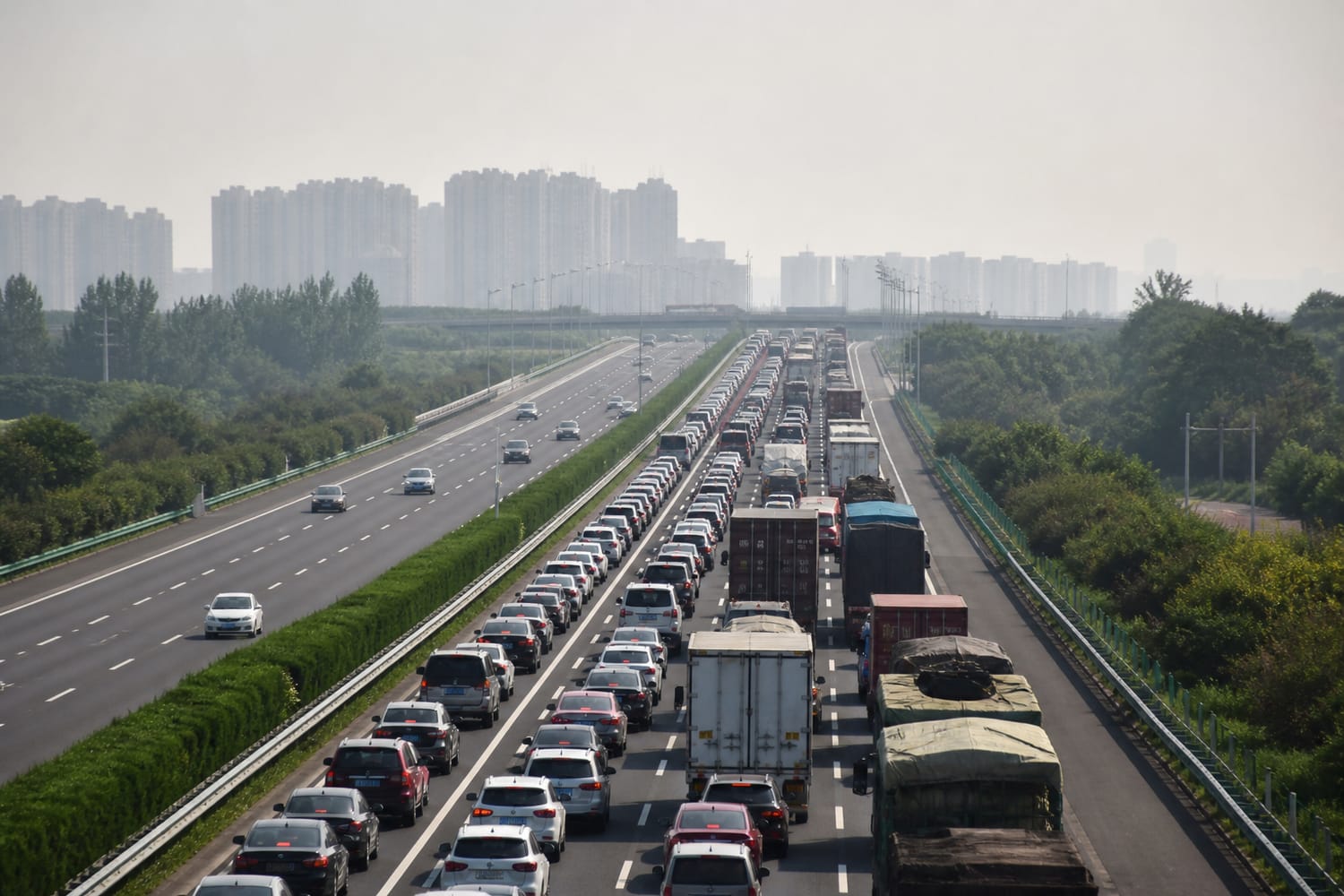
The 2010 gridlock was more than a traffic story. It was also a symbol of China’s transformation.
In just a few decades, China had shifted from a country with relatively limited private car ownership to one of the world’s largest automobile markets. Highways expanded, cities grew, factories multiplied, and freight movement surged.
This growth created enormous opportunities, but it also exposed weaknesses. Roads that had once been adequate became overcrowded. Freight routes became clogged with trucks. Urban planning and logistics systems had to adapt quickly to new demands.
The traffic jam showed how infrastructure can become a victim of economic success. More factories meant more goods. More goods meant more trucks. More wealth meant more cars. Without enough capacity and coordination, the system could become overloaded.
In that sense, the world-record gridlock was not merely an accident. It was a warning about what happens when transportation demand grows faster than the systems designed to support it.
How Authorities Responded
Chinese authorities worked to ease the congestion by directing traffic, managing construction areas, and trying to prevent additional vehicles from entering the worst-hit sections. Police were deployed along the route to maintain order and assist stranded motorists.
Some trucks were reportedly diverted to alternate routes, while officials tried to speed up roadwork and clear blockages. However, because the jam involved so many vehicles over such a long distance, progress was slow.
Unlike a typical traffic jam, there was no single obstacle that could simply be removed. The entire system was overloaded. Clearing one section did not immediately solve the problem if more trucks continued to arrive from behind.
Eventually, after nearly two weeks, the congestion began to ease. Vehicles started moving more steadily, and the massive line gradually dissolved. But by then, the incident had already attracted international attention.
A World Record and a Global Lesson

The China National Highway 110 traffic jam is often cited as the longest traffic jam in history by duration, lasting around 12 days. While other jams have been longer in distance, such as massive holiday backups in Europe or evacuation-related congestion in the United States, few have matched the sheer persistence of the 2010 gridlock.
Its world-record status made it famous, but its real importance lies in what it revealed. Modern transportation systems are fragile when demand, infrastructure limits, construction, and logistics problems collide.
The jam also highlighted the importance of freight planning. Passenger cars often receive the most attention in discussions about traffic, but trucks are essential to the economy. When freight corridors fail, the consequences can ripple through supply chains, energy markets, and local communities.
For governments and planners, the lesson was clear: building roads is not enough. Highways must be maintained carefully, traffic must be monitored in real time, and alternative routes must be available when key corridors become overloaded.
Could It Happen Again?
A 12-day traffic jam may sound unbelievable, but extreme congestion remains a real risk in many parts of the world. Rapid urbanization, rising car ownership, aging infrastructure, and dependence on trucking can all create conditions for major gridlock.
Today, technology offers better tools for preventing such disasters. GPS navigation, traffic cameras, smart toll systems, and real-time logistics platforms can help authorities detect problems earlier and redirect vehicles more efficiently.
However, technology cannot eliminate congestion entirely. If too many vehicles depend on the same route, and if there are not enough alternatives, a serious disruption can still create chaos.
The 2010 China traffic jam remains a powerful reminder that roads are living systems. They depend on planning, maintenance, driver behavior, economic demand, and emergency response. When those elements fall out of balance, even a modern highway can become a parking lot stretching beyond the horizon.
The Legacy of the 12-Day Gridlock
The longest traffic jam in history continues to fascinate people because it turns an everyday annoyance into something almost unimaginable. Everyone understands the frustration of being stuck in traffic, but few can imagine being trapped for days, sleeping beside the road, paying inflated prices for water, and moving only a few meters at a time.
The 12-day gridlock on China National Highway 110 was more than a transportation failure. It was a snapshot of a rapidly changing country, a test of human patience, and a case study in the limits of infrastructure.
It also reminds us that mobility is something we often take for granted. Roads seem simple when they work. We enter a vehicle, choose a destination, and expect to arrive. But behind every smooth journey is a complex network of planning, maintenance, fuel, labor, law enforcement, and logistics.
When that network breaks down, the results can be historic. In August 2010, a highway in northern China became the scene of the world’s most legendary traffic jam: a 12-day standstill that transformed ordinary drivers into unwilling participants in a record-breaking event.