A Sound That Refuses to Disappear
Deep beneath the Scottish Highlands lies an abandoned wartime oil tank with an extraordinary acoustic secret. A single pistol shot inside the chamber produces reverberation lasting up to 112 seconds at low frequencies. Officially recognized for a 75-second broadband decay, Inchindown is home to the world’s longest recorded echo in a human-made structure.
Most sound records focus on overwhelming volume, from explosions to the loudest concerts ever staged. Inchindown is different. Its record is not about how loudly a sound begins, but how slowly it disappears.
A Secret Built for War
The Inchindown oil depot stands near Invergordon in Ross-shire, Scotland. Construction began during the tense years before World War II, when Britain feared that German bombers could attack exposed naval fuel supplies.
Engineers dug six enormous storage tanks into a hillside, surrounding them with rock and reinforced concrete. Completed in 1941, the hidden complex supplied fuel for Royal Navy ships using the nearby anchorage. Five of its tanks could each hold approximately 25.5 million liters of oil.
Their underground location offered protection from aerial attack, while thick walls reduced the risk of leaks and structural failure. The designers were solving a military engineering problem, not creating an acoustic attraction. Yet those same protective features eventually produced an environment unlike almost any other place on Earth.
The tanks were decommissioned in 2002. Once drained, Tank Number 1 became a vast, empty chamber waiting for someone to test its remarkable sound.
Inside the Underground Giant
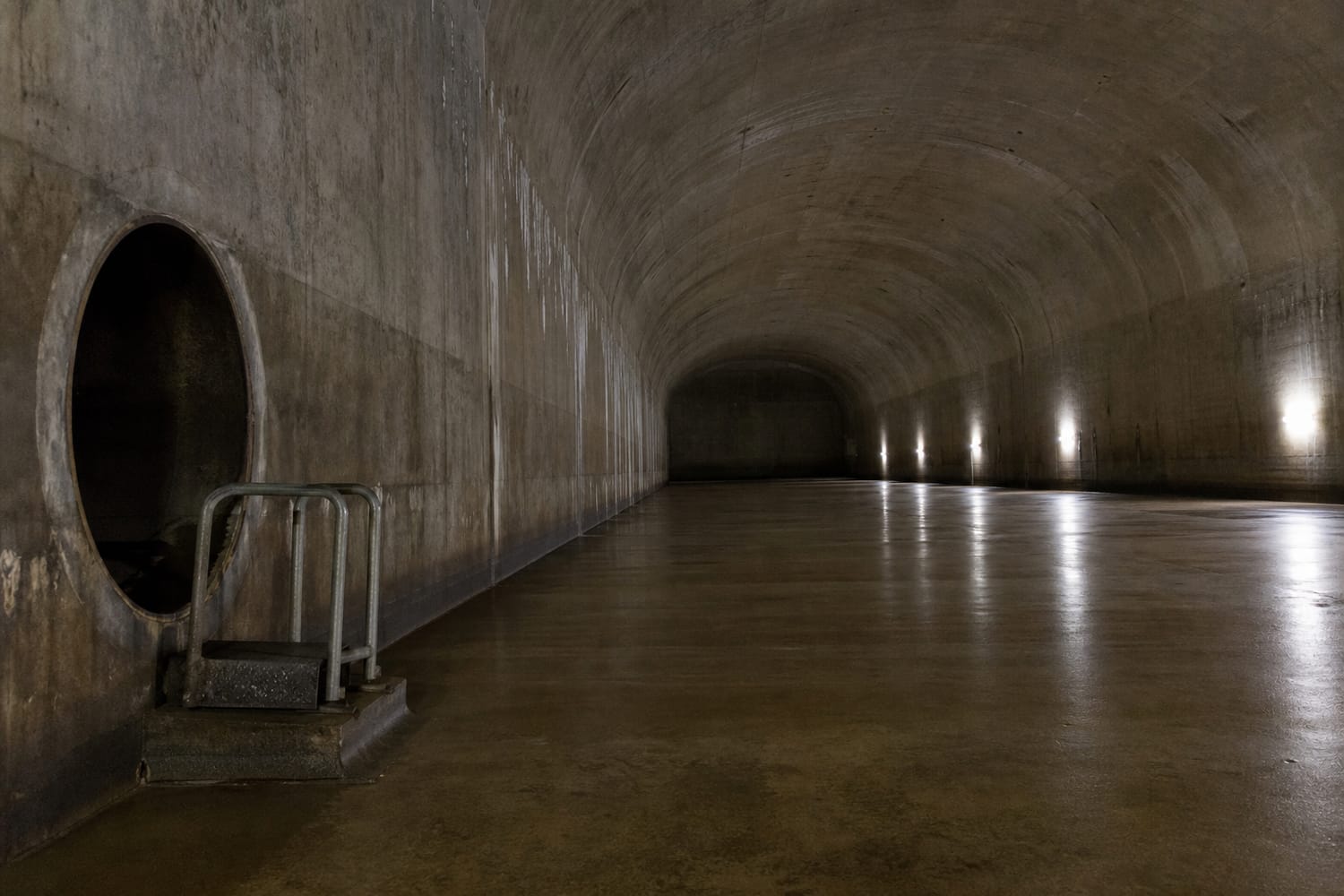
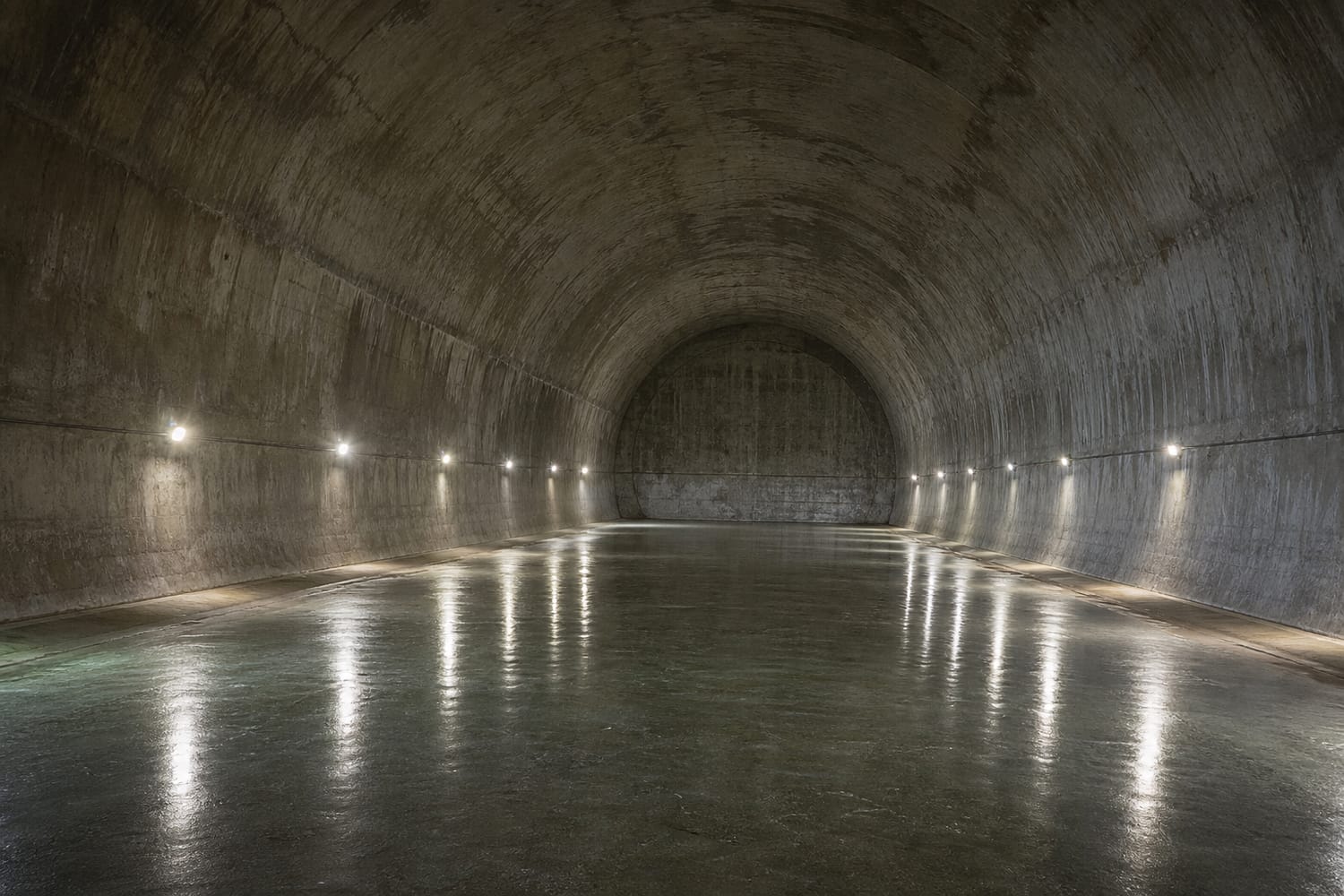
Tank Number 1 measures approximately 237 meters long, 9 meters wide, and 13.5 meters high. That makes it longer than two soccer fields placed end to end. Its concrete walls are around 45 centimeters thick, and an arched ceiling stretches along the entire chamber.
Entering is no ordinary doorway experience. Access is through narrow maintenance pipes measuring only about 45 centimeters in diameter. During the tank’s working life, these openings allowed maintenance crews to inspect the interior.
Beyond the pipe is an immense enclosed space with no windows, furnishings, curtains, carpeting, or crowds. Almost nothing interrupts the sound waves traveling between its hard surfaces.
Several characteristics make the tank acoustically exceptional:
- An enormous internal volume
- Long, uninterrupted concrete walls
- A curved ceiling that redirects sound
- Thick surfaces that allow little energy to escape
- Minimal sound-absorbing material
- A sealed underground position protected from outside noise
Together, these features turn a utilitarian fuel container into a gigantic reverberation chamber.
The Shot That Entered the Record Books
Acoustic engineer Professor Trevor Cox and heritage expert Allan Kilpatrick visited Inchindown to investigate reports about its unusual sound. On June 3, 2012, they conducted measurements inside Tank Number 1 using a starting pistol loaded with blanks.
The pistol created an impulse: a short, sharp burst containing many frequencies. Two professional microphones captured the response as the sound reflected repeatedly from the tank’s walls, floor, and ceiling. The recording equipment operated at a sampling frequency of 44.1 kilohertz with 24-bit precision.
The results were astonishing. Guinness World Records recognized a reverberation time of 75 seconds, destroying the previous 15-second record associated with Hamilton Mausoleum in Lanarkshire. The official longest echo record remains associated with Cox, Kilpatrick, and Inchindown.
However, the frequently quoted figure of 112 seconds is also correct. That measurement applies to the tank’s reverberation at 125 hertz, a low frequency. At middle frequencies important to speech, the decay lasted about 30 seconds. The official 75-second result represents broadband sound rather than one narrow frequency band.
Echo or Reverberation?
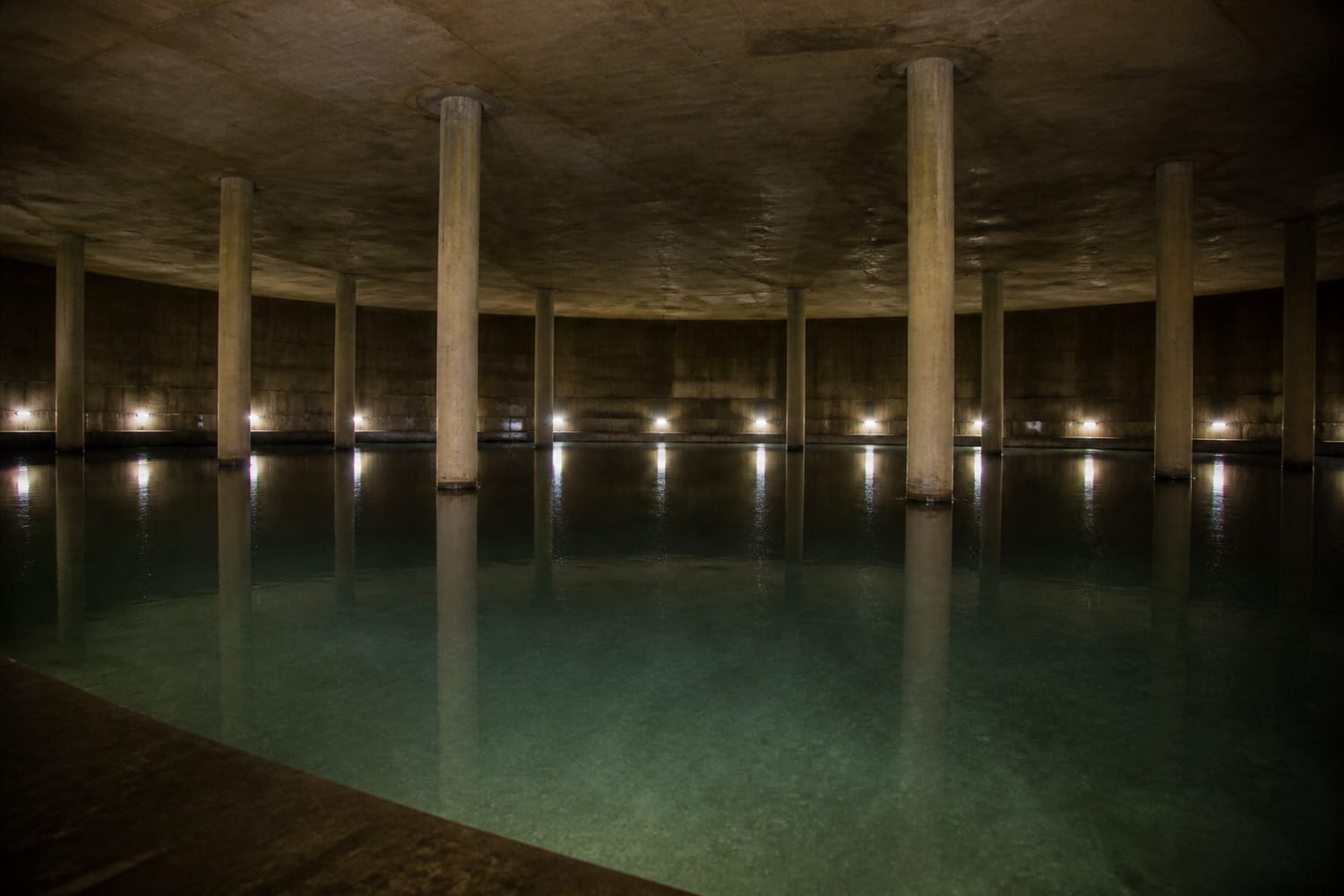
Although the achievement is commonly called the world’s longest echo, “reverberation” is the more scientifically accurate term.
An echo is usually heard as a distinct repetition. Shout toward a distant cliff, for example, and the reflected sound may return as a recognizable second shout. Reverberation occurs when countless reflections arrive so closely together that they overlap, creating a gradually fading tail.
Inside Inchindown, the sound does not simply bounce once and return. It reflects thousands of times from different parts of the chamber. Each reflection loses a small amount of energy, but the tank absorbs so little that the overall decay continues for an extraordinary period.
Researchers measure reverberation time by calculating how long sound takes to fall 60 decibels below its initial level. It is a technical measurement rather than simply the time during which someone believes they can hear something. The methodology used at Inchindown followed an international standard for measuring room acoustics.
Why the Tank Holds Sound for So Long
In an ordinary furnished room, sound energy quickly encounters carpets, curtains, couches, people, and other soft or irregular objects. These surfaces absorb or scatter much of that energy. As a result, speech remains understandable and individual sounds do not linger excessively.
Inchindown offers almost the opposite conditions. Its hard concrete boundaries reflect sound efficiently, while its vast dimensions give the waves enormous distances to travel. The tank’s arched shape also prevents the acoustics from behaving like those of a simple rectangular room.
Frequency plays an important role. High-frequency sounds, which have shorter wavelengths, lose energy relatively quickly. Low bass frequencies are harder for the massive structure to absorb. This explains why the 125-hertz component remained measurable for nearly two minutes.
The result is not a clean, cartoon-like “bang, bang, bang.” Instead, the initial shot expands into a dense, rolling cloud of sound that slowly changes as its higher frequencies disappear and its deepest tones remain.
A Place Where Musicians Can Accompany Themselves
Extreme reverberation creates fascinating possibilities for musicians. A singer can produce one note, move to another, and hear the earlier tone lingering beneath the new one. In effect, the tank allows a performer to harmonize with their own recent past.
Yet the space is also difficult to control. Fast music can become an indistinct mass because every note overlaps with dozens of those that came before it. Slow drones, widely spaced percussion, sustained vocal tones, and ambient compositions are better suited to the chamber.
The tank effectively acts as a gigantic natural effects processor. Modern recording software can imitate reverberant spaces, but Inchindown produces the phenomenon through physical architecture alone. Musicians and sound designers can also capture its impulse response and use digital convolution to apply the tank’s acoustic character to other recordings.
That makes Inchindown an intriguing counterpart to projects involving the longest continuous sound. One record concerns sound sustained at its source; the other reveals how architecture can sustain sound after the source has stopped.
The Lasting Voice of an Industrial Relic
Inchindown’s extraordinary acoustics were never planned. They emerged from wartime secrecy, immense scale, and uncompromising engineering. A structure designed to protect naval fuel now preserves something far less tangible: the fading energy of a sound.
The record also demonstrates that silence is rarely immediate. Every room shapes what happens after a noise is made, whether the decay lasts a fraction of a second or nearly two minutes.
Inside Tank Number 1, a momentary pistol shot becomes an acoustic event with its own long aftermath. The source stops instantly, but the underground chamber keeps speaking—reflection after reflection—until the final bass vibrations surrender to silence.