Deep beneath the windswept surfaces of Antarctica and Greenland lies one of Earth’s most extraordinary archives: ancient ice. Layer by layer, snowfall has accumulated over hundreds of thousands—and in some places potentially millions—of years, compressing into ice that preserves tiny clues about the planet’s past. Within this frozen record are trapped air bubbles, dust particles, volcanic ash, sea salts, and chemical signatures that reveal how Earth’s climate has changed over time.
The oldest ice on Earth is more than a geological curiosity. It is a time capsule, holding direct evidence of ancient atmospheres and long-lost climates. By studying it, scientists can reconstruct past temperatures, greenhouse gas concentrations, atmospheric circulation patterns, and even the timing of volcanic eruptions. This information helps us understand how Earth’s climate system works—and how today’s rapid changes compare with natural climate shifts of the past.
Why Ancient Ice Matters
Ice cores are among the most valuable tools in climate science because they provide a direct record of the atmosphere. Unlike many other climate archives, such as tree rings or ocean sediments, ice cores contain bubbles of ancient air. These bubbles are tiny samples of the atmosphere as it existed when the snow fell and was eventually sealed into ice.
By extracting and analyzing these bubbles, scientists can measure past levels of carbon dioxide, methane, and other gases. This makes ice cores especially important for understanding the connection between greenhouse gases and global temperature. Over the past 800,000 years, ice core records show a strong link between carbon dioxide levels and cycles of warming and cooling.
Ancient ice also reveals how quickly climate can change. Some ice core records show abrupt shifts in temperature and atmospheric circulation, sometimes occurring within decades. These changes are a reminder that Earth’s climate system is not always slow or predictable. It can respond rapidly when key thresholds are crossed.
Where the Oldest Ice Is Found
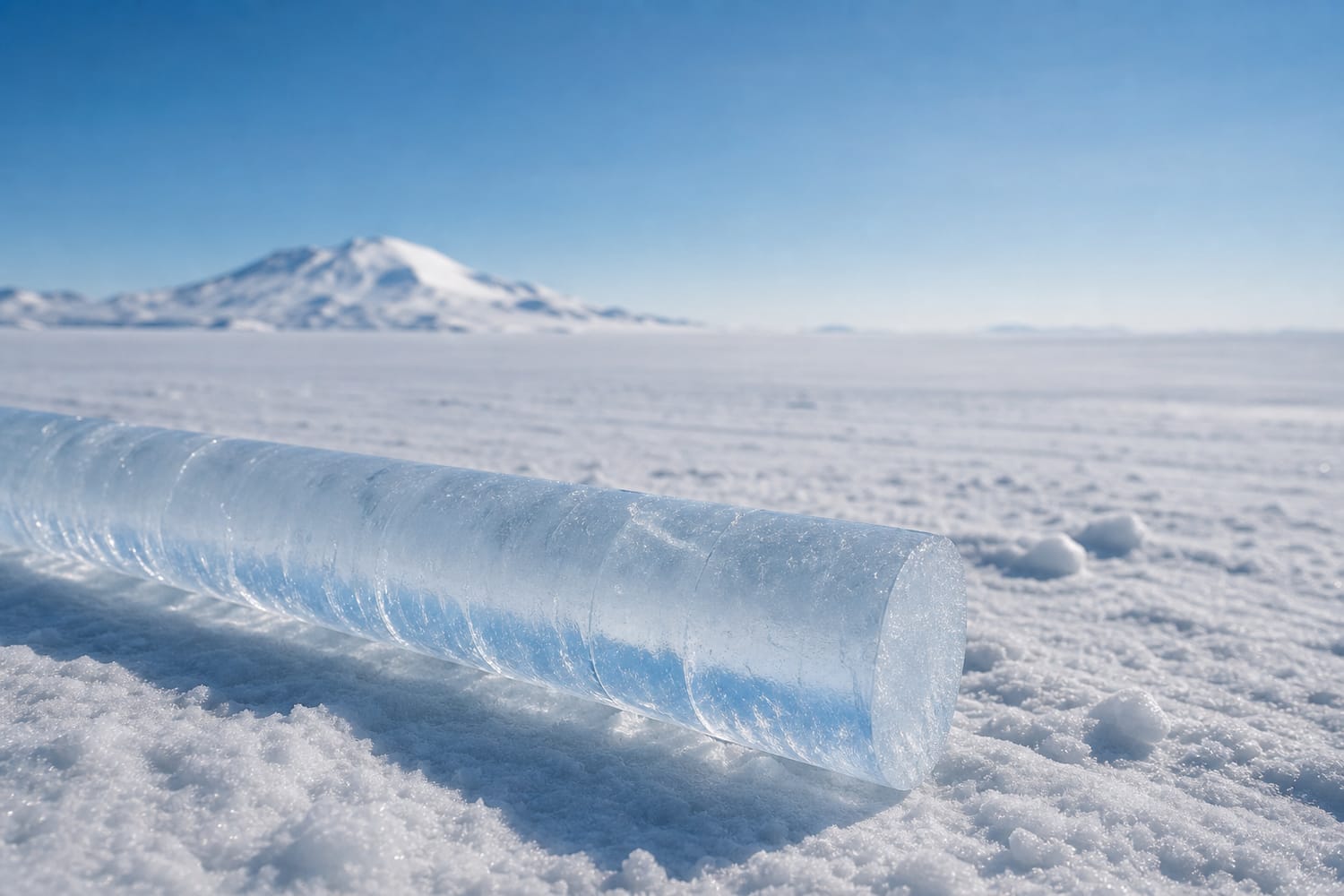
The oldest continuous ice core record recovered so far comes from Antarctica. The European Project for Ice Coring in Antarctica, known as EPICA, drilled at Dome C and recovered ice dating back about 800,000 years. This core transformed climate science by extending the atmospheric record far beyond what had previously been available.
But scientists believe even older ice exists. The great challenge is finding it. The oldest ice is usually located near the base of ice sheets, where the deepest layers have been compressed and buried for immense periods of time. However, ice sheets are not static. They flow under their own weight, and this movement can fold, mix, melt, or destroy the oldest layers.
Antarctica is the best place to search because its ice sheet is thick, cold, and ancient. Regions such as Dome C, Dome Fuji, and other high, dry areas of East Antarctica are especially promising. These places have low snowfall rates, which means that each year adds only a thin layer of snow. Over time, this allows a very long record to be packed into the ice without requiring impossible drilling depths.
How Ice Preserves Climate History
When snow falls on an ice sheet, it contains chemical traces from the atmosphere. Over time, additional snowfall buries it. The weight of the overlying snow compresses the lower layers, gradually transforming snow into firn and then into solid ice. During this process, small pockets of air become trapped, preserving samples of the atmosphere.
The ice itself also contains clues. The ratio of oxygen and hydrogen isotopes in the water molecules can indicate past temperatures. Warmer and colder periods leave different isotopic signatures, allowing scientists to reconstruct temperature trends over time.
Dust in the ice can reveal conditions in deserts and dry regions far away. Higher dust levels often indicate colder, windier, and drier periods, such as ice ages. Volcanic ash and sulfate layers can be matched to known eruptions, helping researchers date the ice and understand how volcanic activity affected climate.
Even sea salt and chemical impurities can tell a story. They provide evidence of changing sea ice extent, ocean conditions, and atmospheric circulation. In this way, a single ice core becomes a layered record of interconnected Earth systems.
The Search for Million-Year-Old Ice
One of the major goals in climate science is to recover ice that is more than one million years old. Scientists are especially interested in ice from a period known as the Mid-Pleistocene Transition, which occurred roughly 1.2 million to 800,000 years ago.
Before this transition, Earth’s ice ages followed a cycle of about 41,000 years, linked to changes in the tilt of Earth’s axis. After the transition, glacial cycles became longer and stronger, occurring roughly every 100,000 years. The reason for this shift remains one of the big unanswered questions in climate science.
A million-year-old ice core could help solve the mystery. If scientists can measure greenhouse gas levels across this transition, they may be able to determine whether changes in carbon dioxide, ice sheet behavior, ocean circulation, or other factors caused the shift in glacial timing.
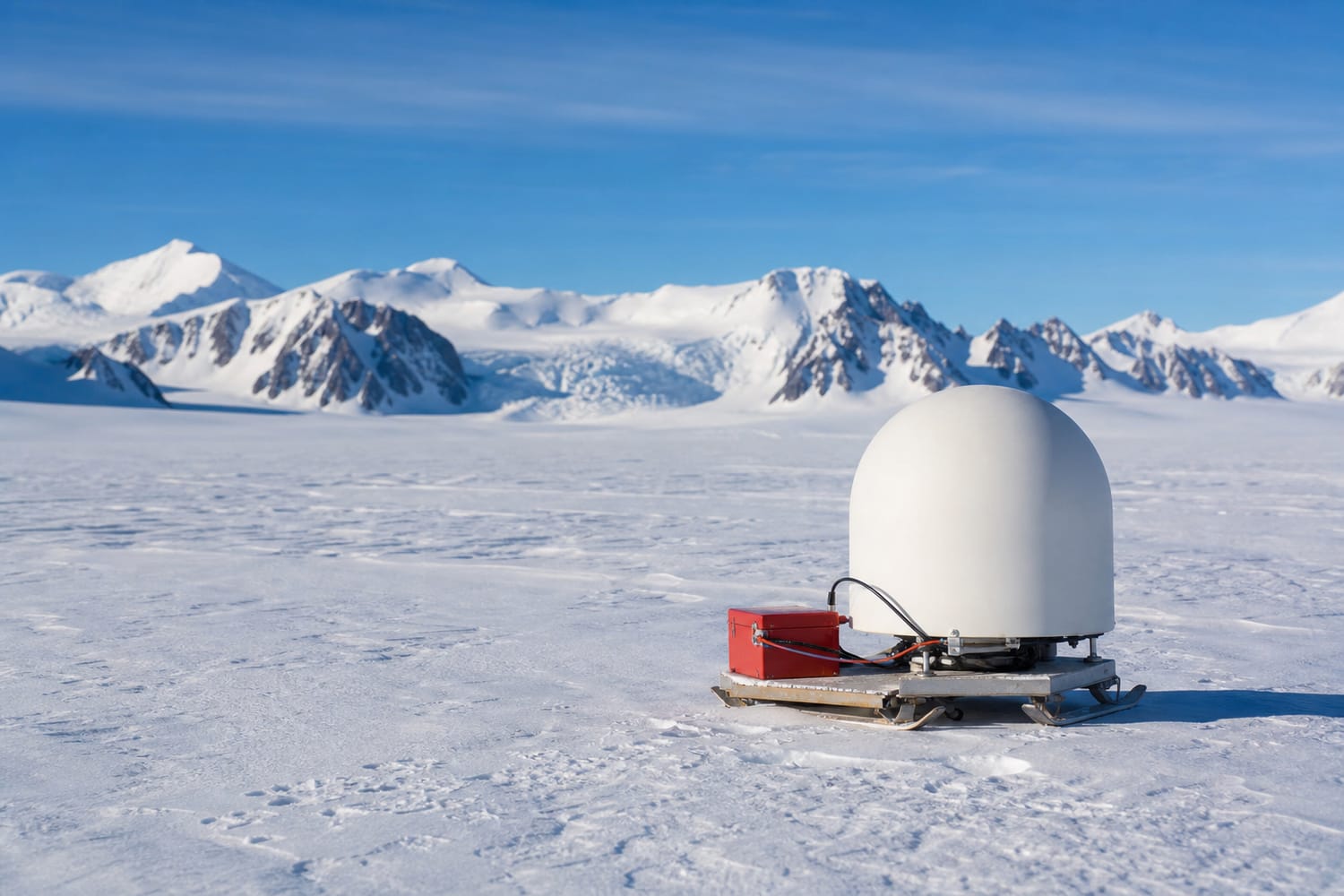
Finding such ice requires advanced mapping techniques. Researchers use radar to look through ice sheets and detect internal layers, bedrock shape, and areas where the oldest ice may be preserved. They must identify places where the ice is thick enough to contain a long record, but not so warm at the base that ancient layers have melted away.
Drilling Into the Deep Past
Recovering ancient ice is a remarkable engineering challenge. Ice core drilling takes place in some of the harshest environments on Earth, where temperatures can plunge far below freezing and storms may last for days. Equipment must be transported across remote Antarctic terrain, often by aircraft or long overland traverses.
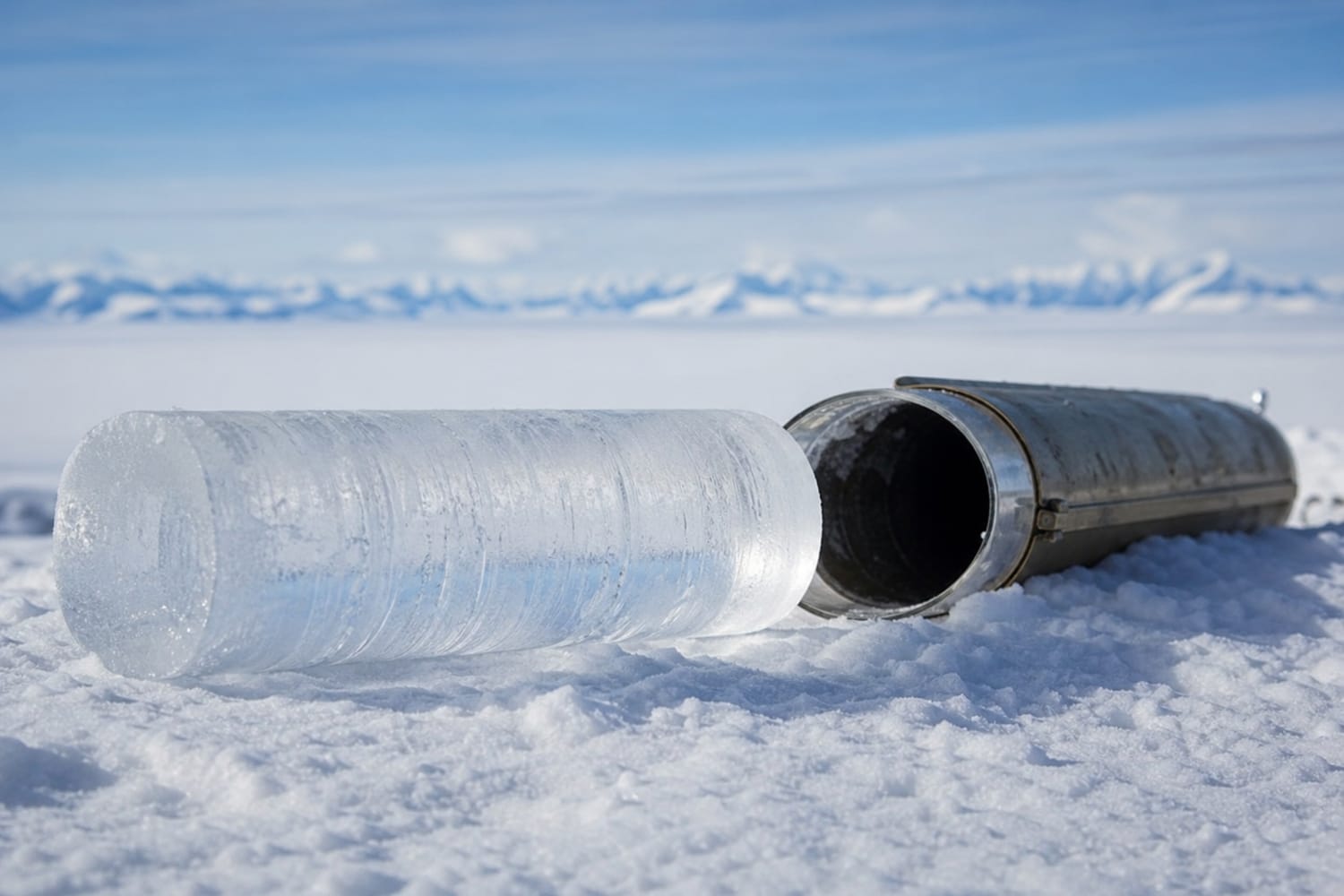
Drilling does not happen quickly. Scientists lower a specialized drill into a borehole, cut a section of ice, bring it to the surface, and repeat the process thousands of times. Each core segment must be carefully handled, logged, packaged, and kept frozen. Contamination must be avoided, especially when analyzing gases and trace chemicals.
Once transported to laboratories, the ice is studied in detail. Some sections are melted for chemical analysis. Others are cut and examined for physical structure. Air bubbles are extracted and measured with highly sensitive instruments. Every layer must be interpreted carefully, because deeper ice can be compressed, thinned, or disturbed by movement.
The result is a timeline of climate history, built centimeter by centimeter from ice that may have formed long before modern humans existed.
What Ancient Ice Reveals About Greenhouse Gases
Ice core records have shown that carbon dioxide and methane levels naturally rise and fall with glacial and interglacial cycles. During ice ages, carbon dioxide concentrations were lower. During warmer interglacial periods, they were higher. These changes were closely tied to shifts in temperature, ocean chemistry, and biological activity.
However, the modern rise in greenhouse gases stands out sharply from the natural record. For hundreds of thousands of years, carbon dioxide levels fluctuated within a relatively narrow range. Since the Industrial Revolution, they have climbed far beyond that range, primarily due to the burning of fossil fuels and land-use changes.
This comparison is one of the clearest contributions of ice core science. Ancient ice shows that today’s atmosphere is not simply following a normal natural cycle. The speed and scale of modern greenhouse gas increases are exceptional when viewed against the long frozen record.
Lessons for the Future
The oldest ice on Earth does not predict the future by itself, but it helps scientists test and improve climate models. By comparing model simulations with evidence from past climates, researchers can better understand climate sensitivity, feedback loops, and the behavior of ice sheets and oceans.
Ancient warm periods are especially useful. They show how sea levels, polar ice, and ecosystems responded when temperatures were higher than pre-industrial levels. While no past period is a perfect match for today, these records offer valuable context for the changes now underway.
Ice cores also emphasize the importance of time. Some climate processes unfold over thousands of years, while others can shift suddenly. Understanding both slow and rapid changes is essential for planning for the future.
A Fragile Archive
Although polar ice seems permanent, it is vulnerable. Warming temperatures threaten glaciers and ice sheets around the world. In some regions, valuable climate records are melting before scientists can study them. Mountain glaciers in particular are disappearing quickly, taking with them archives of regional climate history.
Antarctica’s oldest ice is more protected because of the continent’s extreme cold, but it is not immune to change. As the planet warms, the stability of ice sheets becomes an increasingly urgent concern. Preserving and studying ice cores is therefore a race against time.
The oldest ice on Earth is a frozen memory of the planet’s past. It records ancient winds, temperatures, atmospheres, and transformations across vast stretches of time. By reading this icy archive, scientists gain not only a deeper understanding of where Earth has been, but also a clearer view of where it may be heading.