From Victorian Waters to Flying Machines
The America’s Cup began as a Victorian-era yacht race and evolved into sailing’s answer to Formula 1. Its transformation was driven by an unusual competitive structure that rewards invention. Today, advanced hydrofoils, composite materials, simulation software, sensors, and human-powered hydraulics help boats fly above the water at extraordinary speeds.
That contrast is the event’s enduring appeal. Competitors still pursue an ornate silver trophy won in 1851, but they do so aboard some of the most sophisticated racing machines ever built.
The Race That Created a Legend
On August 22, 1851, the schooner America entered a race around England’s Isle of Wight. Representing a group of New York Yacht Club members, it defeated a fleet of British yachts and claimed the Hundred Guinea Cup.
The trophy was later renamed the America’s Cup after the winning vessel—not the United States. In 1857, its owners donated it to the New York Yacht Club under the Deed of Gift, establishing a framework through which foreign yacht clubs could challenge its holder.
That arrangement created a distinctive contest. Unlike a conventional championship controlled by a permanent governing body, the defending club and challenger negotiate many of the rules for each edition. This flexibility has produced legal disputes and mismatched boats, but it has also encouraged constant experimentation. The official history of the America’s Cup reveals how closely competition and innovation have been connected from the beginning.
A 132-Year Winning Streak
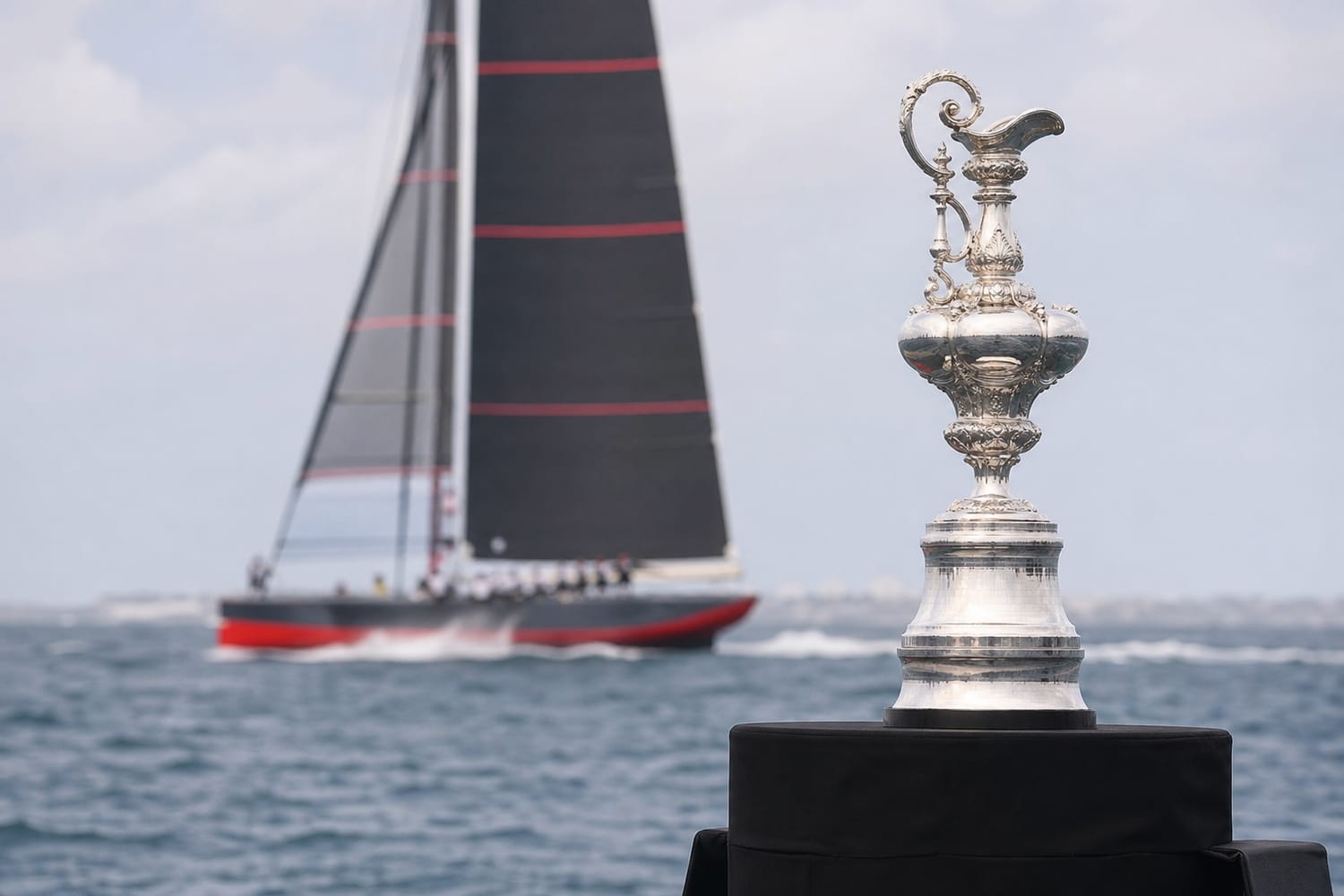
After America won the original race, the New York Yacht Club established one of sport’s most remarkable periods of dominance. American defenders retained the trophy until 1983, creating a 132-year winning streak.
The run became an international symbol of sporting supremacy. Challengers arrived with new hulls, sails, wealthy backers, and talented crews, yet the Cup remained in New York. Its longevity places the achievement alongside other seemingly unbreakable winning streaks in sports history.
Australia II finally ended the streak in 1983. Its secret weapon was a revolutionary winged keel designed under Ben Lexcen’s direction. Screens concealed the keel whenever the yacht was lifted from the water, generating intense speculation. After falling behind 3–1 in the match, the Australians recovered to win 4–3 and take the trophy away from the United States.
The victory demonstrated a principle that continues to define the America’s Cup: a small engineering advantage can overturn decades of dominance.
When Yacht Design Became an Arms Race
Technology influenced the Cup long before computers and carbon fiber. Early designers refined hull shapes, sail plans, ballast, and rigging. The enormous J-Class yachts of the 1930s combined graceful lines with increasingly scientific design, while the 12-Metre era brought model testing and more systematic hydrodynamic research.
Later generations introduced lightweight composite structures, advanced sailcloth, digital weather analysis, and computer-aided design. Teams began recruiting experts from aerospace, automotive engineering, meteorology, and data science.
The objective was not simply to build the fastest boat in a straight line. An America’s Cup yacht must accelerate quickly, turn efficiently, remain controllable in changing wind, and survive the enormous loads created during racing. Every component is therefore part of an interconnected performance system.
This development reflects the wider science of breaking sports records, in which equipment, data, training, and human ability combine to push established limits.
The Foiling Revolution
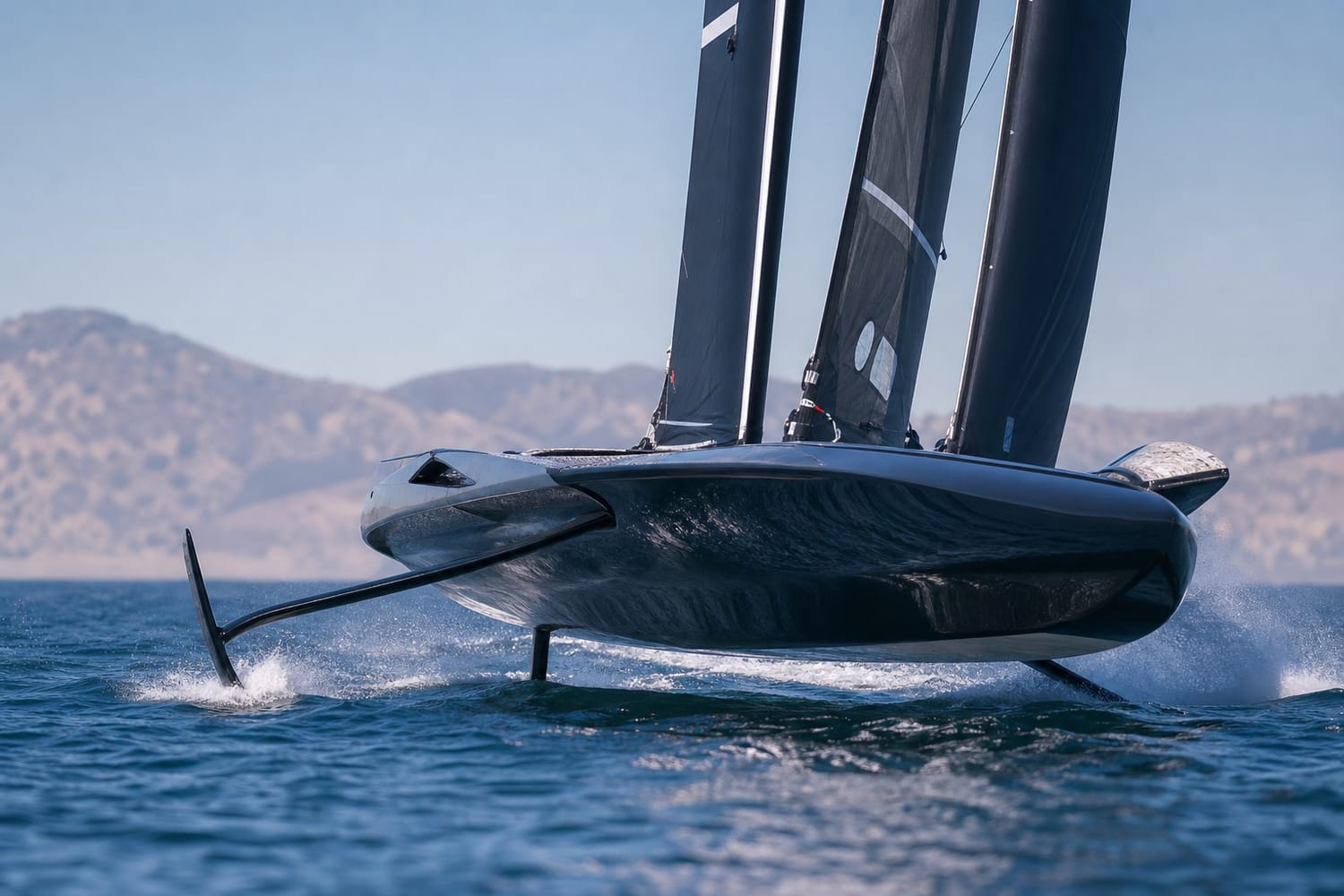
The greatest modern transformation occurred when hydrofoils became central to America’s Cup racing. Foils are wing-like structures beneath the water. As speed increases, they generate lift, raising the hull above the surface and dramatically reducing drag.
Foiling moved into the spotlight during preparations for the 2013 America’s Cup in San Francisco. The spectacular AC72 catamarans appeared to fly across the bay, reaching speeds that would once have seemed impossible for wind-powered craft.
That edition also delivered one of sport’s most famous comebacks. Oracle Team USA trailed Emirates Team New Zealand 8–1 before winning eight consecutive races and retaining the trophy 9–8.
By 2017, smaller AC50 foiling catamarans were racing in Bermuda. Emirates Team New Zealand introduced “cyclors,” crew members who pedaled stationary cycling systems to generate hydraulic power more efficiently than traditional arm-powered grinders. The New Zealanders won the Cup and gained the right to shape its next technological chapter.
The AC75: A Monohull Designed to Fly
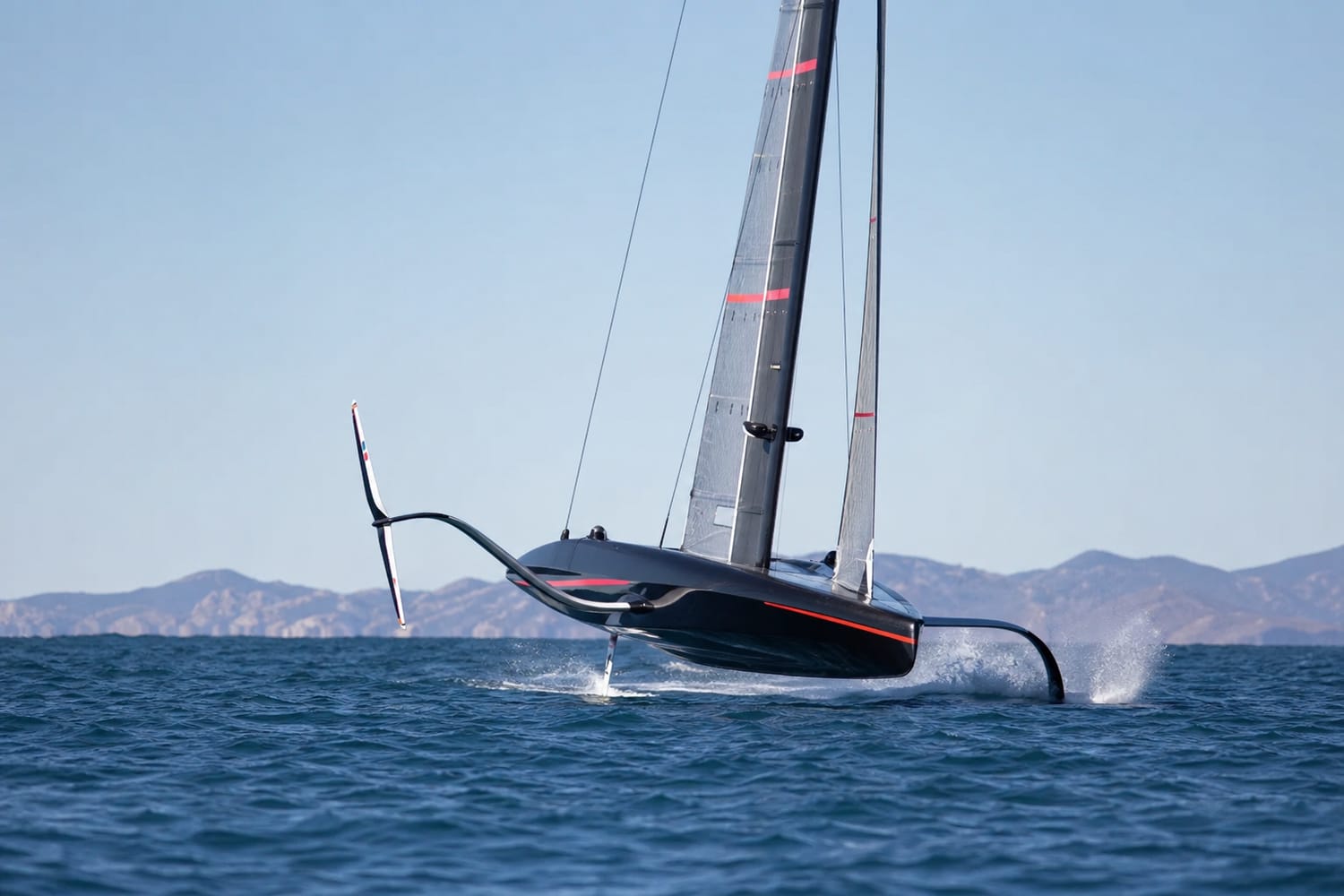
For the 2021 competition, Emirates Team New Zealand and challenger Luna Rossa created the AC75 rule. The result was a 75-foot foiling monohull unlike any previous America’s Cup yacht.
Instead of relying on a conventional fixed keel, an AC75 uses two movable foil arms. During normal foiling, one arm is lowered into the water while the other is raised. The immersed foil provides lift, and the raised arm helps supply the leverage required to keep the yacht upright.
A twin-skin mainsail works with the mast to create an aerodynamic shape resembling an aircraft wing. Hydraulic systems adjust sails and foils, while electronic controls translate sailor inputs into precise mechanical movements. Teams can monitor thousands of data points covering loads, pressures, boat attitude, wind, and speed.
Some components are standardized, including elements of the foil-cant system. Other areas remain open to development, compelling designers to search for advantages in foil geometry, aerodynamics, control systems, weight distribution, and sail shape. The America’s Cup guide to AC75 technology explains how these systems allow a large monohull to rise and balance above the sea.
Sailors, Software, and Split-Second Decisions
Technology has not removed the human element. It has made the sailors’ jobs faster, more specialized, and less forgiving.
Modern crews include helms, trimmers, flight controllers, and cyclors. Flight controllers manage ride height and pitch while the helms steer and make tactical decisions. Cyclors generate power for sail-control and hydraulic functions. During the 2024 cycle, AC75 crews were reduced to eight sailors, four of whom could be dedicated cyclors.
Behind them stands a much larger shore team. Naval architects, software developers, engineers, meteorologists, sailmakers, and performance analysts use simulation and testing to prepare the yacht. Before a component reaches the water, teams may evaluate countless virtual variations.
The result is a race conducted on two levels. Sailors fight for position on the course, while years of hidden engineering work determine how effectively their boat accelerates, turns, and stays on its foils.
A Historic Trophy Racing Toward the Future
In October 2024, Emirates Team New Zealand defeated INEOS Britannia 7–2 in Barcelona, securing a third consecutive America’s Cup victory. The event demonstrated how refined the AC75 concept had become, with boats exceeding 50 knots while remaining capable of close tactical racing.
The next chapter is scheduled for Naples in spring and summer 2027, when the 38th America’s Cup will be held in Italy for the first time. The AC75 will remain at the center of the competition, linking the coming contest to the foiling breakthroughs of 2021 and 2024.
That continuity does not mean development will stop. Teams will continue refining materials, software, aerodynamics, and crew systems in pursuit of marginal gains.
The America’s Cup survives because it embraces this tension between heritage and disruption. The trophy belongs to the nineteenth century, but the race for it is always aimed at the future.