A Literal Bug in an Early Computer
On September 9, 1947, operators investigating a malfunction in Harvard University’s Mark II computer discovered a moth trapped in an electromechanical relay. They removed it, taped it into the machine’s logbook, and labeled it the “first actual case of bug being found.” The incident became computing’s most famous debugging story.
The moth did not create the words bug or debugging, as the popular version of the story sometimes suggests. Instead, it provided an irresistible visual joke: a technical “bug” had turned out to be an actual insect. The preserved logbook page transformed an ordinary repair into a symbol of the growing relationship between humans and computers.
Inside the Harvard Mark II
The Harvard Mark II, formally known as the Aiken Relay Calculator Mark II, belonged to the first generation of large-scale calculating machines. Developed under Harvard physicist Howard Aiken and supported by the U.S. Navy, it performed complex mathematical calculations using thousands of electromechanical relays.
These relays acted as electrically controlled switches. Unlike the microscopic transistors inside modern processors, they were physical mechanisms with moving contacts. As the machine worked, its relays opened and closed with a constant mechanical clatter.
That physical construction made the Mark II vulnerable to dust, worn parts, loose connections, and—in one memorable instance—wildlife. When the moth became lodged between relay contacts, it interfered with the circuit and prevented the machine from operating correctly.
The story belongs to an era when computing was still visibly mechanical. Exploring the machines of that period also raises fascinating questions about what qualifies as the first programmable computer, since early devices varied widely in design, purpose, and programmability.
The Famous Logbook Entry
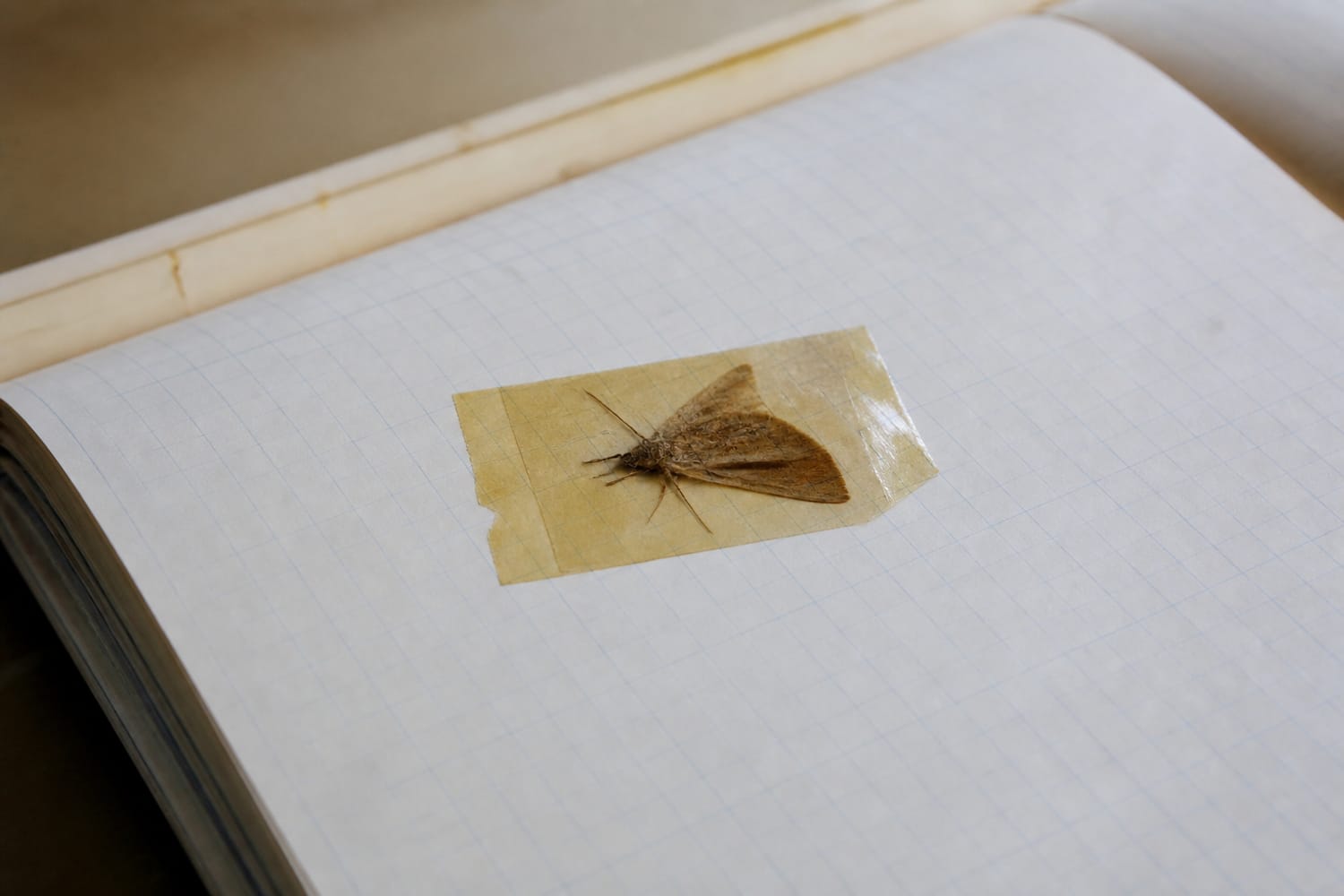
After locating the problem, the operators carefully removed the moth and attached it to the day’s logbook page with tape. Beside it, they wrote the now-famous line about finding the first actual bug.
The wording reveals that the team already understood bug as a technical term. The humor depended on that shared knowledge. They had spent their careers looking for figurative bugs, only to discover a literal one inside the computer.
The original computer bug logbook held by the Smithsonian Institution remains one of the most recognizable artifacts in computing history. Its survival also demonstrates the value of engineering logs. A brief operational note, written without any expectation of fame, can preserve details that later become culturally significant.
Grace Hopper’s Role in the Story

Grace Hopper is frequently described as the person who found the moth, but the historical record calls for more precise language. She was a mathematician, naval officer, and programmer working with the Harvard computing team, yet the logbook was probably not hers, and the individual who wrote the note is not definitively identified.
Hopper’s essential contribution was helping make the story famous. She repeatedly discussed the incident during lectures, often using it to explain the term computer bug. Her reputation as an engaging speaker allowed the anecdote to reach audiences far beyond the original laboratory. The Computer History Museum notes that Hopper was present and later popularized the event through her public appearances.
Her career extended far beyond one moth. Hopper worked on early automatic programming systems and became a powerful advocate for machine-independent programming languages. Her ideas helped move computing away from instructions tied closely to individual machines and toward languages that people could use more easily. The Naval History and Heritage Command’s Grace Hopper biography outlines her work on the Mark computers, UNIVAC, and automatic programming.
“Bug” Was Already an Engineering Term
The use of bug to describe a technical flaw predates electronic computing by decades. Thomas Edison used the word for difficulties in inventions and electrical systems during the 19th century. By the time the Harvard team encountered its moth, engineers were already comfortable describing mysterious mechanical or electrical problems as bugs.
The 1947 incident therefore did not coin bug. Nor was it necessarily the first time someone had debugged a machine. Engineers had always diagnosed faults, tested components, and corrected failures.
What made the Mark II episode special was its perfect combination of language and reality. The operators were “debugging” in the most literal way possible: they removed a bug from a computer.
That distinction matters because historical anecdotes often become cleaner as they are retold. A more accurate summary is:
- Engineers had used bug for technical problems before computers existed.
- The moth was the first recorded literal bug found inside a computer.
- Grace Hopper and her colleagues helped popularize the story.
- The incident strengthened the association between debugging and computing.
From Relays to Software Errors

The Mark II moth caused a hardware failure, not an error in program logic. Modern bugs, by contrast, are usually defects in software: incorrect calculations, faulty assumptions, security vulnerabilities, unexpected interactions, or instructions that fail under particular conditions.
The physical machines have changed, but the basic debugging process remains recognizable. A developer observes a failure, gathers evidence, forms a hypothesis, isolates the cause, applies a correction, and tests the result. Good debugging is less about guessing than about narrowing uncertainty.
Today’s developers use breakpoints, automated tests, log analysis, memory diagnostics, code review, and monitoring tools. Yet these sophisticated techniques serve the same purpose as examining the Mark II’s relays: finding the point where actual behavior departs from expected behavior.
As programming evolved, languages became easier for humans to read and maintain. That development can be explored through the question of which system is considered the first widely used high-level programming language—a shift closely connected to the world Hopper helped create.
Why the Moth Still Matters
The moth remains memorable because it makes an abstract process tangible. Software failures are usually invisible, buried in millions of lines of code or hidden within complicated interactions. The Harvard moth gives the problem a body, wings, and a place in a logbook.
It also captures an important truth about technology: every machine operates in the physical world. Even the most advanced computer depends on components, electricity, environmental conditions, and human decisions. Failures can arise from code, hardware, documentation, communication, or something no designer anticipated.
Most importantly, the story celebrates curiosity. The operators did not merely note that the Mark II had stopped working. They investigated methodically until they found the cause. That habit—questioning, observing, testing, and learning—is the real foundation of debugging.
The moth was not the first technical bug, and its removal did not invent troubleshooting. Nevertheless, the incident gave computing one of its most enduring metaphors. A tiny insect caught in a relay became a reminder that progress depends not on building systems that never fail, but on developing better ways to understand them when they do.